
Honeywell XC Series Modules | XC5010C CPU Module
Honeywell XC Series: Comprehensive Module Range and Technical Overview The Honeywell XC Series represents a core control platform deployed across…
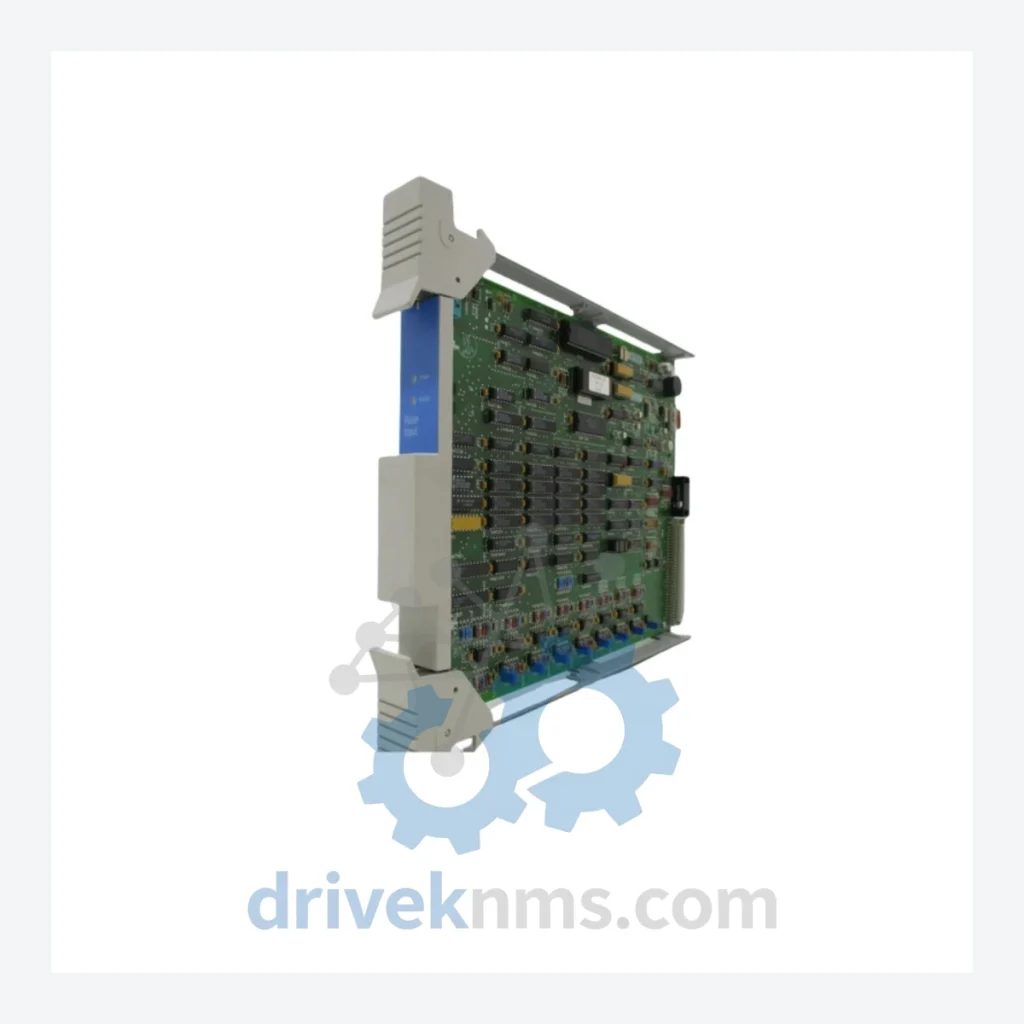
Model: MU-PPIX02
Product Overview
Commercial availability is handled through direct RFQ, model verification and export-oriented follow-up rather than public cart checkout.
Datasheet Preview
Use attached product manuals when available. If the manual is not public yet, request the full file directly through RFQ.
Commercial Path
Product pages on DRIVEKNMS are designed to verify model, brand and series first, then move the buyer into one clean quotation path.
Technical Dossier
When a Pulse Input IOP Module fails inside a Honeywell TDC 3000 or TPS distributed control system, the consequences extend far beyond a single instrument loop. The MU-PPIX02 sits at the data acquisition layer of one of the most widely deployed legacy DCS architectures in the refining, petrochemical, and power generation industries. Its failure can cascade into process shutdowns, unplanned downtime, and — in the worst-case scenario — a forced migration to a modern DCS platform that carries a capital expenditure measured in the millions of dollars. Engineering, re-tagging, loop checkout, operator retraining, and production loss during cutover routinely push full system replacement costs to USD 2–5 million per unit. Against that backdrop, a verified spare MU-PPIX02 is not a line item — it is an insurance policy.
DriveKNMS maintains a carefully managed inventory of hard-to-find Honeywell TDC 3000 / TPS modules. Stock levels for discontinued components are finite and do not replenish. Once the available units are gone, sourcing lead times become unpredictable.
| Part Number | MU-PPIX02 |
| Manufacturer | Honeywell |
| Series | TDC 3000 / TPS IOP |
| Module Type | Pulse Input IOP Module |
| Compatible Systems | Honeywell TDC 3000, TPS (Total Plant Solution) |
| Communication Bus | Local Control Network (LCN) / IOP Bus |
| Country of Origin | United States |
| Discontinuation Status | Discontinued – No longer manufactured or supported by Honeywell |
| Condition Available | New surplus / Professionally refurbished |
Note: Electrical parameters not listed here are application-dependent and should be verified against the Honeywell TDC 3000 IOP Module specification sheet for your specific revision level. DriveKNMS does not publish unverified parameters.
The Honeywell TDC 3000 platform entered service in the early 1980s and remained the backbone of process control in large-scale continuous manufacturing for decades. Many facilities that installed TDC 3000 systems have since found themselves in an uncomfortable position: the installed base is deeply embedded in their process architecture, the engineering knowledge to operate it is mature and proven, yet Honeywell has formally ended hardware production and support for the IOP module family.
The MU-PPIX02 specifically handles pulse input signals — turbine flow meters, positive displacement meters, and other frequency-based transmitters that feed critical flow totalization and custody transfer calculations. There is no software patch that replaces a failed hardware module. When the module fails, the loop goes dark.
Facilities that have extended TDC 3000 asset life by 5–10 years beyond the official end-of-support date consistently follow the same strategy: they build a structured spare parts reserve for the highest-failure-risk modules before the secondary market dries up. The MU-PPIX02, as an active signal-processing module with electrolytic capacitors and firmware-dependent operation, belongs at the top of that reserve list. Procurement managers who act during a planned maintenance window — rather than during an emergency shutdown — pay a fraction of the cost and avoid the operational pressure that leads to poor sourcing decisions.
A single unplanned shutdown day in a mid-scale refinery or chemical plant typically costs USD 500,000 to USD 1,000,000 in lost production and recovery labor. The arithmetic of proactive spare parts procurement is straightforward.
DriveKNMS applies a 5-step quality assurance process to all refurbished IOP modules before they leave our facility:
Q: What warranty applies to a discontinued module like the MU-PPIX02?
A: DriveKNMS provides a 90-day functional warranty on all refurbished units. New surplus units carry a 12-month warranty. Warranty terms are confirmed in writing at the time of order.
Q: How do I know the unit is genuine and not a counterfeit?
A: All units are sourced from documented industrial decommissioning projects or authorized surplus channels. We provide traceability documentation upon request. Physical markings, board revision codes, and firmware identifiers are verified against Honeywell reference data.
Q: Should we buy more than one unit?
A: For facilities running TDC 3000 systems with no planned migration in the next 3–5 years, holding a minimum of two MU-PPIX02 units is a defensible maintenance strategy. Secondary market availability for this module class is declining year over year. The cost of a second unit today is a fraction of the cost of an emergency procurement during a process upset.
Q: Can you source specific firmware revisions?
A: We document firmware revisions for all units in stock. Contact us with your system's current IOP firmware baseline and we will match accordingly where inventory permits.
Related Paths
Honeywell XC Series: Comprehensive Module Range and Technical Overview The Honeywell XC Series represents a core control platform deployed across…
Honeywell MP-DNCF02-200 Single-Phase Power Controller – Obsolete Limitrol Series Spare Part When a single-phase power controller fails inside a legacy…
Honeywell XDL Series: Comprehensive Module Range and Technical Overview The Honeywell XDL series is a core component family within the…