
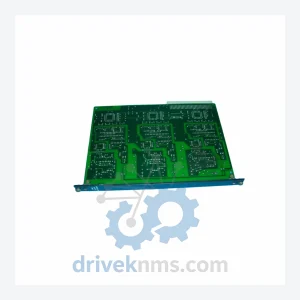
GE IS200 Modules | IS200BPIBG1AEB Driver Board
GE IS200 Series: Comprehensive Module Range and Technical Overview The GE IS200 series constitutes the core I/O, control, and communication…
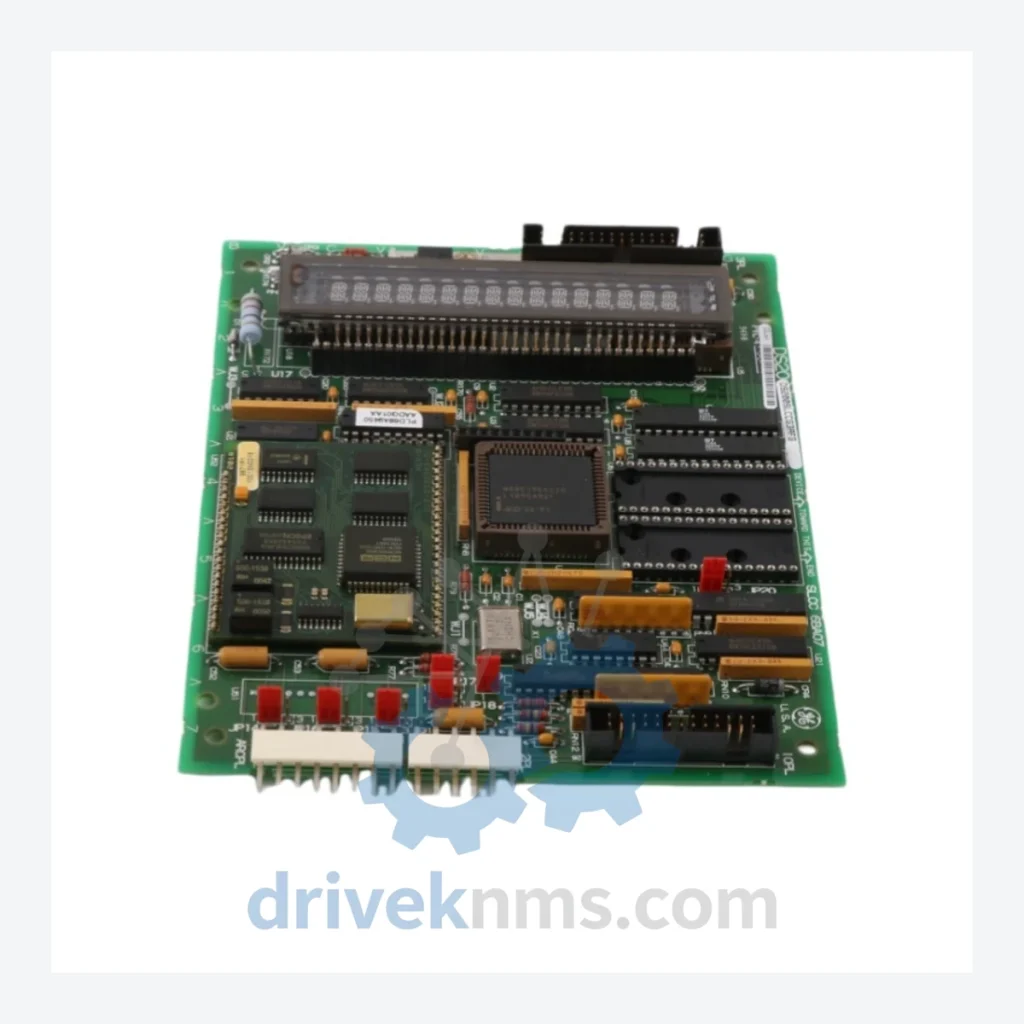
Model: DS200SLCCG4AF
Product Overview
Commercial availability is handled through direct RFQ, model verification and export-oriented follow-up rather than public cart checkout.
Datasheet Preview
Use attached product manuals when available. If the manual is not public yet, request the full file directly through RFQ.
Commercial Path
Product pages on DRIVEKNMS are designed to verify model, brand and series first, then move the buyer into one clean quotation path.
Technical Dossier
The GE DS200 series constitutes the core I/O, communication, and control module family for the GE Mark VI and Mark VIe turbine control systems. Deployed across gas turbines, steam turbines, and combined-cycle power plants globally, DS200-series boards are installed in refineries, petrochemical complexes, nuclear auxiliary systems, and LNG terminals. The Mark VI platform—introduced in the mid-1990s—replaced the earlier Mark V architecture and established a VME-based, triple-redundant control backbone that remains operational in thousands of baseload and peaking power assets worldwide. The DS200 module family covers every functional layer of the Mark VI/VIe rack: processor cards, analog and digital I/O, communication adapters, power supplies, and specialty signal conditioning boards. Because many of these plants operate on 20–40 year maintenance cycles, DS200 components have transitioned from active production to long-term lifecycle support status, making verified spare parts sourcing a critical operational requirement.
The DS200 module family was engineered as the hardware substrate for GE's Mark VI Turbine Control System, released commercially circa 1995–1997. The Mark VI replaced the Mark V (which used the DS3800 and DS3820 module families) and introduced a fully digital, triple-redundant (TMR) or simplex (S) control architecture over a VME backplane. Key architectural milestones:
Generation 1 (Mark VI, 1995–2005): Original DS200 boards with EEPROM-based firmware, 5V VME bus logic, and RS-422/RS-485 serial communication. Boards such as the DS200SLCCG4AF (LAN communication) and DS200SDCCG3A (servo drive control) defined the initial I/O topology.
Generation 2 (Mark VI Enhanced / Mark VIe, 2005–2015): Introduction of Ethernet-based I/O packs (IONet), dual-ported memory, and expanded diagnostics. The DS200 backplane remained compatible, but new variants with revised suffix codes (e.g., G5, G6) introduced updated ASICs and improved EMI tolerance for offshore and high-vibration environments.
Lifecycle / Sustaining Phase (2015–present): GE transitioned Mark VI to a sustaining-only support model. New installations default to Mark VIe with EX2100e excitation and LS2100e load sharing. DS200 boards are no longer manufactured in volume; OEM repair, tested surplus, and third-party remanufacturing are the primary supply channels. Compatibility between suffix revisions (e.g., G3A vs. G4A vs. G5A) must be verified against the specific turbine application software revision before installation.
The following SKUs represent verified, commonly stocked DS200-series components. Each entry reflects the board's primary functional role within the Mark VI/VIe control rack.
Communication & LAN Adapters
DS200SLCCG4AF: LAN communication card; manages Ethernet I/O network interface for Mark VI TMR racks.
DS200SLCCG3A: Earlier LAN communication card revision; functionally equivalent to G4AF with older firmware baseline.
DS200TCQAG1A: Turbine control quad analog output card; four isolated 4–20 mA output channels for actuator control.
Servo & Drive Control
DS200SDCCG3A: Servo drive control card; interfaces with electrohydraulic servo valves for fuel and inlet guide vane positioning.
DS200SDCCG1A: First-generation servo drive control; used in early Mark VI simplex configurations.
DS200SHCAG1A: Speed and health control analog card; processes magnetic pickup speed signals and analog health diagnostics.
Analog I/O Modules
DS200TCDAG1A: Turbine control analog input card; 16-channel thermocouple and RTD signal conditioning.
DS200TCEAG1A: Analog I/O expansion card; extends thermocouple input capacity in high-sensor-count applications.
DS200TCRAG1A: Analog output relay card; combines analog outputs with discrete relay contacts for hybrid control loops.
DS200ADGIH1A: Analog-to-digital gate interface card; converts field analog signals to VME-compatible digital format.
Digital I/O Modules
DS200DSPCH1A: Digital signal processor card; executes high-speed discrete logic and sequence-of-events recording.
DS200DTBCG1A: Digital terminal board controller; manages discrete I/O terminal block assignments and field wiring interface.
DS200EXPSG1A: I/O expansion card; adds discrete input/output capacity to base Mark VI racks.
DS200IOCAG1A: I/O controller adapter card; arbitrates data transfer between I/O modules and the main processor bus.
Power Supply & Backplane
DS200PCCAG1A: Power conditioning and control card; regulates +5V, ±15V VME bus rails and monitors supply health.
DS200VPBLG1A: VME power backplane; distributes regulated DC power to all modules in a single Mark VI chassis slot.
DS200TBQCG1A: Terminal board quad controller; provides field-side terminal block connectivity for four I/O module channels.
Processor & CPU Cards
DS200TCPSG1A: Turbine control processor card; primary CPU executing turbine protection and sequencing logic.
DS200TCPSG2A: Second-generation turbine control processor; increased SRAM, faster scan cycle, backward-compatible with G1A application code.
DriveKNMS maintains a dedicated inventory program for DS200-series components that have reached end-of-manufacture status with GE. Our sourcing protocol covers three supply tiers: (1) tested surplus boards pulled from decommissioned Mark VI racks, verified against GE IS420/IS410 test procedures; (2) OEM-repaired units with documented fault history and repair records; (3) remanufactured boards where original ASICs and EPROMs are replaced with verified equivalents and full functional testing is performed on a Mark VI-compatible test bench. For operators managing aging fleets with no planned migration to Mark VIe, DriveKNMS provides multi-year blanket order agreements to lock in pricing and availability for critical DS200 spares. Emergency same-day dispatch is available for in-stock items to minimize turbine downtime.
DS200 boards present specific test challenges due to their VME backplane bus architecture, triple-redundant voting logic, and mixed analog/digital signal paths. DriveKNMS applies the following test protocol to all DS200 units prior to dispatch:
Visual and physical inspection: Component-level inspection for capacitor ESR degradation, ASIC pin corrosion, and PCB trace integrity under 10× magnification. Conformal coating condition is assessed and reapplied where delamination is detected.
Powered bench test: Each board is installed in a live Mark VI-compatible VME chassis. Communication cards (e.g., DS200SLCCG4AF) are tested for full Ethernet frame transmission and IONet packet integrity. Analog I/O cards are tested across the full 4–20 mA and thermocouple input range with calibrated signal sources. Servo cards are tested for output linearity and response time against GE GEH-6421 specification limits.
Firmware verification: EEPROM firmware revision is read and documented. Where the installed firmware revision is incompatible with the customer's application software version, DriveKNMS coordinates firmware alignment prior to shipment.
Burn-in cycle: All repaired or remanufactured boards undergo a minimum 48-hour powered burn-in at elevated ambient temperature (50°C) to screen for infant-mortality failures before dispatch.
Related Paths
GE IS200 Series: Comprehensive Module Range and Technical Overview The GE IS200 series constitutes the core I/O, control, and communication…
GE IS200 Series: Comprehensive Module Range and Technical Overview The GE IS200 series is the core I/O and control module…
GE IS215 Series: Comprehensive Module Range and Technical Overview The GE IS215 series represents a core hardware family within GE's…