
Honeywell XC Series Modules | XC5010C CPU Module
Honeywell XC Series: Comprehensive Module Range and Technical Overview The Honeywell XC Series represents a core control platform deployed across…
Model: TP-DSOEP1-100 / 51402497-200
Product Overview
Commercial availability is handled through direct RFQ, model verification and export-oriented follow-up rather than public cart checkout.
Datasheet Preview
Use attached product manuals when available. If the manual is not public yet, request the full file directly through RFQ.
Commercial Path
Product pages on DRIVEKNMS are designed to verify model, brand and series first, then move the buyer into one clean quotation path.
Technical Dossier
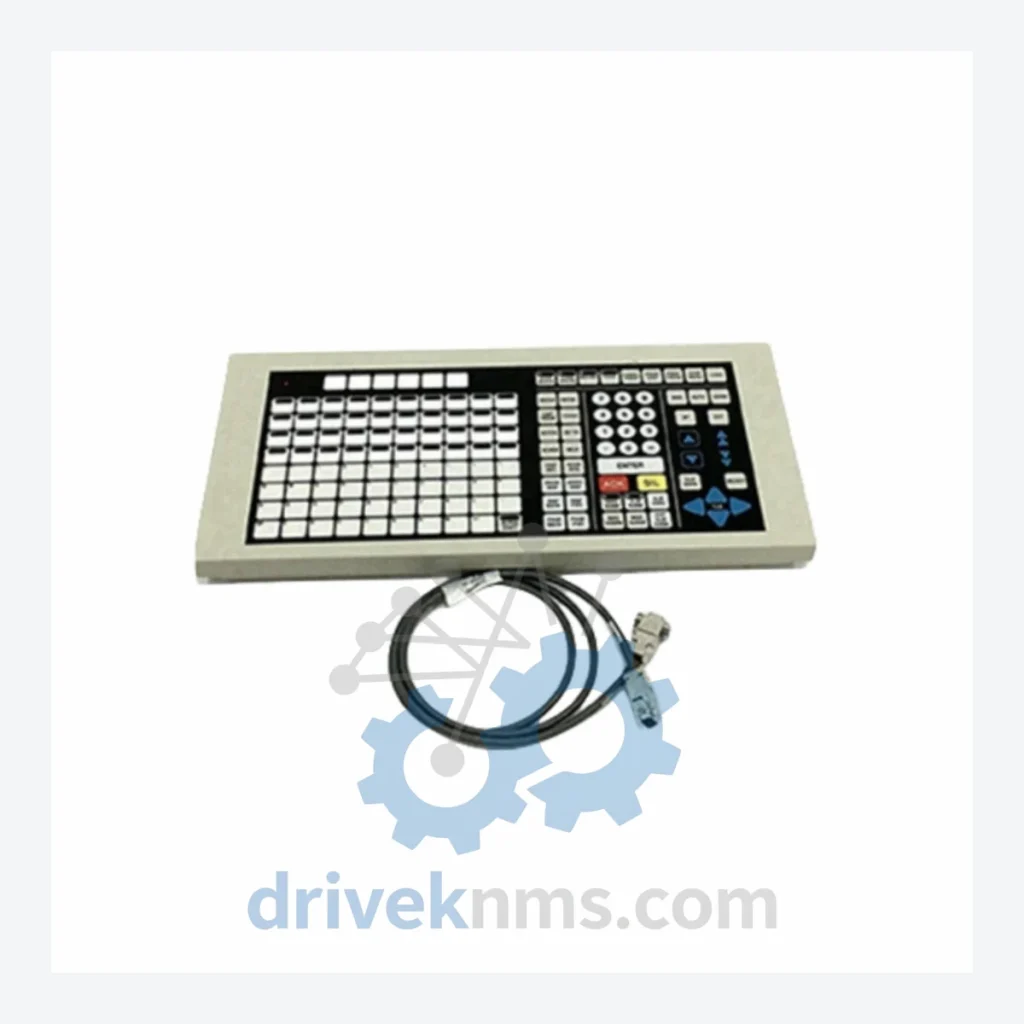
When a Honeywell TDC 3000 Operator Keyboard fails, the consequences extend far beyond a single workstation going dark. The TDC 3000 platform — Honeywell's flagship Distributed Control System deployed across refineries, chemical plants, and power generation facilities from the 1980s through the 2000s — is deeply embedded in process control architectures that were never designed for rapid replacement. A single failed operator keyboard can halt operator interaction with the entire control loop. Sourcing a replacement through standard channels is no longer possible: Honeywell officially discontinued the TDC 3000 product line, and OEM support has ended.
The cost of a forced system migration triggered by a single unavailable component routinely exceeds USD $2–5 million when engineering hours, process downtime, revalidation, and retraining are factored in. DriveKNMS maintains verified physical stock of the TP-DSOEP1-100 (P/N 51402497-200), providing a direct path to restoring operator console functionality without triggering a capital project.
| Parameter | Detail |
|---|---|
| Manufacturer | Honeywell |
| Part Number | TP-DSOEP1-100 |
| Alternate P/N | 51402497-200 |
| Product Series | TDC 3000 (Total Distributed Control) |
| Component Type | Operator Keyboard / HMI Input Device |
| Compatible Platform | Honeywell TDC 3000 DCS |
| Country of Origin | United States |
| OEM Status | Discontinued – No longer manufactured or supported by Honeywell |
| Availability | Limited aftermarket stock – DriveKNMS verified inventory |
Note: Electrical parameters specific to this unit are not published in available aftermarket documentation. DriveKNMS does not fabricate specifications. Contact us for any technical verification requirements prior to purchase.
The Honeywell TDC 3000 was not a commodity product. It was an engineered system — with proprietary communication protocols, a dedicated operator console architecture, and hardware-software interdependencies that make component-level substitution with modern equivalents technically impractical without a full system redesign.
The TP-DSOEP1-100 operator keyboard is the primary human interface point for TDC 3000 console stations. Operators use it to enter process commands, acknowledge alarms, and navigate the Universal Station display environment. There is no generic keyboard that can substitute for it. The connector pinout, scan matrix, and firmware handshake are proprietary to the TDC 3000 architecture.
Facilities that have attempted to bypass this constraint by migrating to modern HMI platforms have encountered multi-year engineering programs, extensive process safety re-validation under IEC 61511, and significant operational disruption. For plants where the TDC 3000 controls critical process units — crude distillation, reactor temperature loops, compressor control — the risk profile of a forced migration is substantial.
Maintaining a physical spare of the TP-DSOEP1-100 is the lowest-cost, lowest-risk strategy for preserving operational continuity. A single unit in bonded storage can protect years of uninterrupted production.
The decision to retire a TDC 3000 installation is rarely driven by the control system's inability to perform its function. It is almost always driven by the inability to source replacement hardware when a component fails. This is a procurement problem, not an engineering problem — and it has a procurement solution.
The following strategy has been applied by plant engineering teams across the petrochemical, pulp and paper, and power generation sectors to defer TDC 3000 retirement by a decade or more:
1. Conduct a Critical Spares Audit. Identify every hardware component in your TDC 3000 installation that has no available substitute and whose failure would cause a process shutdown. Operator keyboards, UCN interface cards, and AM/APP modules are typically at the top of this list. Prioritize by consequence of failure, not by age of component.
2. Establish a Bonded Spare Pool. For each critical component identified, procure a minimum of one verified spare unit and store it under controlled conditions (temperature-stable, ESD-protected environment). The cost of a single spare keyboard is a fraction of one hour of unplanned downtime in a continuous process facility.
3. Source from Verified Aftermarket Suppliers. OEM channels are closed. The aftermarket is the only viable source. Require suppliers to provide documentation of the unit's condition, any refurbishment performed, and the basis for their quality assessment. DriveKNMS provides this documentation as standard practice.
4. Implement a Rotation and Testing Protocol. Spare units should be bench-tested against a known-good TDC 3000 station annually. This confirms the spare remains functional and identifies any storage-related degradation before it becomes a crisis.
5. Document Your Extension Strategy for Capital Planning. A well-documented spare parts program provides plant management with a defensible basis for deferring a capital-intensive migration project. It demonstrates that the risk of continued operation has been actively managed, not ignored.
This approach does not eliminate the eventual need for system modernization. It ensures that modernization happens on the plant's schedule, not in response to an emergency.
DriveKNMS applies a 5-step quality assessment protocol to all discontinued hardware units before they are offered for sale.
Step 1 – Visual and Mechanical Inspection: Full external inspection for physical damage, connector pin corrosion, and keyswitch mechanical integrity. Units with corroded or bent connector pins are rejected at this stage.
Step 2 – Electrolytic Capacitor Assessment: Legacy hardware from the TDC 3000 era uses electrolytic capacitors with a finite service life. Units are inspected for visible capacitor degradation (bulging, electrolyte leakage). Where applicable, capacitor condition is assessed prior to listing.
Step 3 – Firmware and Label Verification: Part number labels, revision markings, and any accessible firmware version identifiers are cross-referenced against known TDC 3000 hardware revisions to confirm authenticity and compatibility.
Step 4 – Functional Bench Test (where test equipment is available): Units are tested for basic electrical continuity and, where a compatible test station is available, functional operation is verified.
Step 5 – Condition Classification and Documentation: Each unit is classified as New Surplus, Refurbished, or Tested Used, and this classification is disclosed to the buyer prior to purchase. No unit is sold without a documented condition assessment.
The TP-DSOEP1-100 is a direct hardware replacement for the existing operator keyboard position in a TDC 3000 Universal Station console. It requires no software modification, no firmware update to the host system, and no reconfiguration of the UCN or LCN network. Installation is a physical swap.
This drop-in replacement characteristic is the defining advantage of sourcing original hardware over attempting a modern substitute. Engineering teams do not need to be engaged. Process safety reviews are not triggered. The console is returned to service in the time it takes to physically replace the unit — measured in minutes, not months.
For facilities operating under tight maintenance windows, this distinction carries direct financial value. A planned keyboard replacement during a scheduled turnaround costs nothing beyond the part price. An unplanned keyboard failure during a production run carries the full cost of unplanned downtime.
Q: What warranty applies to a discontinued part like the TP-DSOEP1-100?
A: DriveKNMS provides a 90-day warranty against DOA (Dead on Arrival) and functional failure under normal operating conditions for all tested and refurbished units. New surplus units carry a 180-day warranty. Warranty terms are confirmed in writing at the time of purchase.
Q: How do I know the unit is genuine Honeywell hardware and not a counterfeit?
A: All units are inspected for OEM markings, part number labels, and construction characteristics consistent with genuine Honeywell TDC 3000 hardware. DriveKNMS does not knowingly source or sell counterfeit components. Buyers may request photographic documentation of the specific unit prior to purchase.
Q: Should I buy more than one unit?
A: For any TDC 3000 installation with more than one operator console, holding at least one spare keyboard is a defensible minimum. For facilities where the TDC 3000 controls a critical process unit with no hot standby, two spares is a more conservative and appropriate position. Aftermarket stock of discontinued TDC 3000 hardware is finite and diminishing. Units available today may not be available in 12 months.
Q: Can you source other TDC 3000 components?
A: Yes. DriveKNMS specializes in legacy DCS and PLC hardware across multiple platforms including Honeywell TDC 3000, TPS, and Experion legacy modules. Contact us with your full bill of materials for a consolidated sourcing assessment.
© 2026 DriveKNMS. (Status: DRAFT)
Related Paths
Honeywell XC Series: Comprehensive Module Range and Technical Overview The Honeywell XC Series represents a core control platform deployed across…
Honeywell MP-DNCF02-200 Single-Phase Power Controller – Obsolete Limitrol Series Spare Part When a single-phase power controller fails inside a legacy…
Honeywell XDL Series: Comprehensive Module Range and Technical Overview The Honeywell XDL series is a core component family within the…