
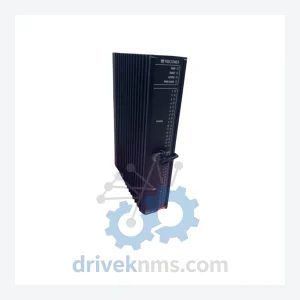
Triconex SDO3411 S2 Digital Output Module: Specs, Models & Availability
Triconex Tricon Series: Comprehensive Module Range and Technical Overview The Triconex Tricon platform is a Triple Modular Redundant (TMR) Safety…
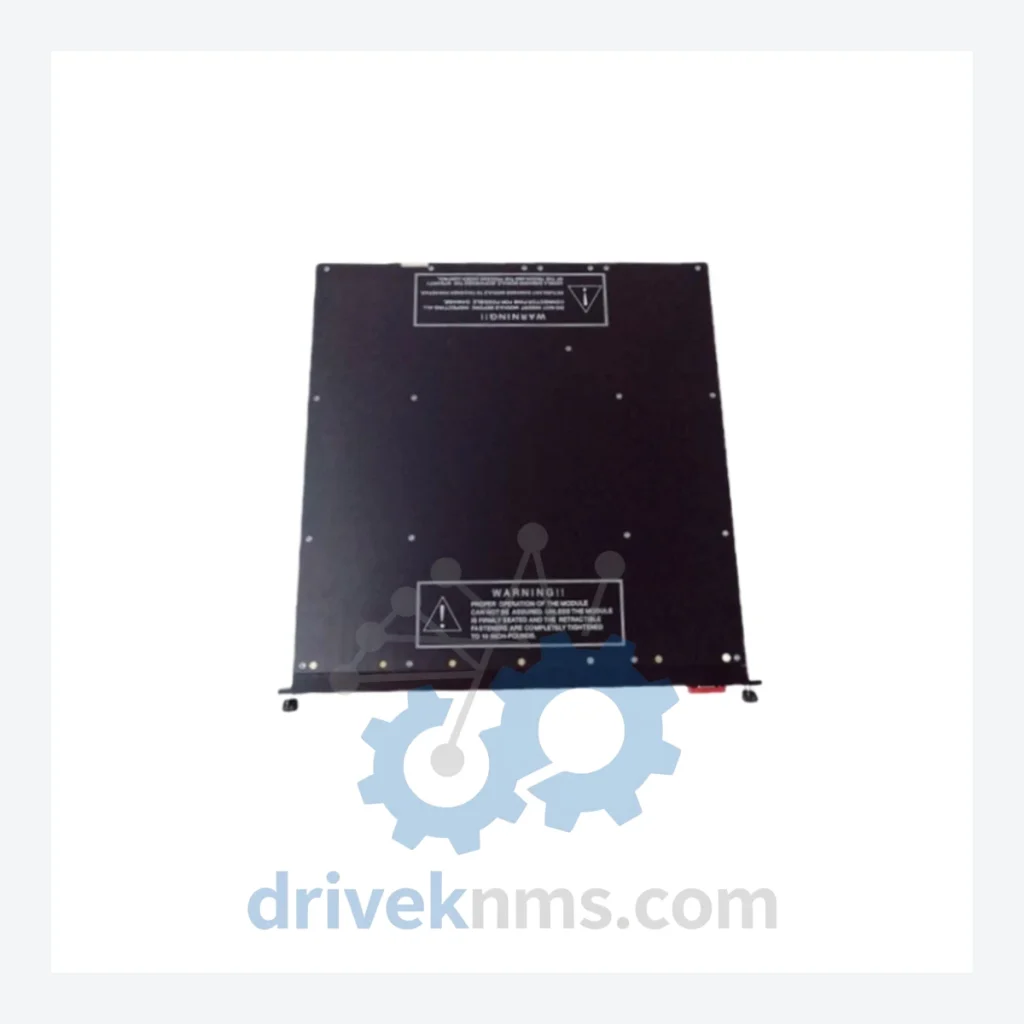
Model: EPI 3382S2
Product Overview
Commercial availability is handled through direct RFQ, model verification and export-oriented follow-up rather than public cart checkout.
Datasheet Preview
Use attached product manuals when available. If the manual is not public yet, request the full file directly through RFQ.
Commercial Path
Product pages on DRIVEKNMS are designed to verify model, brand and series first, then move the buyer into one clean quotation path.
Technical Dossier
The Triconex Tricon platform is one of the most widely deployed triple modular redundancy (TMR) safety instrumented systems (SIS) in global heavy industry. Installed across petrochemical complexes, nuclear power stations, offshore platforms, LNG terminals, and refinery process units, the Tricon system architecture is engineered to IEC 61511 and IEC 61508 SIL 3 requirements. Its TMR design — three independent processing legs voting on a 2-out-of-3 logic basis — provides fault tolerance without process shutdown, making it the reference standard for high-consequence automation environments.
The EPI 3382S2 is a Main Processor module within the Tricon chassis, responsible for executing the safety application logic across all three redundant legs. Its continued availability as a spare part is a direct operational risk factor for any facility running a Tricon-based SIS: a failed processor with no replacement on hand forces either an unplanned shutdown or a bypass condition — both carrying regulatory and safety implications.
The Triconex Tricon platform has evolved through several hardware generations since its commercial introduction in the late 1980s. The original Tricon v1 chassis used proprietary backplane communication at fixed baud rates with limited I/O density. Through the 1990s, Triconex introduced the Tricon v2 and v3 chassis generations, expanding I/O module counts per chassis and introducing the Enhanced Processor Interface (EPI) family — of which the EPI 3382S2 is a member — to replace the earlier MP (Main Processor) modules.
The EPI generation brought faster scan times, expanded memory for larger application programs, and improved diagnostics. The subsequent Tricon CX platform (introduced in the 2000s) retained backward compatibility with many Tricon I/O modules but introduced a new chassis form factor and communication architecture. Facilities running original Tricon chassis hardware face a compatibility boundary: Tricon CX processors are not interchangeable with Tricon v3 chassis slots, meaning the installed base of legacy Tricon systems is permanently dependent on the original EPI and MP module families.
Schneider Electric acquired Triconex in 2014 (via the Invensys acquisition), and while the Tricon CX line remains supported, the original Tricon v3 hardware is in end-of-life status. Schneider Electric's recommended migration path is the Tricon CX or Triconex 3000 platform — a capital project that routinely costs USD 500,000 to several million dollars per safety loop, depending on I/O count and engineering scope. For facilities not yet budgeted for migration, maintaining a spare parts inventory of original Tricon modules is the only operationally viable strategy.
The following SKUs represent the core module families within the Triconex Tricon platform. All models listed are verified Tricon-series hardware. Functional classifications follow Triconex's own module taxonomy.
Main Processors / Enhanced Processor Interface (EPI)
Communication Modules
Digital Input (DI) Modules
Digital Output (DO) Modules
Analog Input (AI) Modules
Power Supply Modules
The Tricon v3 hardware family — including the EPI 3382S2 — is no longer manufactured. Schneider Electric does not offer new production units; availability is limited to certified refurbished stock, surplus channel inventory, and decommissioned system recoveries. Lead times through standard distribution channels for EPI-series processors routinely exceed 16–26 weeks when available at all.
DriveKNMS maintains a dedicated inventory program for Triconex Tricon legacy hardware. Our sourcing network covers decommissioned plant assets across North America, Europe, and Asia-Pacific, with a focus on modules that have been removed from service due to system upgrades rather than failure — preserving the highest probability of functional integrity.
For facilities managing a Tricon-based SIS under an ongoing maintenance contract, we recommend establishing a minimum strategic spare holding of: one EPI processor per chassis, one communication module per network segment, and a minimum 10% buffer on installed I/O module count per type. This holding strategy, benchmarked against typical Tricon MTBF data and repair cycle times, provides a statistically defensible buffer against unplanned downtime for a 5–10 year operational horizon without requiring a full platform migration.
Tricon modules present specific QC challenges due to their TMR internal architecture: a module may pass basic power-on diagnostics while carrying a fault in one of its three internal legs, which will only manifest under the Tricon chassis's internal voting logic. Standard bench testing is insufficient.
DriveKNMS applies a five-stage verification process to all Tricon modules prior to dispatch:
For Triconex Tricon spare parts inquiries, module availability checks, or strategic spare holding consultations:
Related Paths
Triconex Tricon Series: Comprehensive Module Range and Technical Overview The Triconex Tricon platform is a Triple Modular Redundant (TMR) Safety…
Triconex 9853-610 Basic Termination Panel – Obsolete Tricon SIS Spare Part When a Triconex termination panel fails inside an operating…
Triconex 3805EN Analog Output Module – Obsolete Tricon Safety System Spare Part When a Triconex 3805EN fails in an operating…