
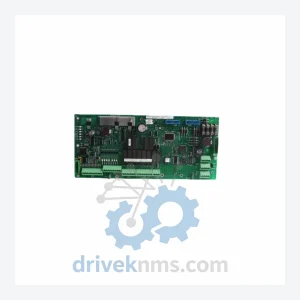
Alfa Laval 3183067861 EPC50BM I/O Board – EPC Series
Alfa Laval 3183067861 EPC50BM I/O Board: Securing Supply Continuity for Critical Heat Transfer Operations The Alfa Laval EPC50BM (P/N 3183067861)…
Model: EPC50B 3183045486
Product Overview
Commercial availability is handled through direct RFQ, model verification and export-oriented follow-up rather than public cart checkout.
Datasheet Preview
Use attached product manuals when available. If the manual is not public yet, request the full file directly through RFQ.
Commercial Path
Product pages on DRIVEKNMS are designed to verify model, brand and series first, then move the buyer into one clean quotation path.
Technical Dossier
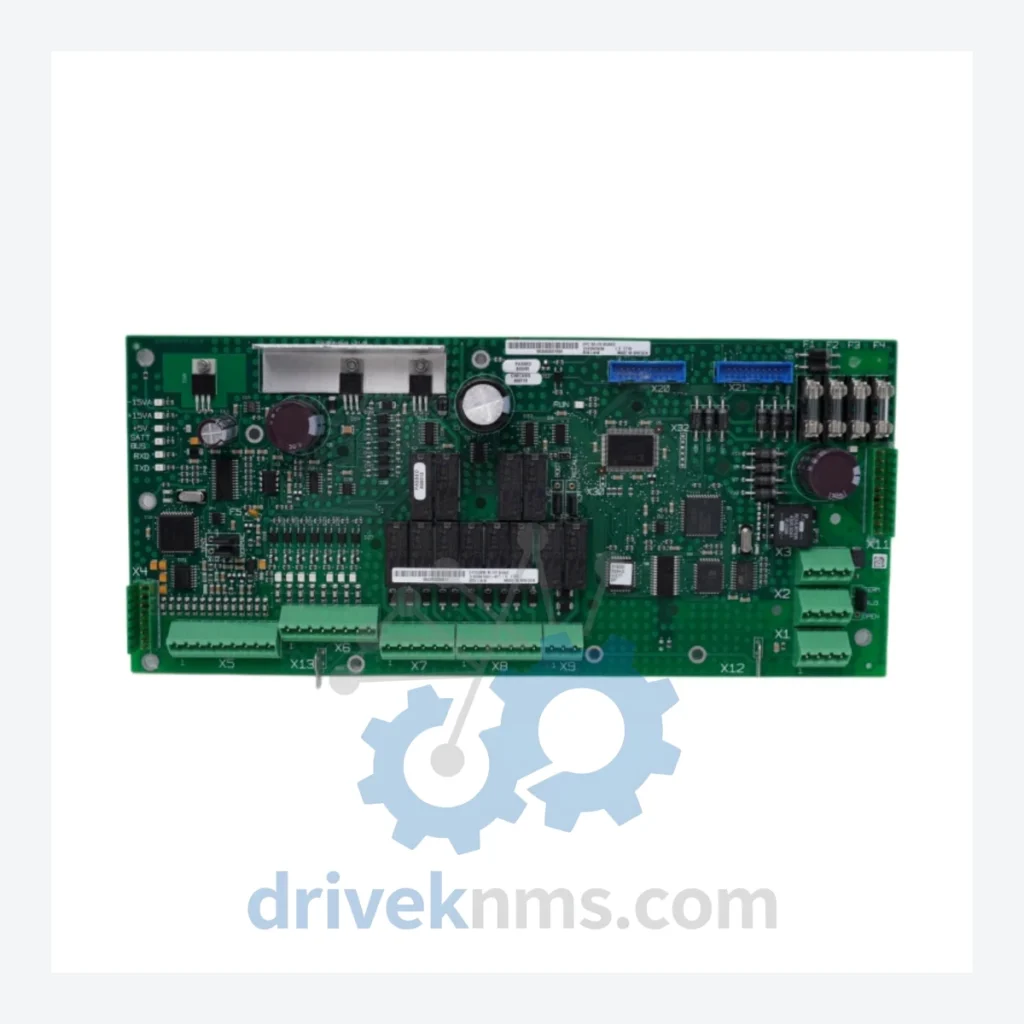
When an I/O board fails inside an Alfa Laval EPC-controlled separation or heat transfer system, the operational clock starts immediately. The EPC50B (P/N 3183045486) is a discontinued I/O interface board that sits at the core of Alfa Laval's legacy EPC automation platform — a platform still running in food & beverage, dairy, pharmaceutical, and marine processing facilities worldwide. Sourcing a replacement through OEM channels is no longer possible. The alternative — a full control system upgrade — routinely costs USD 300,000 to over USD 1,000,000 when engineering, downtime, revalidation, and retraining are factored in. DriveKNMS holds verified physical stock of this board. That stock is finite.
| Parameter | Detail |
|---|---|
| Manufacturer | Alfa Laval |
| Part Number | 3183045486 |
| Model | EPC50B |
| Component Type | I/O Board (Input/Output Interface Board) |
| Series | EPC (Electronic Process Controller) |
| Country of Origin | Sweden |
| OEM Status | Discontinued / Obsolete – No longer manufactured |
| Compatible Systems | Alfa Laval EPC-series control platforms (EPC50, EPC50B variants) |
| Typical Applications | Centrifugal separators, heat exchangers, pasteurization lines, CIP systems |
| Weight (approx.) | 0.8 kg |
Note: Electrical parameters (voltage ratings, I/O channel count, bus interface specifications) are not published here to prevent misapplication. Contact our technical team with your system serial number for compatibility confirmation before ordering.
The Alfa Laval EPC platform was engineered for long-cycle industrial environments. Many installations commissioned in the 1990s and 2000s remain mechanically sound — the separators themselves can run for 30+ years with proper maintenance. The control electronics, however, have reached end-of-life from a parts availability standpoint. The EPC50B I/O board is the communication backbone between field sensors, actuators, and the central processor. Without it, the machine cannot receive process feedback or execute control commands. There is no software patch for a failed board.
Facilities that have not pre-positioned spare boards face a binary choice when failure occurs: accept weeks or months of unplanned downtime while a system integrator scopes a full retrofit, or source the original board from the secondary market. The cost differential between these two paths is not marginal — it is structural. A single week of downtime on a high-throughput dairy separation line can erase more revenue than the entire annual maintenance budget. The EPC50B 3183045486 is not a commodity component. It is an asset protection instrument.
DriveKNMS specializes in the procurement and quality verification of exactly this category of hardware: boards that OEMs no longer support, that distributors no longer stock, and that plant engineers cannot find through standard channels. Our inventory is sourced through controlled decommissioning projects, factory closures, and long-term strategic stockpiling — not from unknown secondary brokers.
For plant managers and maintenance directors operating legacy Alfa Laval EPC systems, the following framework represents the lowest-cost path to sustained operation:
1. Conduct a single-point-of-failure audit. Identify every board and module in your EPC system for which no spare exists on-site. The I/O board is consistently the highest-risk component due to its exposure to vibration, heat cycling, and electrical transients from field wiring.
2. Establish a minimum two-board buffer. One board in active service, one verified spare on the shelf. For facilities running 24/7 operations, a third board held in regional storage is standard practice in pharmaceutical and marine sectors.
3. Prioritize procurement now, not at failure. Secondary market availability for obsolete Alfa Laval EPC components is declining year over year as global installed base shrinks and decommissioning accelerates. Boards available today may not be available in 18 months.
4. Document firmware and configuration baselines. Before any board swap, ensure your current EPC system configuration is fully backed up. This eliminates re-commissioning risk and reduces swap time from days to hours.
5. Calculate the true cost of inaction. A spare EPC50B board costs a fraction of one day's lost production. For any facility processing more than 50,000 liters per day, the ROI on spare board inventory is measured in hours, not years.
This approach has allowed facilities across the food processing, marine, and industrial sectors to defer capital-intensive control system replacements by 5 to 10 years — without compromising process reliability or regulatory compliance.
Every EPC50B 3183045486 board shipped by DriveKNMS passes a structured 5-stage inspection protocol before dispatch:
Stage 1 – Electrolytic Capacitor Assessment: All electrolytic capacitors are inspected for bulging, leakage, and ESR degradation. Capacitors showing any sign of aging are flagged. Boards with compromised capacitors are not sold as functional units.
Stage 2 – Firmware Version Verification: Where accessible, firmware revision is documented and disclosed to the buyer. Mismatched firmware versions between replacement and original boards are a known source of post-swap faults in EPC systems.
Stage 3 – Pin and Connector Inspection: All edge connectors, backplane pins, and field wiring terminals are examined under magnification for oxidation, corrosion, and mechanical deformation. Affected contacts are cleaned using approved methods or the board is rejected.
Stage 4 – Visual PCB Inspection: Full board surface inspection for cracked solder joints, burnt traces, component displacement, and moisture damage indicators.
Stage 5 – Functional Classification: Each board is classified as New Old Stock (NOS), Tested Serviceable, or Refurbished, and labeled accordingly. The classification is disclosed in full on the invoice and packing documentation.
We do not sell boards of unknown condition as functional units. If a board cannot be classified with confidence, it is not offered for sale.
Drop-in replacement compatibility: The EPC50B 3183045486 is a direct hardware replacement for the original board position. No mechanical modification to the control cabinet is required.
No reprogramming required (configuration-dependent): In most EPC50B installations, the system configuration resides in the controller, not the I/O board. Board replacement does not require re-engineering of the control logic. Verify with your system documentation before installation.
Avoids engineering retrofit costs: Replacing a failed I/O board with an original spare eliminates the need for a system integrator engagement, new hardware procurement, software migration, and operator retraining — costs that routinely exceed USD 500,000 for a full EPC system replacement.
Maintains regulatory and process validation status: In pharmaceutical and food-grade environments, a like-for-like hardware replacement preserves existing process validation documentation. A control system upgrade triggers full revalidation — a significant regulatory and financial burden.
Q: What warranty applies to an obsolete board like the EPC50B 3183045486?
A: DriveKNMS provides a 90-day warranty on all boards classified as Tested Serviceable or Refurbished, covering functional failure under normal operating conditions. New Old Stock (NOS) boards carry a 180-day warranty. Warranty terms are confirmed in writing at the time of order.
Q: How do I know the board is genuine Alfa Laval and not a counterfeit?
A: All boards are inspected for OEM markings, PCB revision codes, and component sourcing consistency. We provide photographic documentation of the board prior to shipment upon request. We do not source from unverified brokers or auction platforms.
Q: Should I buy more than one board?
A: For any facility where this board is a single point of failure, holding a minimum of one verified spare on-site is the responsible maintenance position. Given declining secondary market availability, facilities with multiple EPC systems should consider consolidating spare inventory now. We can discuss volume pricing for multi-unit orders.
Q: Can you source other Alfa Laval EPC series components?
A: Yes. DriveKNMS maintains sourcing networks for the broader Alfa Laval EPC platform. Contact us with your full bill of materials for a consolidated availability check.
Q: What is the lead time?
A: In-stock items ship within 2–5 business days after order confirmation and payment. For items requiring sourcing, lead time is quoted individually.
Related Paths
Alfa Laval 3183067861 EPC50BM I/O Board: Securing Supply Continuity for Critical Heat Transfer Operations The Alfa Laval EPC50BM (P/N 3183067861)…
Alfa Laval 3183045486 I/O Board – Obsolete EPC50 Spare Part When an I/O board fails inside an Alfa Laval EPC50…
Alfa Laval HEATPAC Series: Comprehensive Module Range and Technical Overview The Alfa Laval HEATPAC series represents a dedicated line of…