Technical Dossier
Product Details And Specifications
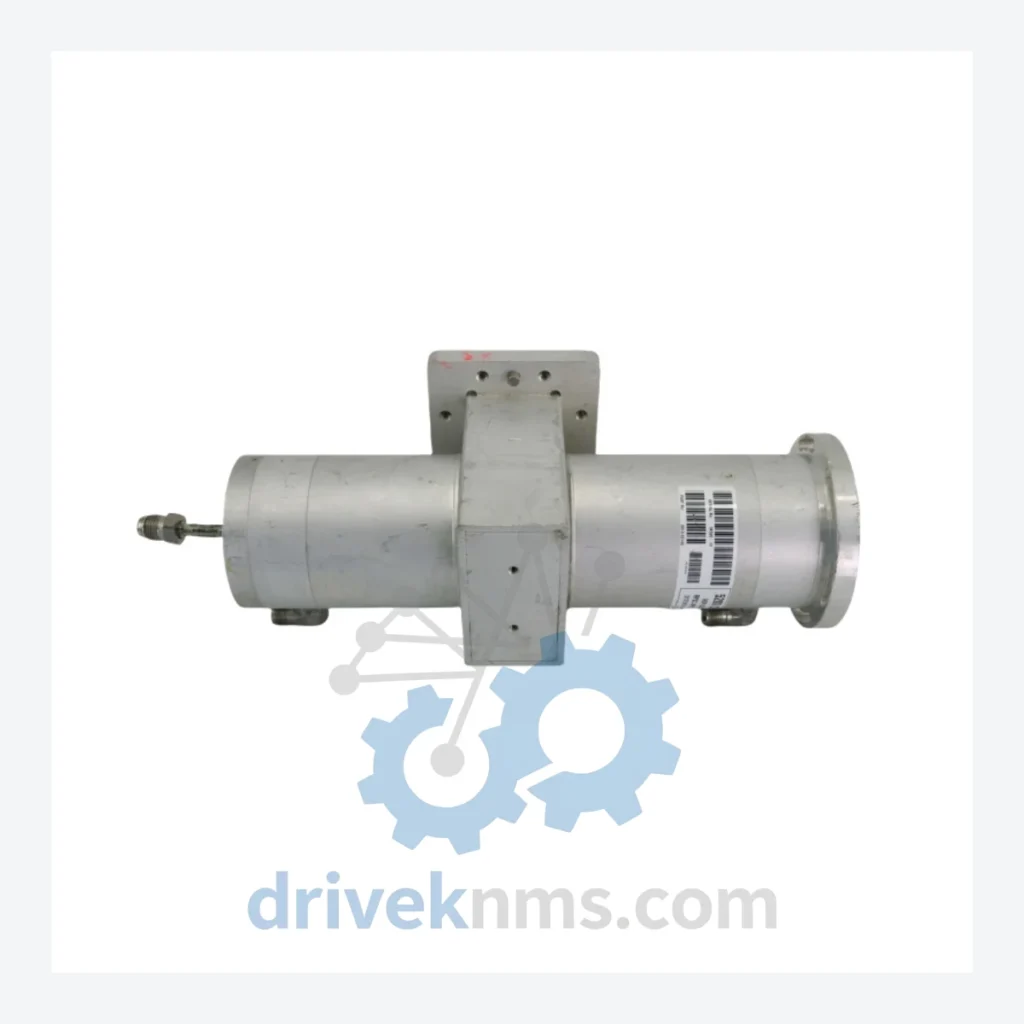
Applied Materials 0020-18542 HDP-CVD RPSC Applicator – Obsolete Semiconductor Spare Part
When an HDP-CVD process chamber goes down due to a failed RPSC Applicator, the clock starts immediately. A single unplanned outage on a 200mm or 300mm wafer fab line can cost between $500,000 and $2,000,000 per day in lost throughput — before factoring in the engineering hours, requalification cycles, and yield loss that follow. If the part is discontinued and no replacement is on hand, the pressure to retire the entire tool and fund a capital equipment upgrade becomes almost impossible to resist. DriveKNMS holds verified stock of the Applied Materials 0020-18542 (cross-reference: 0010-02146, 17-08946-03, 1181-000537-12, 118100053712, MC-31106A) RPSC Applicator for HDP-CVD systems. This is not a commodity item. Securing one unit today is a direct investment in protecting the remaining productive life of your deposition tool.
Technical Specifications
| Field | Detail |
| Manufacturer | Applied Materials (AMAT) |
| Primary Part Number | 0020-18542 |
| Cross-Reference Part Numbers | 0010-02146 / 17-08946-03 / 1181-000537-12 / 118100053712 / MC-31106A |
| Description | RPSC Applicator, Clampless Configuration |
| Application | HDP-CVD (High Density Plasma Chemical Vapor Deposition) Process Chamber |
| Compatible Tool Platform | Applied Materials Centura HDP-CVD, Producer HDP-CVD (verify against your tool BOM) |
| Discontinuation Status | Obsolete – No longer manufactured or supplied through AMAT standard channels |
| Country of Origin | United States |
| Condition Available | New Old Stock (NOS) / Certified Refurbished |
Note: Electrical and dimensional parameters are not published here to prevent misapplication. Confirm compatibility against your tool's Bill of Materials (BOM) before ordering.
Solving the Discontinued Hardware Crisis
Applied Materials HDP-CVD tools have been workhorses of oxide deposition in logic and memory fabs for over two decades. The RPSC (Remote Plasma Source Controller) Applicator is a critical interface component within the chamber assembly. Its function — managing the coupling and delivery of high-density plasma energy to the process gas — is not replicable by a generic substitute. When AMAT discontinued support for this configuration, fabs operating legacy Centura or Producer HDP-CVD platforms were left with a hard choice: source the part on the secondary market, or commit to a tool retirement and the capital expenditure that follows.
The cost of tool retirement is rarely just the price of new equipment. It includes process requalification (typically 3–6 months), new recipe development, operator retraining, and the risk of yield excursions during the transition window. For a fab running 24/7 production, that transition window is never convenient. Facilities managers who have navigated this before understand that a single verified spare part — held in controlled storage — is the lowest-cost insurance policy available against this scenario.
The 0020-18542 RPSC Applicator is one of those parts. Its absence from the supply chain is not a recent development; secondary market availability has been tightening for years. Fabs that secured buffer stock early have continued to run their HDP-CVD tools without interruption. Those that did not are now facing the full cost of that decision.
How to Extend Your HDP-CVD Tool Life by 5–10 Years: A Practical Strategy for Fab Management
The decision to retire a capital tool should be driven by process capability limits, not by parts availability. For fab managers facing pressure to decommission legacy HDP-CVD equipment, the following approach has proven effective in extending productive tool life without large capital commitments:
1. Conduct a Critical Parts Audit. Map every component in your HDP-CVD chamber assembly that is either discontinued or has lead times exceeding 90 days. The RPSC Applicator, chamber liners, gas distribution plates, and RF match components are typically the highest-risk items. Quantify the cost of a single unplanned outage for each.
2. Build a Minimum Buffer Stock. For parts with no active manufacturer support, a minimum of two units per tool is a defensible position. One unit in service, one unit in controlled storage. For high-utilization tools, three units is more appropriate. The carrying cost of this inventory is a fraction of a single day of unplanned downtime.
3. Establish a Preventive Replacement Schedule. Rather than waiting for failure, schedule replacement of high-wear components at defined process-hour intervals. This converts an unpredictable failure event into a planned maintenance window, which can be scheduled during low-demand periods.
4. Qualify a Secondary Market Supplier. AMAT will not supply these parts. A qualified secondary market supplier with documented QA processes, traceability records, and a warranty policy is not a compromise — it is the only viable supply chain for obsolete semiconductor tooling. DriveKNMS operates with full inspection documentation and provides condition reports on request.
5. Document the Business Case for Continued Operation. For every year a legacy HDP-CVD tool remains in qualified production, the capital expenditure for its replacement is deferred. At a replacement cost of $3–8M for a comparable new deposition system, even two additional years of operation represents a significant return on the investment in spare parts management.
Condition & Reliability Assurance
Obsolete parts sourced from the secondary market carry inherent risk if the supplier does not apply rigorous inspection protocols. DriveKNMS applies a 5-step QA process to all HDP-CVD chamber components before shipment:
Step 1 – Visual and Dimensional Inspection: Full surface inspection for mechanical damage, contamination, and dimensional conformance against reference specifications.
Step 2 – Electrolytic Capacitor Assessment: Where applicable, aging electrolytic capacitors are identified and flagged. Components with capacitor assemblies showing ESR drift or physical deformation are quarantined.
Step 3 – Firmware and Revision Verification: For assemblies with embedded firmware or revision-controlled sub-components, the revision level is documented and confirmed against known compatible tool configurations.
Step 4 – Contact and Pin Corrosion Inspection: All electrical connectors, pins, and contact surfaces are inspected under magnification for oxidation, pitting, and corrosion. Affected contacts are cleaned or the unit is rejected.
Step 5 – Functional Documentation and Traceability: Each unit shipped is accompanied by an inspection report. Serial numbers and lot codes are recorded where present. Condition classification (New Old Stock or Certified Refurbished) is clearly stated on all documentation.
Key Features for System Maintenance
The 0020-18542 RPSC Applicator is a direct, drop-in replacement for the original AMAT-supplied component. Installation does not require process recipe modification, chamber requalification, or software changes in standard configurations. This is a critical distinction from alternative approaches such as chamber redesign or platform migration, which carry engineering costs measured in months and hundreds of thousands of dollars.
Facilities that have installed secondary market RPSC Applicators sourced through qualified suppliers have reported no measurable difference in process performance compared to OEM-supplied units, provided the part is in verified condition. The clampless configuration (as specified in this part number) must be confirmed against the chamber assembly drawing before installation — do not substitute a clamped variant without engineering review.
FAQ
Q: What warranty applies to an obsolete part like this?
A: DriveKNMS provides a 90-day warranty against defects in material and workmanship on all certified refurbished units. New Old Stock units are sold with a 30-day inspection warranty. Warranty terms are confirmed in writing prior to shipment.
Q: How do I know the part is genuine and not a counterfeit?
A: All units are inspected for OEM markings, part number conformance, and physical characteristics consistent with genuine AMAT components. Inspection documentation is provided with each shipment. We do not source from unverified channels.
Q: Should I buy more than one unit?
A: For any HDP-CVD tool in active production, holding at least one spare RPSC Applicator is a minimum prudent position. Given the tightening secondary market availability of this specific part number, purchasing two units now — if budget allows — eliminates the sourcing risk entirely for the foreseeable operational life of the tool.
Q: Can you provide a certificate of conformance?
A: Yes. A certificate of conformance and inspection report are available upon request and are standard documentation for all shipments to semiconductor facilities.
Status: DRAFT