
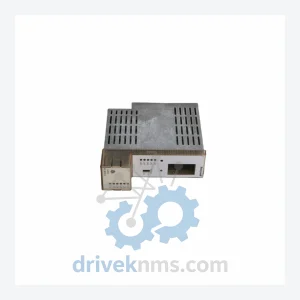
Honeywell XC Series Modules | XC5010C CPU Module
Honeywell XC Series: Comprehensive Module Range and Technical Overview The Honeywell XC Series represents a core control platform deployed across…
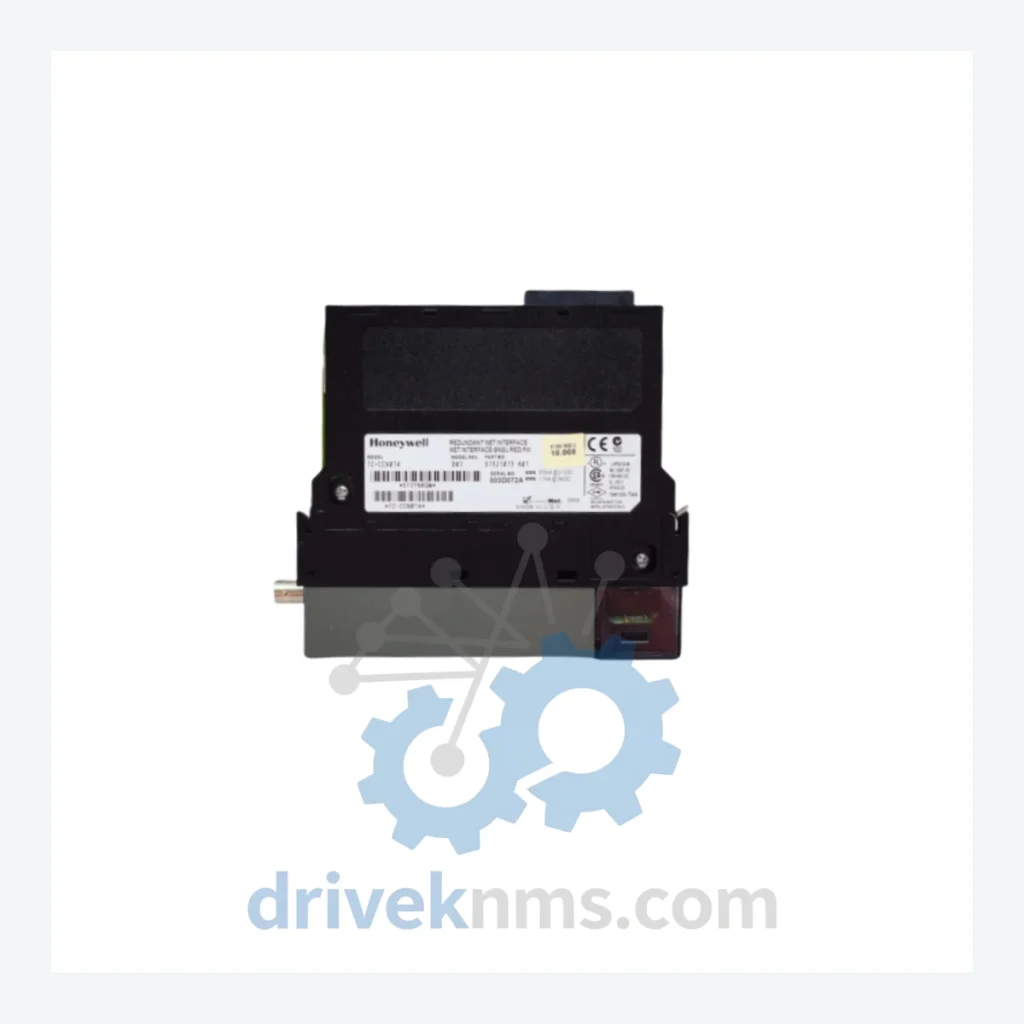
Model: TK-CCR014
Product Overview
Commercial availability is handled through direct RFQ, model verification and export-oriented follow-up rather than public cart checkout.
Datasheet Preview
Use attached product manuals when available. If the manual is not public yet, request the full file directly through RFQ.
Commercial Path
Product pages on DRIVEKNMS are designed to verify model, brand and series first, then move the buyer into one clean quotation path.
Technical Dossier
When a Redundant Net Interface Module fails inside a Honeywell TotalPlant Solution (TPS) or TDC 3000 distributed control system, the consequences extend far beyond a single module replacement. The TK-CCR014 is the communication backbone that maintains redundant network integrity across the Universal Control Network (UCN). Its failure can cascade into full process shutdown, unplanned downtime, and — in the worst-case scenario — a forced migration to a modern DCS platform. Conservative estimates place a full TPS-to-Experion migration at USD $2–8 million per unit, excluding engineering, revalidation, and lost production costs. A single TK-CCR014 sourced from DriveKNMS inventory can defer that capital expenditure by years.
DriveKNMS maintains verified stock of this discontinued module for facilities that have made the deliberate decision to extend the operational life of their legacy Honeywell infrastructure rather than absorb the cost and risk of premature system retirement.
| Parameter | Detail |
|---|---|
| Part Number | TK-CCR014 |
| Manufacturer | Honeywell Process Solutions |
| Product Series | TotalPlant Solution (TPS) / TDC 3000 |
| Module Function | Redundant Net Interface Module (UCN) |
| Compatible Network | Universal Control Network (UCN) |
| Compatible Systems | Honeywell TDC 3000, TPS, HPM, APM, LCN-based architectures |
| Discontinuation Status | Officially discontinued by Honeywell; no longer manufactured or supported under standard service contracts |
| Country of Origin | United States |
| Condition Available | New surplus / Professionally refurbished (see QA section) |
Note: Electrical parameters not independently verified by DriveKNMS are intentionally omitted. All specifications above are sourced from publicly available Honeywell documentation. Do not rely on third-party parameter claims for safety-critical installations without cross-referencing the original Honeywell engineering drawings.
The Honeywell TDC 3000 and TPS platforms represent decades of process control investment. Many facilities running these systems have accumulated deep institutional knowledge — tuned control strategies, validated alarm structures, and operator familiarity — that cannot be transferred to a new DCS without significant re-engineering effort. The TK-CCR014 sits at the center of this infrastructure: it manages the redundant communication path across the UCN, ensuring that a single network fault does not interrupt process visibility or control authority.
Honeywell formally discontinued the TDC 3000 hardware line, and the TK-CCR014 is no longer available through authorized distribution channels. Facilities that have not pre-positioned spare inventory face a binary choice when this module fails: source it from the secondary market or initiate an emergency system migration under the worst possible conditions — during an unplanned outage, under production pressure, with no budget approval in place.
The secondary market window for TK-CCR014 units is narrowing. As installed base units age and are decommissioned, the pool of recoverable, testable modules shrinks. Facilities that act now to secure one or two spare units are purchasing operational insurance at a fraction of the cost of the alternative.
Asset Life Extension Strategy — Practical Guidance for Plant Management:
This approach has allowed facilities in the petrochemical, power generation, and specialty chemical sectors to extend TPS/TDC 3000 operational life by 5–10 years beyond the original OEM end-of-support date, deferring capital expenditure while maintaining process safety and regulatory compliance.
DriveKNMS applies a structured 5-step qualification process to all discontinued modules before they are offered for sale. This process is designed specifically for legacy hardware where age-related degradation — not just functional failure — is the primary risk.
Q: What warranty applies to a discontinued TK-CCR014?
A: DriveKNMS provides a 90-day warranty covering functional defects on all qualified refurbished units. New surplus units carry a 12-month warranty. Warranty terms are confirmed in writing prior to order confirmation.
Q: How do I know the unit is genuine and not counterfeit?
A: All units sourced by DriveKNMS are traceable to decommissioned Honeywell TPS/TDC 3000 installations or verified surplus inventory. We do not source from unverified brokers. Serial numbers and label integrity are checked as part of the intake process. Buyers are encouraged to request photos of the specific unit prior to purchase.
Q: Should I buy more than one unit?
A: For any facility where the TK-CCR014 is a single point of failure in an active production system, holding at least one cold spare is a minimum prudent standard. Facilities with multiple UCN segments or extended planned operational life should consider holding two units. The secondary market supply of this module is finite and declining.
Q: Can you reserve stock for future delivery?
A: Yes. DriveKNMS can hold allocated units against a confirmed purchase order for staged delivery. Contact us to discuss terms.
Q: What information should I provide when inquiring?
A: Please provide your current firmware revision if known, the number of units required, and your target delivery timeline. This allows us to match available stock to your specific system requirements.
For availability confirmation, technical pre-sales questions, or to place a reservation on current stock:
Related Paths
Honeywell XC Series: Comprehensive Module Range and Technical Overview The Honeywell XC Series represents a core control platform deployed across…
Honeywell MP-DNCF02-200 Single-Phase Power Controller – Obsolete Limitrol Series Spare Part When a single-phase power controller fails inside a legacy…
Honeywell XDL Series: Comprehensive Module Range and Technical Overview The Honeywell XDL series is a core component family within the…