Technical Dossier
Product Details And Specifications
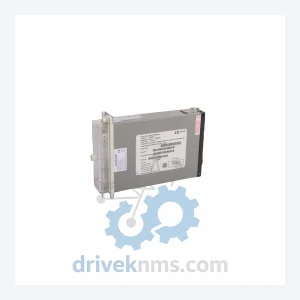
Olympus OLS-ILW DV525301 AQ8967 White LED Unit – Obsolete Endoscopy Illumination Spare Part
When the illumination module in an Olympus endoscopy or industrial imaging system fails, the consequences extend far beyond a single component replacement. A full system upgrade — new processor, new scope tower, new integration — routinely runs into hundreds of thousands of dollars, with additional costs for staff retraining, workflow disruption, and regulatory re-validation in clinical environments. The Olympus OLS-ILW White LED Unit (DV525301 / AQ8967, paired board DV525402 / AQ8970) is the core light source assembly that drives image quality in legacy Olympus imaging platforms. Once this unit is discontinued, the only alternative to sourcing a genuine replacement is a capital expenditure your budget may not support.
DriveKNMS maintains verified stock of this obsolete assembly. This is not a listing for a substitute or a workaround — it is the original Olympus OLS-ILW White LED Unit, sourced through authorized secondary channels and subject to our multi-stage inspection protocol before shipment.
Technical Specifications
| Parameter | Detail |
| Brand | Olympus |
| Part Number (Primary) | DV525301 / AQ8967 |
| Part Number (Secondary) | DV525402 / AQ8970 |
| Assembly Designation | OLS-ILW |
| Component Type | White LED Illumination Unit |
| Application | Olympus Endoscopy / Industrial Imaging Systems |
| Country of Origin | Japan |
| Discontinuation Status | Confirmed Obsolete – No longer manufactured or supplied by Olympus |
| Condition Available | New Old Stock (NOS) / Professionally Refurbished |
Note: Electrical parameters (voltage, current draw, luminous flux) are system-specific and vary by host platform configuration. DriveKNMS does not publish unverified electrical data. Contact us with your system model for compatibility confirmation.
Solving the Discontinued Hardware Crisis
Olympus endoscopy and imaging platforms built around the OLS-ILW illumination architecture represent a generation of equipment that remains clinically and industrially functional — but is increasingly orphaned by the manufacturer's parts supply chain. Hospitals, surgical centers, and industrial inspection facilities that invested in these systems face a hard reality: the equipment performs its function reliably, but a single failed illumination module can ground an entire imaging tower.
The OLS-ILW White LED Unit is not a peripheral accessory. It is the primary light source for the imaging chain. Without it, the system cannot operate. Olympus no longer manufactures this assembly, and authorized service channels have exhausted their stock. The secondary market — specifically, suppliers with documented sourcing histories and inspection capabilities — is now the only viable path to keeping these systems operational.
Facilities that have extended the service life of their Olympus imaging platforms by 5 to 10 years beyond the manufacturer's intended lifecycle have done so through a deliberate spare parts strategy: identifying the highest-failure-risk components, securing verified stock before demand spikes, and establishing a relationship with a reliable secondary-market supplier. The OLS-ILW LED unit sits at the top of that risk list. A single unit in reserve eliminates the most likely cause of unplanned system downtime.
The cost comparison is straightforward. A replacement OLS-ILW unit from DriveKNMS is a fraction of the cost of a new imaging system. For facilities operating under capital expenditure constraints — which describes most hospital procurement environments today — this is not a marginal decision. It is the difference between a functioning department and a multi-year procurement cycle.
Condition & Reliability Assurance
Every OLS-ILW White LED Unit shipped by DriveKNMS passes a five-stage inspection process designed specifically for obsolete electro-optical assemblies:
- Stage 1 – Visual and Mechanical Inspection: Full examination of housing integrity, connector condition, and pin alignment. Any unit with physical damage to the LED array housing or connector interface is rejected at this stage.
- Stage 2 – Electrolytic Capacitor Assessment: Aged LED driver boards are susceptible to capacitor degradation. We inspect all electrolytic capacitors for bulging, leakage, and ESR deviation. Units with compromised capacitors are either recapped with equivalent-spec components or rejected.
- Stage 3 – Firmware and Board Version Verification: Where applicable, board revision and firmware version are documented and matched against known-compatible system configurations. This prevents installation of a unit that is electrically functional but incompatible with the host system's control logic.
- Stage 4 – Pin and Contact Corrosion Check: Connector pins are inspected under magnification for oxidation, corrosion, and mechanical deformation. Affected contacts are treated or the unit is rejected.
- Stage 5 – Functional Verification: Units are powered and tested for LED output stability and driver circuit response before packaging.
Units that pass all five stages are packaged in anti-static, moisture-barrier packaging with a condition report included in the shipment.
Key Features for System Maintenance
- Drop-in Replacement: The OLS-ILW is a direct physical and electrical replacement for the original assembly. No mechanical modification to the host system is required.
- No Reprogramming Required: The unit interfaces with the host system's existing control architecture. There is no firmware flashing, parameter reconfiguration, or software update required on the host side.
- Avoids Engineering Rework Costs: Substituting a non-OEM illumination solution in a validated imaging system typically requires engineering assessment, compatibility testing, and in clinical environments, re-validation. A genuine OLS-ILW replacement eliminates all of that overhead.
- Extends Asset Service Life: Replacing a failed illumination module restores full system functionality. Combined with a proactive spare parts inventory, facilities have documented 7–10 year extensions of imaging system service life without capital replacement.
- Supports Regulatory Continuity: In clinical environments, maintaining the original hardware configuration supports existing device registration and compliance documentation. Introducing non-OEM components can trigger re-evaluation requirements.
FAQ
Q: What warranty applies to an obsolete part like the OLS-ILW?
A: DriveKNMS provides a 90-day warranty covering defects identified under normal operating conditions. Given the obsolete status of this part, we recommend purchasing a minimum of two units if your facility operates multiple systems or cannot tolerate extended downtime.
Q: How do I confirm this is a genuine Olympus unit and not a counterfeit?
A: All units are sourced with documented chain-of-custody records. Part markings, board revision codes, and physical construction are verified against reference units. We do not source from anonymous brokers. Sourcing documentation is available upon request for qualified buyers.
Q: Should we stock multiple units as a long-term reserve?
A: Yes. For facilities with more than one Olympus imaging system using this platform, holding two to three units in reserve is standard practice. LED assemblies in continuous-use environments have a finite service life, and secondary-market availability of this specific part will decrease over time as existing stock is consumed. Purchasing reserve units now, while verified stock is available, is the lower-risk position.
Q: Can this unit be used across different Olympus system models?
A: Compatibility depends on the specific host system configuration. Contact DriveKNMS with your system model number before ordering if you are uncertain about compatibility.
© 2026 DriveKNMS. Status: DRAFT