
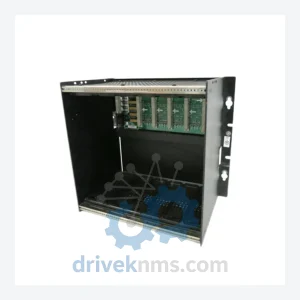
GE IC697CHS750 5-Slot Rack Rear Mount – Obsolete Series 90-70 Spare Part
GE IC697CHS750 5-Slot Rack Rear Mount – Obsolete Series 90-70 Spare Part When a GE Series 90-70 rack fails, the…
Model: 0021-42136 0040-82246 CPU80 IC697CPU780E
Product Overview
Commercial availability is handled through direct RFQ, model verification and export-oriented follow-up rather than public cart checkout.
Datasheet Preview
Use attached product manuals when available. If the manual is not public yet, request the full file directly through RFQ.
Commercial Path
Product pages on DRIVEKNMS are designed to verify model, brand and series first, then move the buyer into one clean quotation path.
Technical Dossier
A single failed CPU module in a 300mm wafer fab line does not produce a repair bill — it produces a shutdown. For facilities running Applied Materials process equipment integrated with GE Fanuc Series 90-70 PLC architecture, the 0021-42136 / IC697CPU780E CPU80 module is the control core of a system that was never designed to be replaced piecemeal. OEM support for this hardware has ended. New production has ceased. When this module fails, the choice is binary: locate a verified spare, or face a forced migration to a modern control platform — a project that routinely costs seven figures and takes 12 to 24 months to validate in a regulated semiconductor environment.
DriveKNMS maintains verified inventory of this module. This is not a listing built on speculation. If stock is shown, it is physically on hand and has passed our incoming inspection protocol.
| Field | Detail |
|---|---|
| Applied Materials P/N | 0021-42136 / 0040-82246 |
| GE Fanuc P/N | IC697CPU780E |
| Module Designation | CPU80 |
| Platform | GE Fanuc Series 90-70 PLC |
| Application Context | Applied Materials 300mm Wafer Fab Equipment (XTRA Row Extending Flow) |
| OEM Production Status | Discontinued – No longer manufactured |
| OEM Support Status | End of Life (EOL) |
| Country of Origin | United States |
| Condition Available | New surplus / Professionally refurbished |
Note: Electrical parameters such as backplane voltage, memory capacity, and scan time are not published here to avoid inaccuracy. Confirmed specifications are provided upon request with supporting documentation.
The GE Fanuc Series 90-70 platform was a dominant force in heavy industrial and semiconductor automation through the 1990s and 2000s. Applied Materials integrated it deeply into their 300mm process tool architecture — not as a peripheral, but as the primary execution engine for recipe management, interlock logic, and equipment front-end module (EFEM) coordination.
When GE Fanuc (later GE Intelligent Platforms, now Emerson) discontinued the Series 90-70 line, it did not eliminate the installed base. Thousands of these systems remain in production globally, particularly in legacy fabs that have deferred capital expenditure on control system upgrades. The IC697CPU780E is not a commodity item that can be substituted with a modern equivalent without engineering effort. Its rack-based backplane architecture, proprietary ladder logic execution environment, and tight integration with Applied Materials' tool software mean that any replacement requires full revalidation — a process that in a semiconductor context involves process qualification, equipment qualification (EQ), and in many cases, customer notification under SEMI standards.
The practical implication: a facility that loses this CPU module without a spare on hand faces a minimum of several weeks of downtime while sourcing options are evaluated, and potentially months if a migration path is chosen. At 300mm wafer fab utilization rates, the cost of unplanned downtime on a single process tool can exceed the value of maintaining a multi-year spare parts inventory by an order of magnitude.
Maintaining one or two verified spare CPU modules is not a luxury. It is the lowest-cost insurance policy available to a facility still operating this equipment.
For plant managers and maintenance engineers facing pressure to retire aging PLC-based control systems, the following framework has been applied successfully across semiconductor, chemical, and discrete manufacturing environments to defer costly migrations while maintaining production reliability.
1. Conduct a Critical Spares Audit. Map every module in your Series 90-70 rack — CPU, power supply, I/O modules, communications processors. Cross-reference each against current market availability. Modules with no available stock represent your highest risk. Prioritize procurement accordingly.
2. Establish a Minimum Viable Spare Set. For a CPU module like the IC697CPU780E, a minimum of one cold spare per tool family is a defensible position. For high-utilization tools or tools with no redundancy, two spares per site is the standard recommendation in semiconductor maintenance practice.
3. Implement Scheduled Preventive Inspection. Electrolytic capacitors in modules manufactured in the 1990s and early 2000s are approaching or have exceeded their rated service life. A scheduled inspection cycle — typically every 18 to 24 months — that includes visual inspection for capacitor bulging, PCB discoloration, and connector oxidation can identify modules at risk before they fail in service.
4. Maintain Firmware Version Control. Document the exact firmware revision running on each CPU module. When sourcing replacement units, verify firmware compatibility before installation. Mismatched firmware versions in Series 90-70 systems can cause subtle behavioral differences that are difficult to diagnose under production pressure.
5. Negotiate Long-Term Supply Agreements. Distributors with verified inventory of obsolete parts can often structure multi-year supply agreements that lock in pricing and reserve stock. This is particularly relevant for modules where global inventory is measured in dozens of units rather than thousands.
Executed consistently, this approach has allowed facilities to operate legacy control systems reliably for 5 to 10 years beyond the point at which migration would otherwise have been forced — at a fraction of the capital cost of a control system upgrade.
Sourcing obsolete hardware from the secondary market carries real risk. DriveKNMS applies a five-step incoming inspection protocol to every CPU module before it is offered for sale.
Step 1 – Visual and Mechanical Inspection. Full board inspection under magnification. We check for physical damage, PCB delamination, burnt components, and evidence of prior repair attempts.
Step 2 – Electrolytic Capacitor Assessment. Capacitor aging is the primary failure mode in modules of this vintage. We inspect for bulging, electrolyte leakage, and elevated ESR where test equipment permits.
Step 3 – Connector and Pin Inspection. Backplane connectors and I/O terminal areas are inspected for oxidation, bent pins, and contamination. Corroded contacts are the second most common cause of intermittent faults in legacy rack-based systems.
Step 4 – Firmware Version Verification. Where accessible, firmware revision is documented and disclosed to the buyer prior to shipment.
Step 5 – Functional Verification. Where test bench capability exists for this module family, power-on and basic functional checks are performed. Test results are documented and available upon request.
Units that do not pass all applicable steps are not offered for sale. Condition grade (new surplus, tested refurbished) is disclosed on each order confirmation.
Drop-in replacement compatibility. The IC697CPU780E installs directly into the existing Series 90-70 rack without mechanical modification. No new rack, no new backplane, no rewiring.
No reprogramming required. Provided the replacement unit carries a compatible firmware revision, existing ladder logic programs stored in the system are retained. There is no requirement to reload or revalidate application software in most standard replacement scenarios — though site-specific validation procedures should always be followed.
Avoids engineering reconstruction costs. A control system migration for a 300mm process tool involves not just hardware, but software porting, I/O remapping, HMI reconfiguration, and process requalification. Replacing a failed CPU module with a verified spare eliminates all of that cost for the duration of the spare's service life.
Supports phased migration planning. Maintaining operational continuity with spare parts buys engineering teams the time to plan and execute a migration on a scheduled basis — rather than under emergency conditions with production pressure.
What warranty is provided on this module?
DriveKNMS provides a 90-day warranty against defects on tested and refurbished units. New surplus units are sold as-is with inspection documentation. Extended warranty arrangements can be discussed for volume orders.
How do I confirm the unit is genuine and not counterfeit?
All units are sourced through traceable supply channels. We provide documentation of origin where available, and our inspection process includes verification of manufacturer markings and board revision codes. We do not knowingly sell remarked or counterfeit components.
Should I buy more than one spare?
For a module in this obsolescence category, yes. Global secondary market inventory is finite and decreasing. If your facility operates multiple tools using this CPU, purchasing two to three spares now is a lower-cost decision than sourcing under emergency conditions 18 months from now.
Can you source other Series 90-70 modules?
Yes. DriveKNMS specializes in obsolete and hard-to-find industrial automation components. Contact us with your full BOM and we will advise on availability.
What is the lead time?
In-stock units ship within 2 to 5 business days after order confirmation and payment. Lead time for sourced units varies and will be confirmed before order placement.
© 2026 DriveKNMS. (Status: DRAFT)
Related Paths
GE IC697CHS750 5-Slot Rack Rear Mount – Obsolete Series 90-70 Spare Part When a GE Series 90-70 rack fails, the…
GE IC697BEM733 Genius Remote I/O Scanner: Securing Your Series 90-70 Supply Chain in a Discontinued-Parts Market The GE IC697BEM733 is…
GE IC697CPU772 CPU Module – Obsolete Series 90-70 Spare Part When a GE Series 90-70 CPU module fails, the consequences…