
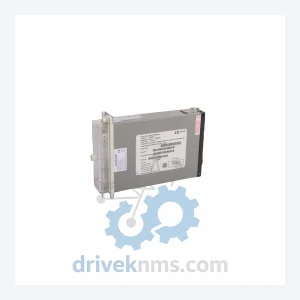
ALSTOM MVAJ105RA0802A Protection Relay – MiCOM Series
ALSTOM MVAJ105RA0802A Protection Relay: Supply Continuity Strategy for a Discontinued Critical Component The ALSTOM MVAJ105RA0802A is a numerical protection relay…
Model: MWTX-8-MNET PIO 810-800056-010 0100-00548
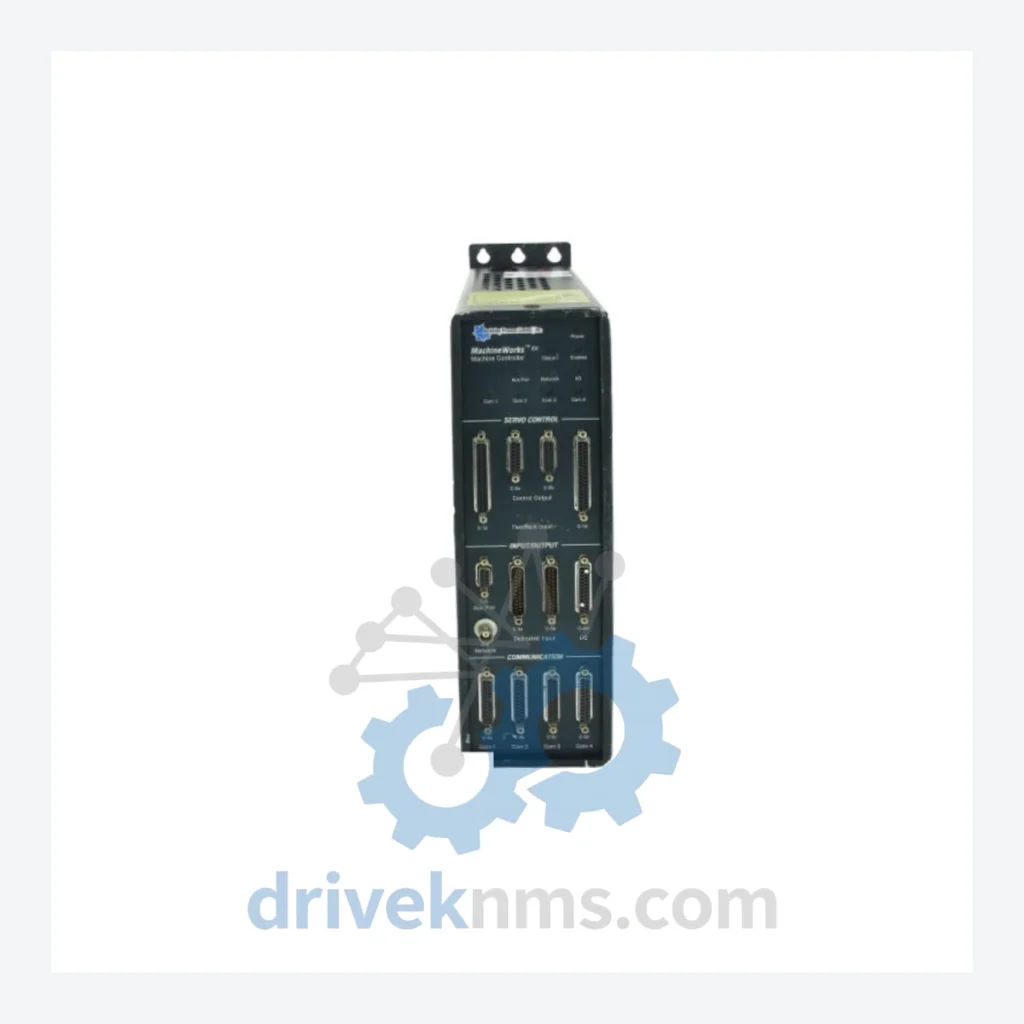
Product Overview
Commercial availability is handled through direct RFQ, model verification and export-oriented follow-up rather than public cart checkout.
Datasheet Preview
Use attached product manuals when available. If the manual is not public yet, request the full file directly through RFQ.
Commercial Path
Product pages on DRIVEKNMS are designed to verify model, brand and series first, then move the buyer into one clean quotation path.
Technical Dossier
When a machine controller at the core of your production line fails, the clock starts immediately. For facilities still operating legacy Berkeley MWTX-series platforms, the discontinuation of this hardware creates a procurement crisis that most maintenance teams are not prepared for. A forced migration away from a Berkeley MWTX-8-MNET-based control architecture — including new PLC hardware, rewiring, software re-engineering, operator retraining, and production downtime — routinely costs manufacturers between $500,000 and several million dollars per line. Against that exposure, a verified spare controller is not a line item. It is an insurance policy.
DriveKNMS maintains a carefully sourced inventory of discontinued industrial control hardware. The Berkeley MWTX-8-MNET PIO (P/N: 810-800056-010, Ref: 0100-00548) is one of the most difficult-to-locate components in the legacy Berkeley MWTX ecosystem. If you are reading this, you already understand the urgency.
| Attribute | Detail |
|---|---|
| Brand | Berkeley Controls |
| Model / SKU | MWTX-8-MNET PIO |
| Part Number | 810-800056-010 |
| Reference Number | 0100-00548 |
| Series | MWTX (MegaNet Machine Controller Series) |
| Interface | MNET (MegaNet Fieldbus) |
| I/O Type | PIO (Parallel I/O) |
| Product Status | Discontinued / Obsolete – No longer manufactured |
| Country of Origin | United States |
| Typical Application | CNC machine tool control, legacy automated manufacturing lines |
Note: Electrical parameters (voltage ratings, current draw, backplane specifications) for this specific part number are not publicly documented. DriveKNMS will provide verified datasheet references upon inquiry. No parameters are assumed or fabricated.
The Berkeley MWTX-8-MNET was designed for integration into multi-axis CNC and automated assembly environments where MegaNet fieldbus communication was the backbone of machine-to-controller data exchange. Facilities that built production infrastructure around this architecture in the 1990s and early 2000s face a specific and well-documented problem: the control logic, HMI interfaces, and machine-level programming are deeply tied to the Berkeley MWTX command set. There is no plug-and-play modern equivalent.
Replacing this controller is not a hardware swap. It is a system redesign. Engineering hours, integration testing, safety re-certification, and production loss during transition represent costs that dwarf the price of maintaining a spare parts inventory. Plant managers who have navigated this situation consistently report the same conclusion: sourcing verified spare MWTX controllers — even at premium cost — is the rational financial decision when weighed against forced modernization on an emergency timeline.
The MWTX-8-MNET's MegaNet interface also means that peripheral devices — drives, I/O modules, operator panels — are all communicating on a protocol that modern controllers do not natively support. Replacing the controller without replacing the entire communication infrastructure is not feasible. This is precisely why a single working spare unit can extend an entire production line's operational life by five to ten years, deferring a capital expenditure that most facilities are not budgeted to absorb.
DriveKNMS applies a structured 5-step inspection protocol to all discontinued controller hardware before it is offered for sale. For legacy units like the MWTX-8-MNET, age-related failure modes are predictable and must be systematically addressed:
For facilities operating legacy Berkeley MWTX-based systems, the question is not whether the controller will eventually fail — it is whether the failure will occur on your terms or the machine's. The following framework is used by maintenance teams that have successfully extended legacy automation asset life by 5–10 years:
1. Identify single points of failure. The machine controller is typically the highest-risk single point of failure in a MWTX-based system. It is non-redundant, non-repairable in the field, and has no modern equivalent. It should be the first component for which a spare is secured.
2. Establish a minimum spare parts inventory. A conservative strategy holds one verified spare controller per production line. A more robust strategy holds two — one for immediate swap, one as a long-term reserve. Given the scarcity of MWTX-8-MNET units on the secondary market, waiting until failure to source a replacement is a high-risk approach.
3. Document firmware and configuration baselines. Before any failure occurs, the current firmware version and all machine parameters should be backed up and stored off-machine. This eliminates the most common source of delay during a controller replacement event.
4. Schedule proactive inspections. Controllers in this age range should be inspected annually for the failure modes described above. Early detection of capacitor degradation or connector corrosion allows planned maintenance rather than emergency response.
5. Evaluate total cost of ownership honestly. The cost of a verified spare MWTX-8-MNET controller, measured against the cost of a single unplanned production stoppage, is not a difficult calculation. Facilities that treat spare parts procurement as a capital protection strategy — rather than a maintenance expense — consistently achieve better uptime and lower total cost of ownership over the asset lifecycle.
Q: What warranty is provided on discontinued parts?
A: DriveKNMS provides a 90-day warranty on all tested and inspected units, covering functional defects identified under normal operating conditions. Warranty terms for specific units are confirmed at the time of sale.
Q: How do I know the unit is genuine and not a counterfeit?
A: All units are sourced through verified industrial surplus and decommissioning channels. Physical markings, board revisions, and serial number formats are cross-checked against known authentic units. We do not source from unverified brokers.
Q: Are units new or refurbished?
A: Units are offered as new-old-stock (NOS) where available, or as inspected and reconditioned surplus. Condition is clearly stated for each unit at the time of inquiry. We do not misrepresent condition.
Q: Can I order multiple units for long-term inventory?
A: Yes. Given the scarcity of MWTX-8-MNET units, customers managing multiple lines or planning long-term asset protection are encouraged to inquire about quantity availability. Stock is not guaranteed to remain available.
Q: What if my specific firmware version is required?
A: Firmware version is documented for each unit. If your installation requires a specific firmware revision for compatibility, please specify this at the time of inquiry so we can match accordingly.
© 2026 DriveKNMS. Status: DRAFT
Related Paths
ALSTOM MVAJ105RA0802A Protection Relay: Supply Continuity Strategy for a Discontinued Critical Component The ALSTOM MVAJ105RA0802A is a numerical protection relay…
MOORE 16137 Series: Comprehensive Module Range and Technical Overview The MOORE 16137 Series represents a core component family within Moore…
Yaskawa YPHT11014-1A Circuit Board – Obsolete Drive Control Spare Part When a Yaskawa YPHT11014-1A circuit board fails in a production…