
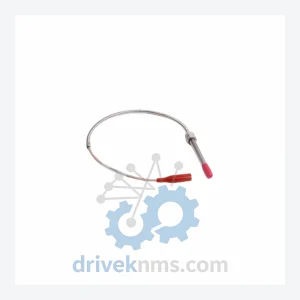
PROVIBTECH TM0180-A08-B00-C10-D05 Extension Cable – Vibration Sensor Series
PROVIBTECH TM0180-A08-B00-C10-D05 Extension Cable: Sourcing Strategy & Asset Return Value in a Constrained Supply Environment The PROVIBTECH TM0180-A08-B00-C10-D05 is a…
Model: PT2060/43
Product Overview
Commercial availability is handled through direct RFQ, model verification and export-oriented follow-up rather than public cart checkout.
Datasheet Preview
Use attached product manuals when available. If the manual is not public yet, request the full file directly through RFQ.
Commercial Path
Product pages on DRIVEKNMS are designed to verify model, brand and series first, then move the buyer into one clean quotation path.
Technical Dossier
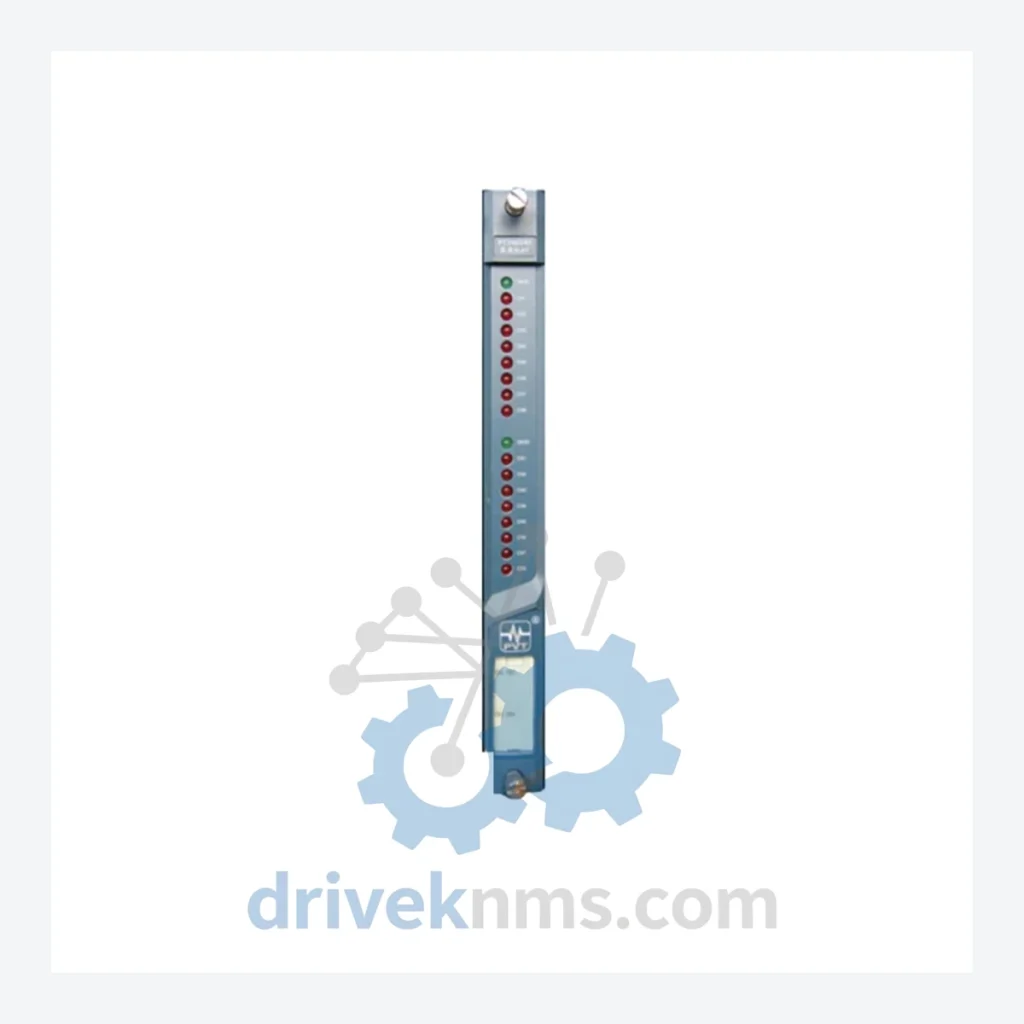
The ProvibTech R-RELAY series represents a dedicated line of redundant relay output modules engineered for safety-critical machinery protection systems in global heavy industry. Deployed extensively in petrochemical complexes, offshore platforms, nuclear power stations, and refinery turbomachinery trains, the R-RELAY architecture provides the final hardwired output layer between a vibration monitoring system and plant shutdown actuators. The PT2060/43 is the primary catalog reference for this redundant relay output card, designed to interface directly with ProvibTech's PT2060 rack-based monitoring chassis. Its dual-channel redundant relay configuration ensures that a single component failure does not compromise the protective function — a mandatory requirement under IEC 61511 and API 670 standards governing machinery protection in process industries. Installations of this module are documented across LNG liquefaction trains in the Middle East, steam turbine protection panels in Southeast Asian power utilities, and compressor monitoring racks in North American upstream oil and gas facilities.
ProvibTech's relay output modules trace their lineage to the early rack-based vibration monitoring platforms of the 1990s, where single-relay output cards were the industry norm. The introduction of the R-RELAY designation marked a deliberate architectural shift toward redundant output topologies, driven by increasingly stringent SIL (Safety Integrity Level) requirements from end users in the refining and power generation sectors.
Early PT2060-series relay cards operated as single-output devices with manual reset functions. The transition to the PT2060/43 redundant relay form factor introduced dual independent relay coils on a single module footprint, allowing the protection system to maintain output integrity even under partial hardware failure. This design aligns with the IEC 61508 SIL 2 architectural constraints for low-demand mode safety functions.
Compatibility considerations are significant for maintenance engineers: the PT2060/43 is backplane-compatible with the PT2060 19-inch rack chassis but is not interchangeable with earlier single-relay variants without firmware and configuration review. Integration with SCADA and DCS platforms (Honeywell, Yokogawa, Emerson DeltaV) is achieved via hardwired relay contacts rather than fieldbus, preserving independence from the control network — a deliberate design choice for safety layer separation.
As the PT2060 platform has entered its mature/end-of-active-production phase, long-term maintenance support and spare parts availability have become the primary procurement concern for asset owners with 15–25 year plant lifecycles.
The following SKUs represent the verified catalog of ProvibTech PT2060-series modules, including relay output, I/O, power, and communication types. Each entry reflects a distinct hardware function within the rack architecture:
PT2060/43: Redundant relay output module, dual-coil, rack-mount, API 670 compliant
PT2060/41: Single-channel relay output module, normally energized configuration
PT2060/42: Single-channel relay output module, normally de-energized configuration
PT2060/44: Quad relay output module, four independent relay channels per card
PT2060/10: Main CPU / controller card for PT2060 rack, system master
PT2060/11: Redundant CPU card, hot-standby processor for fault-tolerant operation
PT2060/20: Analog input module, 4–20 mA process variable acquisition
PT2060/21: Vibration input module, proximity probe signal conditioning, Bently Nevada compatible
PT2060/22: Velocity input module, seismic velocity transducer interface
PT2060/23: Acceleration input module, accelerometer signal conditioning, IEPE/ICP compatible
PT2060/30: Digital input module, 24 VDC discrete signal acquisition, 16-channel
PT2060/31: Digital output module, 24 VDC discrete output, 8-channel
PT2060/50: Power supply module, 24 VDC rack power, single redundancy
PT2060/51: Redundant power supply module, dual-feed, automatic switchover
PT2060/60: Modbus RTU communication adapter, RS-485 interface to DCS/SCADA
PT2060/61: Ethernet communication module, Modbus TCP/IP, 10/100 Mbps
PT2060/70: Keyphasor input module, once-per-revolution reference signal interface
PT2060/80: Rack termination / backplane interface card, I/O marshalling
PT2060/90: Configuration and display module, local HMI for rack parameter setup
The PT2060 platform, including the PT2060/43 R-RELAY module, is in a mature production lifecycle. OEM lead times for new units have extended significantly, and certain sub-variants are no longer available through standard distribution channels. DriveKNMS maintains a dedicated inventory program for ProvibTech PT2060-series modules, sourced through verified industrial surplus channels, decommissioned plant asset recovery, and authorized secondary market procurement.
Relay output modules in the PT2060/43 class present specific test challenges due to their dual-coil redundant architecture and direct integration with rack backplane bus communications. DriveKNMS applies a structured test protocol to every R-RELAY unit processed through its facility:
Coil continuity and insulation resistance measurement on both relay channels independently. Operate/release voltage threshold verification against ProvibTech factory specification. Contact resistance measurement (milliohm-level) on normally open and normally closed contacts. Backplane connector pin integrity check — fretting corrosion on gold-plated contacts is the primary failure mode for long-stored units. Functional relay switching test under rated load (resistive and inductive) with cycle count logging. Visual inspection of PCB for electrolytic capacitor condition, solder joint integrity, and conformal coating status. Where applicable, firmware version verification is performed and documented.
Units that do not meet all test criteria are quarantined and not offered for sale. Test records are retained and available to customers upon request.
Related Paths
PROVIBTECH TM0180-A08-B00-C10-D05 Extension Cable: Sourcing Strategy & Asset Return Value in a Constrained Supply Environment The PROVIBTECH TM0180-A08-B00-C10-D05 is a…
PROVIBTECH TM0182-A50-B01-C00 Automation Module: Global Sourcing Strategy & Asset Return Value The PROVIBTECH TM0182-A50-B01-C00 is a precision automation module within…
PROVIBTECH TM0181-A40-B00 Extension Cable – Obsolete Vibration Monitoring Spare Part When a vibration monitoring extension cable fails in a legacy…