
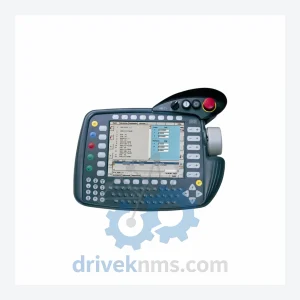
KUKA KCP2 VKCP2 Robot Control Panel – KCP Series
KUKA KCP2 VKCP2 Robot Control Panel: Sourcing Strategy & Asset Return Value in a Constrained Global Supply Chain The KUKA…
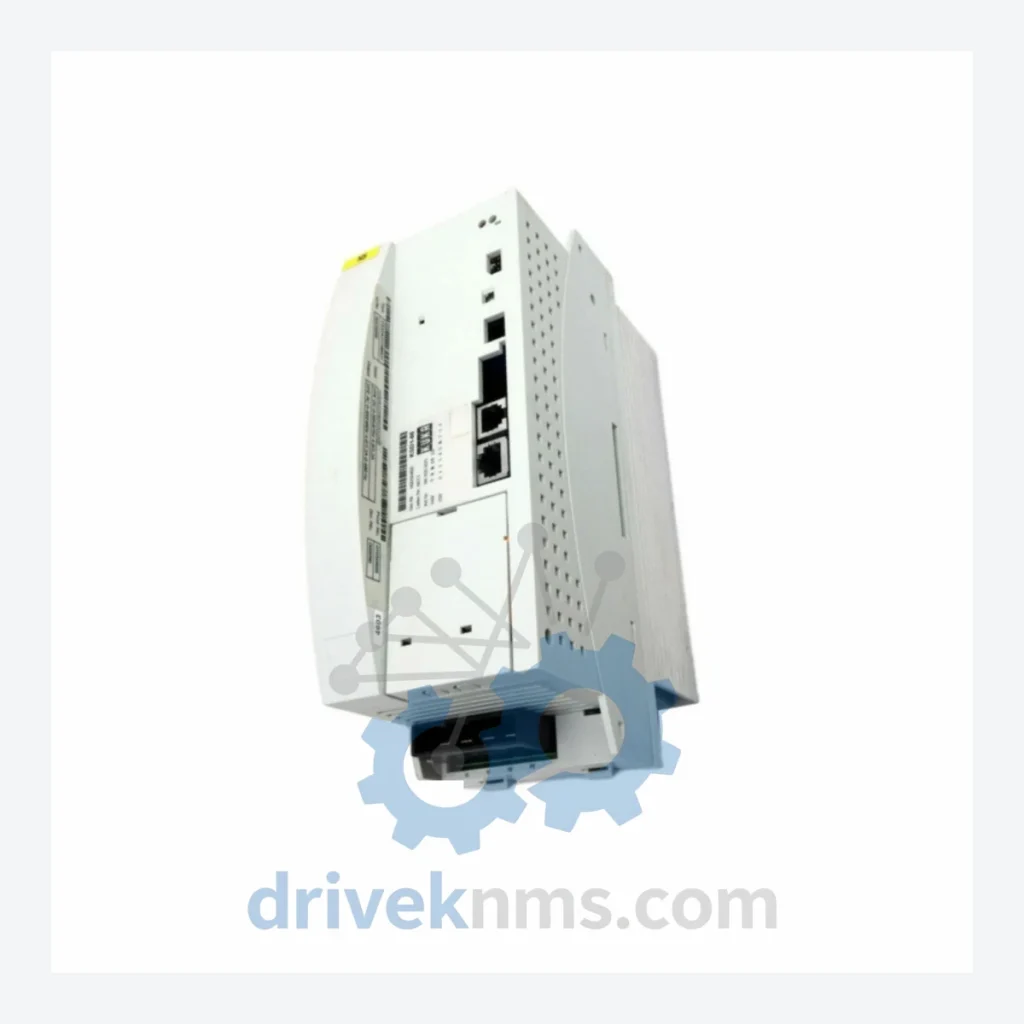
Model: KSD1-16 00-122-285
Product Overview
Commercial availability is handled through direct RFQ, model verification and export-oriented follow-up rather than public cart checkout.
Datasheet Preview
Use attached product manuals when available. If the manual is not public yet, request the full file directly through RFQ.
Commercial Path
Product pages on DRIVEKNMS are designed to verify model, brand and series first, then move the buyer into one clean quotation path.
Technical Dossier
The KUKA KSD1-16 is a compact servo drive module designed for integration within KUKA robot controller cabinets, primarily the KRC1 and KRC2 generations. Rated at 16A continuous output current, the KSD1-16 series has been deployed across heavy industrial sectors including automotive body-in-white assembly, chemical plant material handling, nuclear facility maintenance robotics, and refinery pipeline inspection systems. Its modular form factor allows direct backplane mounting within the KRC controller rack, enabling multi-axis configurations with shared DC bus architecture. The series represents KUKA's standardized approach to axis-specific power electronics, where each drive module governs one robot joint independently, providing fault isolation and simplified field replacement. Installed base estimates place the KSD1-16 among the most widely deployed KUKA servo drives globally, with active units still operating in production lines commissioned in the late 1990s through mid-2000s.
The KSD1-16 was introduced as part of KUKA's KRC1 controller platform in the mid-1990s, replacing earlier analog servo amplifier designs with a fully digital PWM-controlled architecture. The drive communicates with the KRC controller CPU via the proprietary KRC internal bus (DSE-IBS), enabling real-time torque, velocity, and position loop closure at the controller level. Early KSD1-16 variants (pre-2000) used through-hole power components and discrete gate driver circuits. Post-2000 revisions transitioned to surface-mount technology on the control board while retaining the same power stage topology, improving thermal performance and MTBF ratings. The KSD1-16 was carried forward into the KRC2 platform with minor firmware and connector revisions, maintaining backward mechanical compatibility in most rack configurations. As KUKA transitioned to the KRC4 platform (circa 2010–2012), the KSD1-16 was superseded by the KPP (KUKA Power Pack) and KSP (KUKA Servo Pack) modular drive system, which uses a shared AC/DC converter topology. The KSD1-16 is now classified as a mature/end-of-life component. No new production runs are confirmed. Field support relies entirely on refurbished stock, tested pull-outs, and specialist repair services. Long-term maintenance planning for KRC1/KRC2 installations must account for increasing lead times and diminishing availability of this module.
The following SKUs represent verified part numbers within the KUKA KSD1-16 servo drive family. Each entry corresponds to a distinct hardware revision, current rating sub-variant, or regional market configuration. All units are axis-level servo drives for KRC1/KRC2 robot controllers.
The KSD1-16's internal architecture presents specific test challenges due to its integrated DSE-IBS communication interface and shared DC bus design. DriveKNMS applies a structured test protocol to all KSD1-16 units prior to dispatch. Power stage verification is conducted under resistive load at rated current (16A) with thermal imaging to confirm IGBT junction temperatures remain within specification. The DSE-IBS interface is exercised using a KRC2 controller test bench to validate real-time communication integrity, encoder feedback processing, and fault response behavior. Gate driver timing is verified with an oscilloscope to confirm dead-time insertion and shoot-through protection. DC bus capacitor ESR is measured and compared against OEM tolerance bands; units with capacitors outside specification are recapped before release. Firmware version is read and documented for each unit. All test results are logged against the unit's serial number and provided to the customer upon request. Units that fail any test stage are either routed to component-level repair or quarantined from inventory.
Related Paths
KUKA KCP2 VKCP2 Robot Control Panel: Sourcing Strategy & Asset Return Value in a Constrained Global Supply Chain The KUKA…
KUKA KCP2 Series: Comprehensive Module Range and Technical Overview The KUKA KCP2 (KUKA Control Panel 2) teach pendant is the…
KUKA KSD1-08 Servo Drive: Procurement Strategy & Asset Return Value in a Constrained Supply Chain The KUKA KSD1-08 is a…