
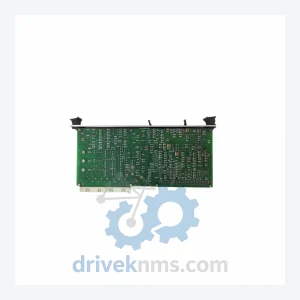
Yokogawa K9634DA-01 TCD Card Modules
Yokogawa K9634DA Series: Comprehensive Module Range and Technical Overview The Yokogawa K9634DA series TCD (Thermocouple/mV Input) cards are field-proven I/O…
Model: NFLR121-S51 S1
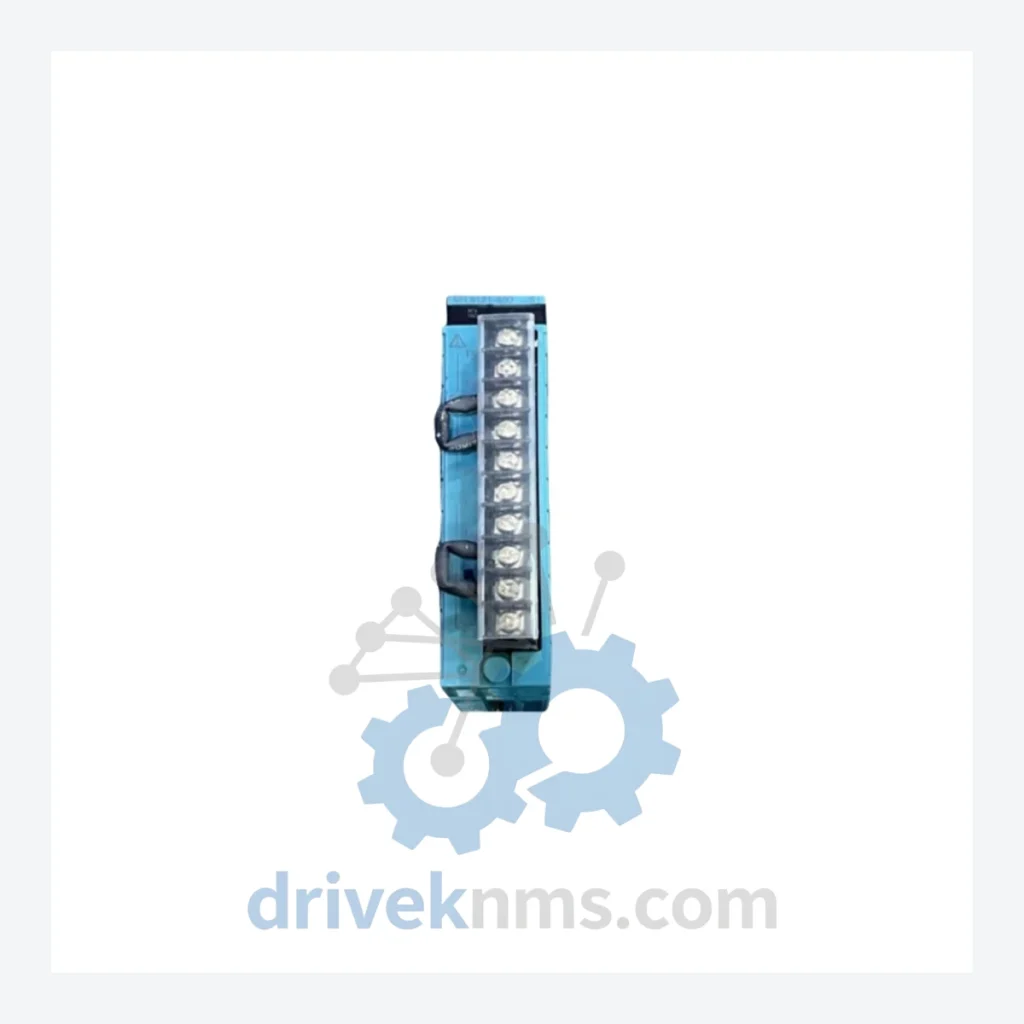
Product Overview
Commercial availability is handled through direct RFQ, model verification and export-oriented follow-up rather than public cart checkout.
Datasheet Preview
Use attached product manuals when available. If the manual is not public yet, request the full file directly through RFQ.
Commercial Path
Product pages on DRIVEKNMS are designed to verify model, brand and series first, then move the buyer into one clean quotation path.
Technical Dossier
The Yokogawa NFLR series represents a critical tier of network and field communication modules deployed across global heavy industry infrastructure. Installed in chemical processing complexes, petroleum refineries, nuclear power generation facilities, and LNG terminals, NFLR-series modules serve as the communication backbone within Yokogawa's CENTUM VP Distributed Control System (DCS) and STARDOM network-based control architecture. Their role is to bridge field-level instrumentation with supervisory control layers via Vnet/IP, Ethernet, and proprietary fieldbus protocols. The NFLR121-S51 S1 specifically functions as a network field communication module with redundancy support, designed for high-availability process environments where communication interruption is operationally unacceptable.
The NFLR module lineage traces its origins to Yokogawa's transition from the legacy CENTUM-XL and CENTUM CS 3000 platforms toward the unified CENTUM VP architecture introduced in the mid-2000s. Early field communication in CENTUM CS 3000 relied on the FCU (Field Control Unit) with dedicated bus coupler cards operating over Vnet. As Yokogawa migrated to Vnet/IP — an Ethernet-based real-time control network — the NFLR series was engineered to provide protocol translation, redundant path management, and field device integration within this new topology.
The NFLR121 variant introduced support for dual-redundant network paths, a direct response to refinery and nuclear plant requirements for SIL-rated communication continuity. Suffix designations such as -S51 and S1 denote hardware revision levels and firmware compatibility tiers, critical parameters when sourcing replacement units for installed base systems. Compatibility between suffix variants must be verified against the installed FCU firmware version and CENTUM VP R5.x/R6.x release notes before substitution.
As CENTUM VP has matured into its R6 generation, certain NFLR sub-variants have entered the Yokogawa End-of-Sale (EOS) and End-of-Support (EOL) lifecycle phases. This makes third-party lifecycle extension sourcing — including tested surplus and refurbished units — the primary procurement path for maintenance teams operating legacy installed bases.
The following SKUs represent verified models within the Yokogawa NFLR and closely related CENTUM VP field communication module range. Each entry reflects a distinct hardware configuration or revision level:
NFLR121-S51 S1: Dual-redundant Vnet/IP network field communication module, Rev S1.
NFLR121-S51 S2: Revised hardware iteration of NFLR121-S51 with updated firmware compatibility.
NFLR121-S52: Enhanced variant with extended environmental tolerance for high-temperature cabinets.
NFLR121: Base model network field communication module for CENTUM VP FCU integration.
NFLR141: Extended I/O capacity communication module for large-scale DCS node configurations.
NFLR141-S51: Suffix-designated revision of NFLR141 with Vnet/IP redundancy path support.
NFLR161: High-density field communication module supporting expanded fieldbus device counts.
NFLR811: FOUNDATION Fieldbus H1 communication interface module for CENTUM VP FCS.
NFLR811-S10: Suffix revision of NFLR811 with updated segment coupler compatibility.
NFLR831: PROFIBUS DP communication module for integration with third-party field devices.
NFLR831-S10: Revised PROFIBUS DP module with enhanced diagnostic register support.
NFLR851: DeviceNet communication interface module for CENTUM VP field control stations.
NFLR861: Modbus RTU/TCP gateway module for legacy instrument integration within CENTUM VP.
NFLR871: HART multiplexer communication module supporting multi-drop HART device polling.
NFLR881: Ethernet-based general-purpose communication module for supervisory data exchange.
NFLR891: OPC-UA gateway module for CENTUM VP integration with MES and historian systems.
NFLR901: Redundant communication controller module for safety-critical FCS node configurations.
DriveKNMS maintains a dedicated inventory program for Yokogawa NFLR series modules that have entered End-of-Sale or End-of-Support status. For facilities operating CENTUM VP R4.x and R5.x systems — where OEM spare part availability has declined — DriveKNMS provides tested surplus units, cross-referenced by suffix revision and firmware compatibility tier.
All sourced NFLR modules are matched against the customer's installed FCU hardware revision and CENTUM VP software release to prevent incompatibility. DriveKNMS maintains traceability records for each unit, including prior installation history where available, supporting plant maintenance documentation requirements. Emergency procurement lead times for critical NFLR variants are typically 3–7 business days from confirmed stock.
NFLR series modules incorporate complex backplane bus interfaces and dual-port Vnet/IP communication stacks that require protocol-level validation beyond standard power-on testing. DriveKNMS applies a structured test protocol for all NFLR units prior to dispatch:
Each module undergoes backplane connector integrity inspection under magnification to identify pin deformation or oxidation on the high-density edge connector. Vnet/IP port continuity and link negotiation are verified using a CENTUM VP-compatible test bench. For fieldbus variants (NFLR811, NFLR831, NFLR851), segment coupler response and device enumeration are tested against reference configurations. Firmware revision is read and documented; units with mismatched firmware for the target system revision are flagged and segregated. Thermal cycling is applied to identify latent solder joint failures common in modules recovered from high-ambient-temperature cabinet environments. Final functional verification confirms module recognition and communication handshake within a live FCU test rack before packaging.
Related Paths
Yokogawa K9634DA Series: Comprehensive Module Range and Technical Overview The Yokogawa K9634DA series TCD (Thermocouple/mV Input) cards are field-proven I/O…
Yokogawa UT350-01 Digital Indicating Controller – Obsolete UT Series Spare Part When a Yokogawa UT350-01 fails on the plant floor,…
YOKOGAWA NFDR Series: Comprehensive Module Range and Technical Overview The YOKOGAWA NFDR series relay output modules are core field control…