
Reflexite AU350 Mechanical Terminal Lug – Obsolete Industrial Spare Part
Reflexite AU350 Mechanical Terminal Lug – Obsolete Industrial Spare Part When a single terminal lug fails on a legacy control…
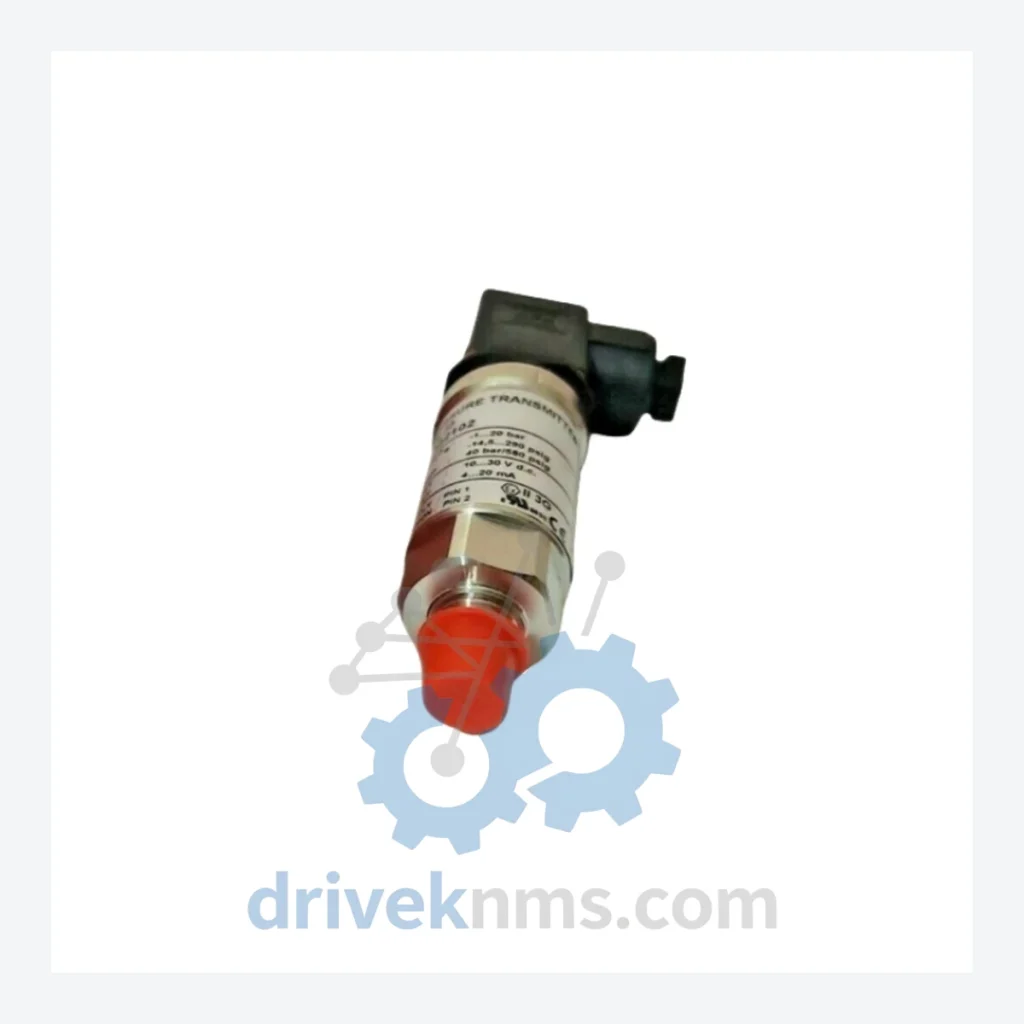
Model: 060G2102
Product Overview
Commercial availability is handled through direct RFQ, model verification and export-oriented follow-up rather than public cart checkout.
Datasheet Preview
Use attached product manuals when available. If the manual is not public yet, request the full file directly through RFQ.
Commercial Path
Product pages on DRIVEKNMS are designed to verify model, brand and series first, then move the buyer into one clean quotation path.
Technical Dossier
When a pressure transmitter fails on a production line built around legacy instrumentation, the consequences extend far beyond a single component. A forced system-wide upgrade — driven solely by the unavailability of one discontinued module — can cost a facility anywhere from several hundred thousand to several million dollars in engineering, downtime, revalidation, and retraining. The Hengli 060G2102 is precisely the kind of critical field instrument that, when it fails without a qualified replacement on hand, forces that conversation. DriveKNMS maintains verified stock of hard-to-source industrial components specifically to prevent that outcome.
| Parameter | Detail |
|---|---|
| Part Number | 060G2102 |
| Manufacturer | Hengli |
| Product Category | Pressure Transmitter |
| Discontinuation Status | Obsolete / End-of-Life – no longer in active production |
| Country of Origin | China (CN) |
| Condition Available | New Old Stock (NOS) / Professionally Refurbished |
| Compatibility | Designed for integration with legacy industrial process control and instrumentation systems |
Note: Electrical parameters (input range, output signal, supply voltage, process connection) are not published here to prevent specification errors. Please contact us with your application requirements for verified datasheet confirmation.
Pressure transmitters occupy a deceptively critical position in process automation. They are not glamorous components, but they are load-bearing ones. In legacy distributed control systems — including older Honeywell, Yokogawa, and Siemens TELEPERM architectures — field transmitters like the Hengli 060G2102 were specified and wired into loop configurations that assume a fixed signal range, connector type, and physical footprint. Substituting a modern transmitter is rarely a matter of swapping hardware. It typically requires loop recalibration, updated I/O card configuration, revised P&ID documentation, and in regulated industries, a formal change management process.
For plant managers operating facilities built in the 1990s or early 2000s, the calculus is straightforward: a verified drop-in replacement that preserves the existing loop integrity is worth multiples of its purchase price in avoided engineering cost. The 060G2102 represents that option — provided it can be sourced before the failure event, not after.
Procurement teams that wait until a transmitter fails before searching for obsolete stock face two compounding problems: lead times measured in weeks or months, and a spot market where scarcity drives price volatility. Facilities that maintain a small buffer stock of their highest-criticality obsolete instruments consistently report lower unplanned downtime costs and greater negotiating leverage with their maintenance budgets.
Every obsolete instrument that passes through DriveKNMS undergoes a structured five-step evaluation before it is offered for sale:
1. Electrolytic Capacitor Assessment — Aged capacitors are the most common failure mode in stored electronics. Each unit is inspected for capacitor bulge, leakage, and ESR deviation from specification.
2. Firmware and Configuration Verification — Where applicable, firmware version is confirmed and documented. Units with corrupted or unknown firmware states are quarantined.
3. Pin and Terminal Corrosion Inspection — All electrical connection points are examined under magnification for oxidation, pitting, or mechanical deformation that could cause intermittent contact in service.
4. Functional Bench Test — Units are powered and tested against their known output behavior. Any unit that does not perform within expected parameters is either reconditioned or removed from inventory.
5. Packaging and Storage Audit — Units are stored in ESD-safe, humidity-controlled conditions and re-inspected prior to shipment to confirm no degradation occurred during storage.
The primary value of sourcing an original 060G2102 rather than pursuing a cross-reference substitute is operational continuity. A genuine drop-in replacement means:
No loop reconfiguration. The existing wiring, signal range, and process connection remain unchanged. Installation is a direct swap.
No PLC or DCS reprogramming. The control system continues to read the transmitter signal without any software modification, preserving validated process parameters.
No engineering change order. In facilities subject to ISO, FDA, or industry-specific change management requirements, avoiding a formal engineering change can save weeks of administrative process and audit exposure.
Immediate return to production. With a pre-sourced spare on the shelf, mean time to repair is measured in hours, not weeks. For continuous process industries — chemical, petrochemical, food and beverage, pharmaceutical — that difference is measured directly in revenue.
Extending the operational life of an automation asset by five to ten years through disciplined spare parts management is not a compromise strategy. It is a capital allocation decision. The cost of maintaining a critical spare inventory is a fraction of the cost of a single unplanned shutdown, and orders of magnitude less than a forced system migration.
What warranty applies to obsolete parts?
DriveKNMS provides a 90-day functional warranty on all refurbished units and a 180-day warranty on confirmed New Old Stock. Warranty terms are confirmed in writing at the time of quotation.
How do I know the unit is genuine and not counterfeit?
All units are sourced through documented industrial channels — decommissioned facilities, authorized surplus dealers, and verified OEM overstock. Physical markings, date codes, and construction are cross-referenced against known-good reference units. We do not source from unverified grey-market channels.
Should I buy more than one unit?
For any obsolete instrument that is installed in multiple loops or at multiple sites, holding a minimum of two to three units is a defensible maintenance strategy. The cost of a second spare is predictable; the cost of a second emergency sourcing event — if inventory has been depleted — is not. We can advise on appropriate buffer quantities based on your installed base.
Can you source other Hengli obsolete parts?
Yes. DriveKNMS specializes in hard-to-find industrial components across multiple manufacturers. If you have a broader obsolescence list, contact us with your full BOM and we will conduct a sourcing assessment.
Related Paths
Reflexite AU350 Mechanical Terminal Lug – Obsolete Industrial Spare Part When a single terminal lug fails on a legacy control…
Leviton C2623 Locking Connector – Obsolete Industrial Spare Part When a locking connector fails on an aging electrical panel or…
VICPAS VT580WAPT00 HMI Touch Screen Terminal – Industrial Spare Part When a production line depends on a single HMI terminal,…