
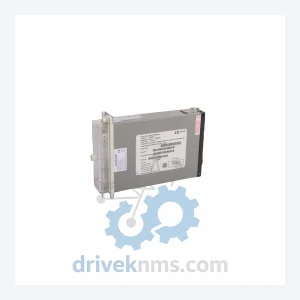
ALSTOM MVAJ105RA0802A Protection Relay – MiCOM Series
ALSTOM MVAJ105RA0802A Protection Relay: Supply Continuity Strategy for a Discontinued Critical Component The ALSTOM MVAJ105RA0802A is a numerical protection relay…
Model: PCO3000EL0
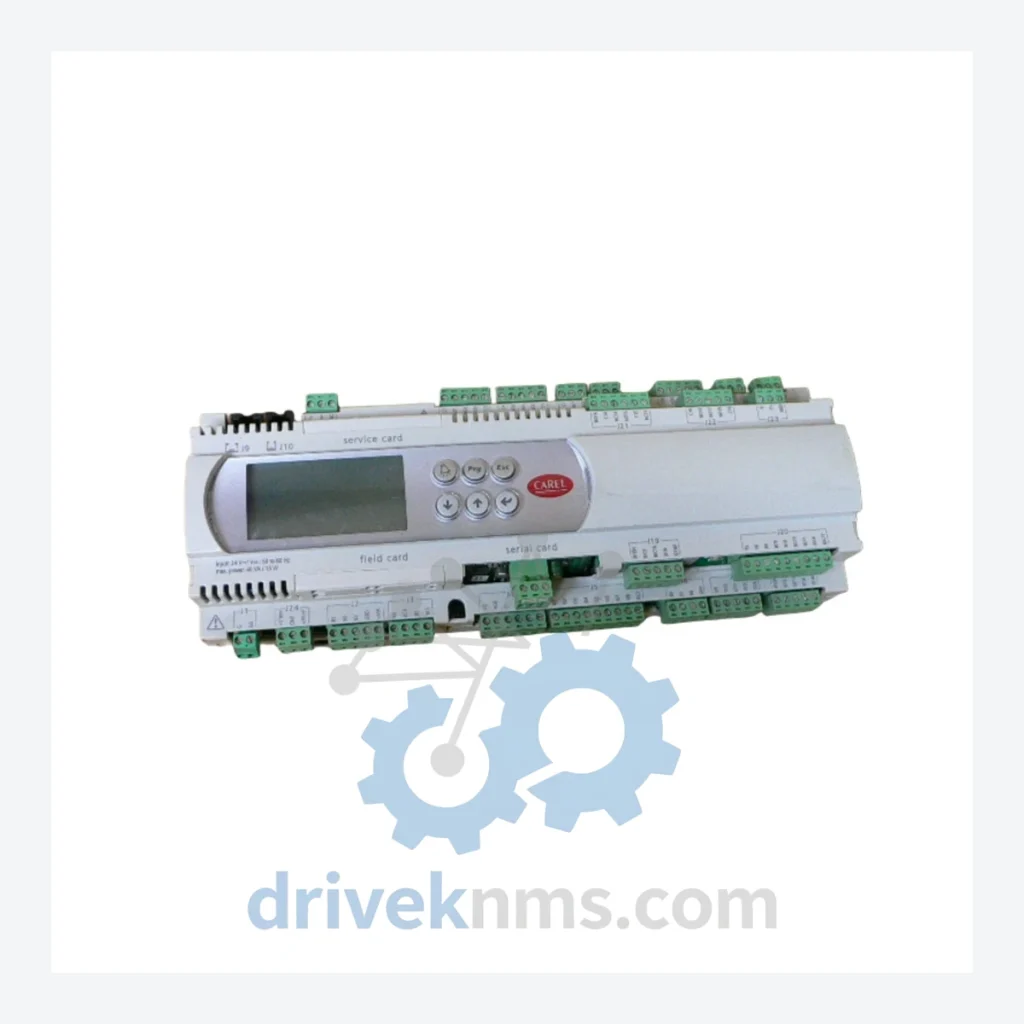
Product Overview
Commercial availability is handled through direct RFQ, model verification and export-oriented follow-up rather than public cart checkout.
Datasheet Preview
Use attached product manuals when available. If the manual is not public yet, request the full file directly through RFQ.
Commercial Path
Product pages on DRIVEKNMS are designed to verify model, brand and series first, then move the buyer into one clean quotation path.
Technical Dossier
When a CAREL PCO3000EL0 controller fails in an active refrigeration or HVAC system, the consequences extend far beyond a single component. The pCO Series platform underpins thousands of chillers, rooftop units, and precision cooling systems installed across industrial and commercial facilities worldwide. A forced migration away from this platform — driven solely by the unavailability of one controller board — can trigger a cascade of engineering costs: new control panel design, field rewiring, software re-commissioning, operator retraining, and extended production downtime. Conservative estimates place full system replacement costs in the range of hundreds of thousands of dollars per installation. DriveKNMS maintains verified stock of the PCO3000EL0 specifically to prevent that outcome.
| Attribute | Detail |
|---|---|
| Manufacturer | CAREL Industries S.p.A. |
| Part Number | PCO3000EL0 |
| Series | pCO³ (pCO Series) |
| Product Category | Programmable Controller for HVAC/R Applications |
| Country of Origin | Italy |
| Discontinuation Status | Obsolete – No longer in active production by CAREL |
| Compatible Systems | CAREL pCO³ platform; compatible with pGD terminal displays and pLAN network |
| Communication | pLAN, RS-485 serial (protocol-dependent on firmware version) |
| Firmware | Verified prior to shipment – version confirmed against original application requirements |
Note: Electrical parameters not independently verified by DriveKNMS are intentionally omitted. Buyers requiring full electrical specifications should cross-reference the original CAREL pCO³ technical datasheet for their specific application.
The CAREL pCO³ platform was the control backbone for a generation of refrigeration and HVAC equipment deployed from the late 1990s through the 2010s. Supermarket refrigeration racks, industrial process chillers, and precision air conditioning units across Europe, Asia, and the Americas were built around this architecture. The platform's application-specific firmware — developed and validated over years of field operation — cannot be trivially ported to a successor platform without significant re-engineering effort.
When CAREL discontinued the PCO3000EL0 variant, facilities managers faced a binary choice: locate genuine replacement hardware, or commit to a full controls upgrade. For sites operating 20 or more controlled zones on the same pCO³ network, the upgrade path is rarely a single-line item. It involves new hardware procurement, panel modifications, updated wiring schematics, re-commissioning of every connected device, and validation testing — all while the affected system remains offline or operates in a degraded state.
The PCO3000EL0 eliminates that choice. A verified replacement unit restores the system to its original validated state, preserving the existing application software, operator interface, and network topology. No re-engineering. No revalidation of the broader control architecture. The asset continues to operate as designed.
For plant managers operating aging infrastructure under capital expenditure constraints, this is not a minor convenience. It is the difference between a planned maintenance event and an unplanned capital project.
Industrial refrigeration and HVAC assets represent substantial capital investment. A large-capacity chiller or a multi-zone supermarket refrigeration system may represent $500,000 to several million dollars in installed value. When the control system reaches end-of-life before the mechanical components, the economic case for maintaining the original controls — rather than replacing them — is often compelling.
The following approach has been applied successfully by facilities teams managing pCO³-based systems under decommissioning pressure:
1. Critical Spare Inventory: Identify every PCO3000EL0 unit in the facility. Procure at minimum one verified spare per site, ideally two for high-criticality applications. The cost of a spare controller is a fraction of one day of unplanned downtime.
2. Firmware Version Documentation: Record the firmware version running on each active controller before any failure occurs. This information is essential for sourcing a compatible replacement and cannot always be recovered after a board failure.
3. Application Backup: Where the pCO³ platform supports application upload/download, maintain a current backup of the application software on a dedicated engineering laptop. This eliminates the risk of losing the application program if the controller fails without warning.
4. Scheduled Preventive Inspection: Electrolytic capacitor degradation is the primary failure mode for controllers of this age. A scheduled inspection cycle — every 24 to 36 months — allows early identification of boards showing signs of capacitor bulging, pin corrosion, or relay contact wear before they cause a system trip.
5. Supplier Qualification: Establish a qualified source for PCO3000EL0 units before a failure occurs. Emergency procurement under production pressure consistently results in higher costs and greater exposure to counterfeit or unverified parts. DriveKNMS maintains stock specifically to support planned procurement programs.
Facilities that implement this approach consistently extend the productive life of their pCO³-based systems by five to ten years beyond the point at which unmanaged obsolescence would have forced a capital replacement decision.
Sourcing obsolete control hardware from unverified channels carries real risk. A controller that passes visual inspection but carries degraded internal components can cause intermittent faults that are difficult to diagnose and may damage connected equipment. DriveKNMS applies a structured five-step inspection protocol to every PCO3000EL0 unit prior to shipment:
Step 1 – Electrolytic Capacitor Assessment: All electrolytic capacitors are inspected for physical signs of aging: bulging tops, electrolyte leakage, and base deformation. Units showing any capacitor degradation are quarantined.
Step 2 – Firmware Version Verification: The firmware version is read and recorded. Where the buyer has specified a required firmware version, compatibility is confirmed before shipment.
Step 3 – Pin and Connector Inspection: All I/O connectors, terminal blocks, and board-edge connectors are inspected under magnification for oxidation, corrosion, and mechanical damage. Affected contacts are cleaned or the unit is rejected.
Step 4 – PCB Visual Inspection: The printed circuit board is inspected for cold solder joints, cracked traces, burn marks, and evidence of prior repair or modification.
Step 5 – Functional Verification: Where test infrastructure permits, units are powered and basic functional checks are performed prior to packaging.
Units that do not pass all five steps are not offered for sale. Condition grade (New, Refurbished-Tested, or Surplus) is disclosed on the order confirmation.
Drop-in Replacement: The PCO3000EL0 is a direct hardware replacement for the original installed unit. No modifications to the control panel wiring, terminal assignments, or network configuration are required.
No Reprogramming Required: The existing application software remains on the pLAN network or can be reloaded from backup. There is no requirement to engage a controls engineer for application re-commissioning in a standard replacement scenario.
Avoids Engineering Reconstruction Costs: Replacing a single controller board eliminates the need for panel redesign, new hardware qualification, and the extended validation cycle that accompanies a platform migration.
Preserves Operator Familiarity: The existing pGD operator interface and alarm structure remain unchanged. Operators continue to work with the system they know, without retraining.
Supports Long-Term Spare Parts Programs: DriveKNMS can discuss multi-unit procurement for facilities seeking to build a managed spare parts inventory against future failures.
Q: What warranty applies to an obsolete part like the PCO3000EL0?
A: DriveKNMS provides a 90-day warranty against defects in material and workmanship on all tested units. Warranty terms for new-old-stock units are confirmed at the time of order. Extended warranty arrangements are available for volume procurement — contact us to discuss.
Q: How do I know the unit is genuine CAREL and not a counterfeit?
A: All units are inspected for CAREL manufacturer markings, board revision codes, and component sourcing consistent with genuine CAREL production. We do not source from unverified secondary markets. Buyers may request inspection photographs prior to shipment.
Q: Should I buy more than one unit?
A: For any facility with active pCO³-based systems, holding at least one spare PCO3000EL0 on-site is a defensible maintenance decision. For facilities with multiple controlled zones or high-criticality refrigeration loads, two units is a more conservative position. Stock availability for obsolete parts is not guaranteed — procurement delays measured in weeks or months are common once existing inventory is exhausted.
Q: Can you source other pCO³ series components?
A: Yes. DriveKNMS specializes in obsolete and hard-to-find industrial control components. Contact us with your full bill of materials for a consolidated sourcing inquiry.
Related Paths
ALSTOM MVAJ105RA0802A Protection Relay: Supply Continuity Strategy for a Discontinued Critical Component The ALSTOM MVAJ105RA0802A is a numerical protection relay…
MOORE 16137 Series: Comprehensive Module Range and Technical Overview The MOORE 16137 Series represents a core component family within Moore…
Yaskawa YPHT11014-1A Circuit Board – Obsolete Drive Control Spare Part When a Yaskawa YPHT11014-1A circuit board fails in a production…