
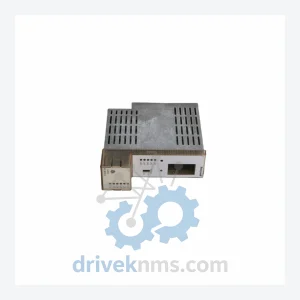
Honeywell XC Series Modules | XC5010C CPU Module
Honeywell XC Series: Comprehensive Module Range and Technical Overview The Honeywell XC Series represents a core control platform deployed across…
Model: TC-BATT03 51199942-300
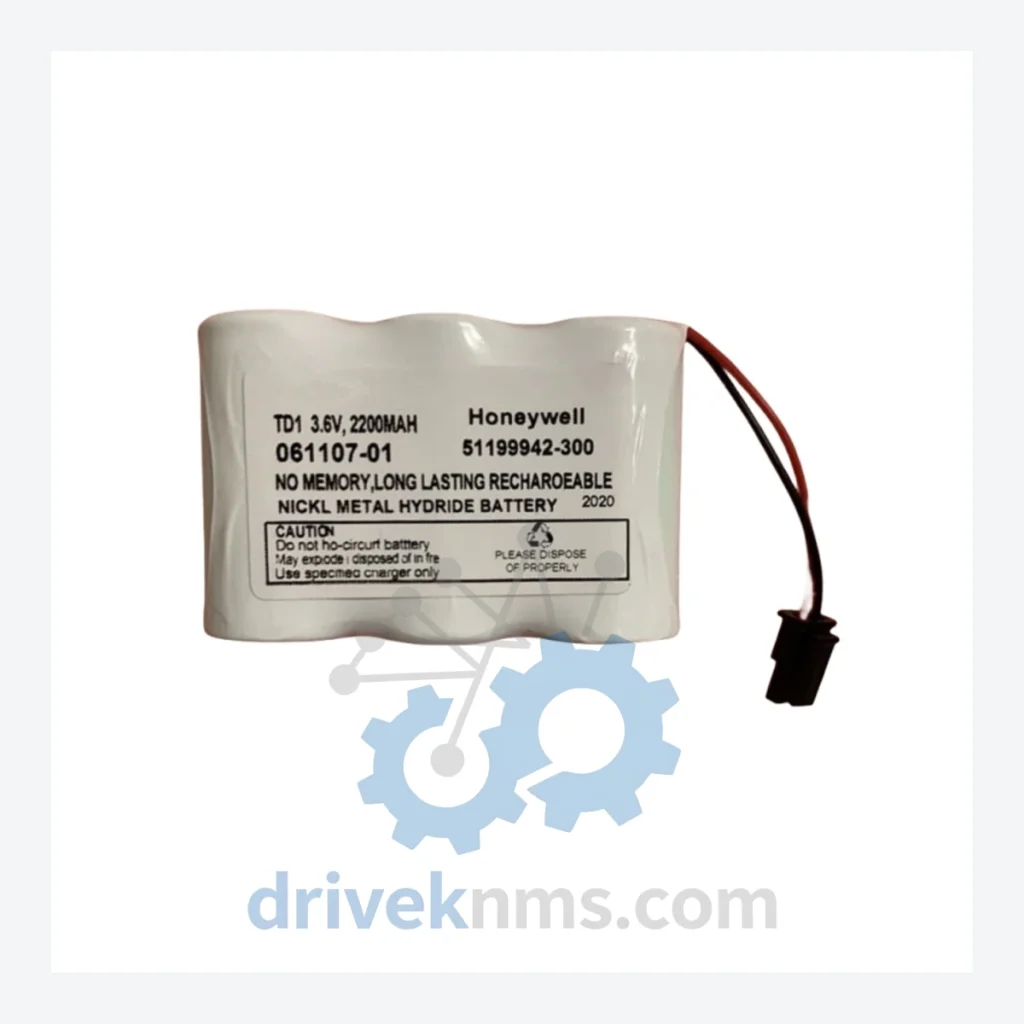
Product Overview
Commercial availability is handled through direct RFQ, model verification and export-oriented follow-up rather than public cart checkout.
Datasheet Preview
Use attached product manuals when available. If the manual is not public yet, request the full file directly through RFQ.
Commercial Path
Product pages on DRIVEKNMS are designed to verify model, brand and series first, then move the buyer into one clean quotation path.
Technical Dossier
When a battery module fails inside a Honeywell TDC 3000 or TotalPlant Solution (TPS) distributed control system, the consequences extend far beyond a single component. The TDC 3000 platform — deployed across refineries, chemical plants, and power generation facilities worldwide — was discontinued by Honeywell, yet remains the operational backbone of hundreds of production lines that cannot be economically migrated. A single unplanned shutdown caused by a failed backup battery can trigger cascading process interruptions. Conservative industry estimates place the cost of a full DCS platform migration at USD $2–8 million per unit, excluding engineering, re-commissioning, and lost production. Against that figure, securing a verified TC-BATT03 spare is not a procurement decision — it is an asset protection decision.
DriveKNMS maintains limited physical stock of the Honeywell TC-BATT03 (P/N 51199942-300). Availability is not guaranteed. Once current inventory is depleted, no further production runs are scheduled by the OEM.
| Parameter | Detail |
|---|---|
| Manufacturer | Honeywell |
| Part Number | TC-BATT03 |
| Alternate P/N | 51199942-300 |
| Product Series | TDC 3000 / TotalPlant Solution (TPS) |
| Component Type | Backup Battery Module |
| OEM Status | Discontinued – No longer manufactured |
| Country of Origin | United States |
| Compatible Systems | Honeywell TDC 3000, TPS (TotalPlant Solution), HPM, LCN-based architectures |
| Condition Available | New Old Stock (NOS) / Refurbished – Tested & Certified |
The Honeywell TDC 3000 platform entered end-of-life status years ago, but the installed base remains substantial. Plant managers operating on this architecture face a structural dilemma: the cost of a full DCS migration — including new hardware, software licensing, loop re-engineering, operator retraining, and production downtime — routinely exceeds the capital budget available in a single fiscal cycle. The result is a deliberate, multi-year extension strategy where critical spare parts become the primary risk mitigation tool.
The TC-BATT03 battery module serves a non-negotiable function within the TDC 3000 architecture. It provides backup power to volatile memory and real-time clock circuits within controller and interface modules. Without a functional battery, configuration data and process parameters stored in RAM are lost during any power interruption — including routine maintenance shutdowns. Recovery from such an event requires re-loading configurations from backup media, a process that introduces both time loss and the risk of version mismatch if backup discipline has not been rigorous.
Facilities that have implemented a structured spare parts strategy — maintaining at least one verified TC-BATT03 unit on the shelf — report measurably shorter mean time to repair (MTTR) for power-related incidents. The battery is not a high-wear consumable in normal operation, but its failure mode is silent: capacity degrades over time without triggering alarms until the moment backup power is actually demanded. Proactive replacement on a scheduled cycle, combined with on-site stock, is the only reliable mitigation.
For plant managers facing board-level pressure to justify continued operation of legacy DCS infrastructure, the arithmetic is straightforward. A verified TC-BATT03 spare, sourced now while stock exists, costs a fraction of one hour of unplanned downtime. The alternative — discovering the part is unavailable at the moment of failure — converts a maintenance event into a production crisis.
DriveKNMS applies a structured 5-step quality assurance protocol to all discontinued components before shipment. For battery modules specifically, this process addresses the primary failure modes associated with long-term storage and aging chemistry:
Step 1 – Electrolytic Capacitor Aging Inspection: All associated circuitry is inspected for capacitor bulging, electrolyte leakage, and ESR (equivalent series resistance) deviation. Aged capacitors are replaced before the unit is cleared for sale.
Step 2 – Firmware Version Verification: Where applicable, embedded firmware is confirmed against the last known stable release for TDC 3000 compatibility. No unauthorized firmware modifications are present.
Step 3 – Pin and Connector Corrosion Audit: All connector pins, backplane contacts, and terminal interfaces are inspected under magnification. Oxidized contacts are treated; units with structural corrosion are rejected from inventory.
Step 4 – Functional Load Test: Battery output voltage and sustained load capacity are tested under controlled conditions. Units that do not meet minimum discharge specifications are not sold.
Step 5 – Packaging and ESD Protection: Cleared units are repackaged in anti-static materials with desiccant. Storage and shipping conditions are controlled to prevent moisture ingress.
The TC-BATT03 is a direct drop-in replacement for the original Honeywell-supplied battery module. No hardware modification, no firmware update, and no re-engineering of the host controller is required. Installation follows the standard Honeywell TDC 3000 maintenance procedure: power-down the affected module, swap the battery assembly, restore power, and verify system status via the operator console.
This plug-and-play characteristic is operationally significant. It means the replacement can be executed by qualified maintenance personnel without specialist DCS engineers on-site, reducing both labor cost and scheduling complexity. It also means the intervention window is measured in minutes, not hours — a critical factor when the replacement is performed during a scheduled maintenance window with production pressure on either side.
Avoiding a forced platform migration preserves the existing operator skill base, eliminates software re-licensing costs, and maintains process continuity without the validation and re-commissioning burden that accompanies any new DCS installation. For facilities operating under regulatory frameworks — pharmaceutical, nuclear, or petrochemical — this avoidance of re-commissioning has compliance value that extends well beyond the component cost.
Industry data consistently shows that the total cost of ownership for a well-maintained legacy DCS, supported by a structured spare parts program, remains lower than migration for facilities with 5–10 years of remaining planned operational life. The following principles define a low-cost maintenance strategy that plant management can present to capital committees:
1. Critical Spare Inventory Mapping: Identify every component in the TDC 3000 architecture that is discontinued, has no current-generation equivalent, and whose failure would cause a process shutdown. Battery modules, power supply units, and communication interface cards typically head this list. Maintain minimum one-unit on-shelf stock for each.
2. Scheduled Preventive Replacement: Do not wait for failure. Battery modules should be replaced on a defined cycle — typically every 3–5 years depending on operating environment — regardless of apparent condition. The cost of a scheduled replacement is predictable; the cost of an unscheduled failure is not.
3. Verified Sourcing Protocol: As OEM stock is exhausted, the secondary market becomes the only supply channel. Establish relationships with verified distributors who apply documented QA processes. Avoid untested surplus stock from unverified sources — a failed replacement part is worse than no replacement, as it may mask the underlying fault.
4. Configuration Backup Discipline: Maintain current, version-controlled backups of all controller configurations on media that can be read by current hardware. This reduces recovery time in the event that a battery failure does result in memory loss.
5. Lifecycle Planning Horizon: Engage with your DCS vendor and spare parts suppliers annually to assess remaining stock levels for your critical components. A 3-year forward visibility on parts availability allows capital planning for migration to begin at the right time — not under emergency conditions.
Facilities that implement these five practices routinely extend the productive life of TDC 3000 and equivalent legacy DCS platforms by 5–10 years beyond the point at which unmanaged systems would face forced retirement.
Q: What warranty applies to a discontinued TC-BATT03 unit?
A: DriveKNMS provides a 90-day functional warranty on all tested and certified units. New Old Stock (NOS) units carry a 180-day warranty. Warranty covers functional failure under normal operating conditions and excludes physical damage after installation.
Q: How do I confirm the unit is genuine Honeywell and not a counterfeit?
A: All units sourced by DriveKNMS are inspected for OEM markings, part number consistency, and manufacturing date codes. We provide documentation of the inspection record upon request. We do not sell units where provenance cannot be established.
Q: Should I buy multiple units for long-term stock?
A: For any facility operating TDC 3000 infrastructure with a planned operational horizon of 3 years or more, holding a minimum of two TC-BATT03 units on-site is a defensible maintenance practice. Given the discontinued status and finite secondary market supply, procurement delay carries real availability risk.
Q: Can this battery module be used in systems other than TDC 3000?
A: The TC-BATT03 is designed for Honeywell TDC 3000 and TPS platform architectures. Compatibility with other systems should be verified against your specific hardware documentation before installation.
© 2026 DriveKNMS. (Status: DRAFT)
Related Paths
Honeywell XC Series: Comprehensive Module Range and Technical Overview The Honeywell XC Series represents a core control platform deployed across…
Honeywell MP-DNCF02-200 Single-Phase Power Controller – Obsolete Limitrol Series Spare Part When a single-phase power controller fails inside a legacy…
Honeywell XDL Series: Comprehensive Module Range and Technical Overview The Honeywell XDL series is a core component family within the…