
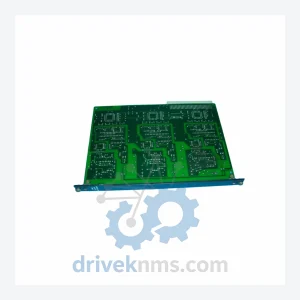
GE IS200 Modules | IS200BPIBG1AEB Driver Board
GE IS200 Series: Comprehensive Module Range and Technical Overview The GE IS200 series constitutes the core I/O, control, and communication…
Model: IS220PRROH1A
Product Overview
Commercial availability is handled through direct RFQ, model verification and export-oriented follow-up rather than public cart checkout.
Datasheet Preview
Use attached product manuals when available. If the manual is not public yet, request the full file directly through RFQ.
Commercial Path
Product pages on DRIVEKNMS are designed to verify model, brand and series first, then move the buyer into one clean quotation path.
Technical Dossier
The GE IS220P series is a core I/O and control module family within the GE Mark VIe Distributed Control System (DCS) platform. Deployed extensively across global heavy industry — including petrochemical refineries, nuclear power stations, combined-cycle gas turbine plants, and offshore platforms — the IS220P series represents one of the most widely installed DCS I/O architectures in continuous-process environments. Its triple-redundant (TMR) and simplex configurations make it the reference standard for safety-critical loop control in facilities where unplanned downtime carries significant operational and financial consequences. The series interfaces directly with GE's VCMI, VTUR, VGEN, and VSVO I/O packs, and is managed through the Mark VIe Toolbox engineering environment.
The IS220P series succeeded the earlier IS200 and IS215 module families introduced under the Mark VI platform in the late 1990s. The transition to Mark VIe in the mid-2000s brought a shift from proprietary backplane communication to Ethernet-based I/O (EtherCAT-derived IONet), enabling higher data throughput and simplified diagnostics. IS220P modules introduced standardized 24 VDC logic power rails, improved EMI shielding for high-noise industrial environments, and modular terminal board designs that reduced field wiring time. Early IS220P revisions (Rev A/B) used parallel backplane addressing; later revisions (Rev C onward) adopted serial IONet addressing, creating compatibility constraints when mixing module generations within the same I/O rack. Facilities upgrading from Mark VI to Mark VIe must verify terminal board compatibility (IS200 vs. IS220 terminal boards are not interchangeable without adapter kits). As of 2024, GE Vernova has formally classified the majority of IS220P variants as mature/end-of-active-production, with lifecycle support available through authorized service channels and independent MRO suppliers.
The following SKUs represent verified, commonly deployed modules within the IS220P series, organized by functional category:
Redundancy & Relay Output Modules
IS220PRROH1A: Redundant relay output module, 16-channel, TMR-compatible, 24 VDC logic
IS220PRROH1B: Redundant relay output module Rev B, enhanced contact rating, drop-in replacement for H1A
IS220PRRAH1A: Redundant relay output module, analog-hybrid variant, 8-channel relay + 4-channel AO
Analog Input Modules
IS220PAICH1A: Analog input module, 16-channel, 4–20 mA / 0–10 V, HART pass-through capable
IS220PAICH1B: Analog input module Rev B, extended temperature range, improved ADC resolution
IS220PAIAH1A: Analog input module, high-density 32-channel, single-ended, 4–20 mA
IS220PTCCH1A: Thermocouple input module, 16-channel, J/K/T/E/R/S/B type, cold-junction compensated
Analog Output Modules
IS220PAOAH1A: Analog output module, 8-channel, 4–20 mA, loop-powered, HART revision 5/6/7
IS220PAOAH1B: Analog output module Rev B, increased output compliance voltage, improved fault detection
Digital Input Modules
IS220PDIAH1A: Digital input module, 32-channel, 24 VDC, optically isolated, group-common return
IS220PDIBH1A: Digital input module, 32-channel, 125 VDC, high-voltage field wiring
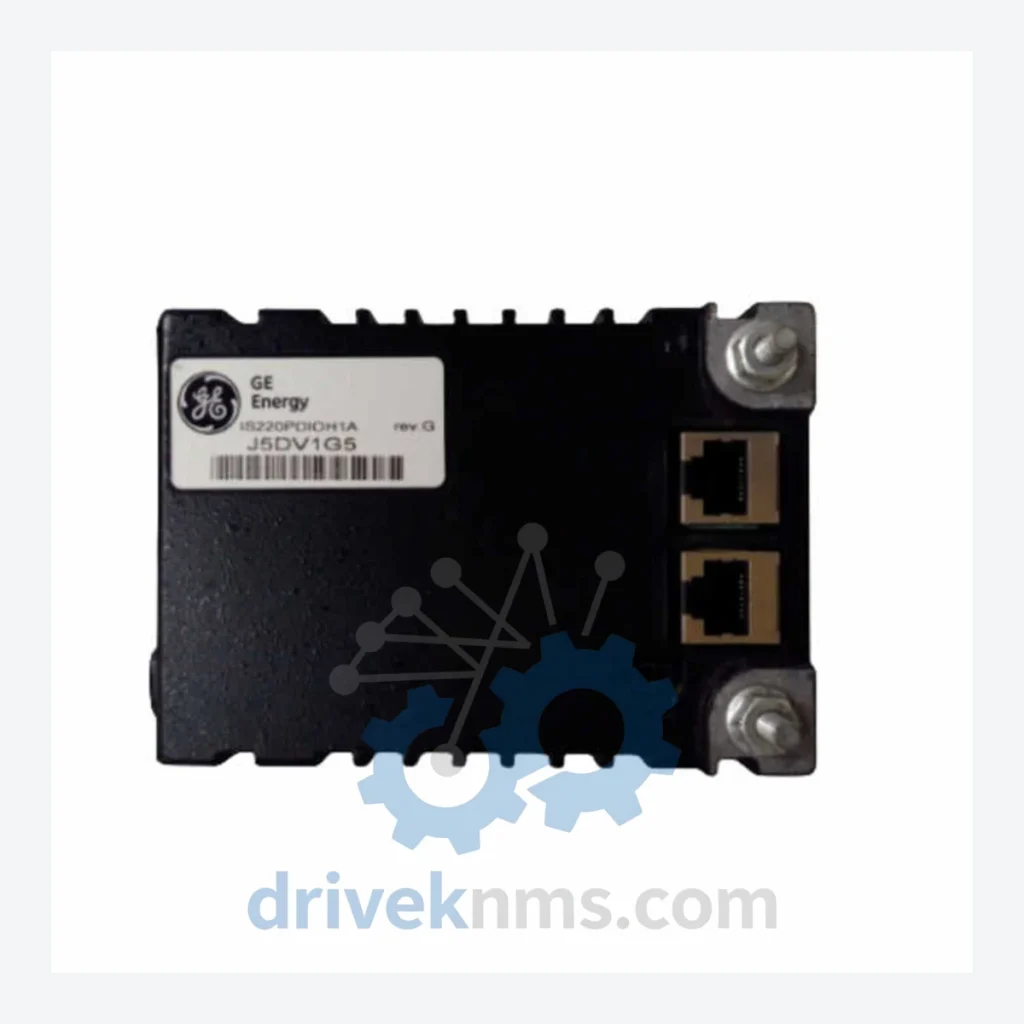
IS220PDIOH1A: Digital input module, 16-channel, configurable sourcing/sinking, diagnostic per-channel
Digital Output Modules
IS220PDOAH1A: Digital output module, 16-channel, 24 VDC sourcing, 0.5 A per channel, short-circuit protected
IS220PDOAH1B: Digital output module Rev B, increased surge immunity, CE/ATEX marking
Communication & CPU Modules
IS220PSCAH1A: Serial communication adapter, RS-232/RS-485, Modbus RTU master/slave
IS220PTURH1A: Turbine I/O interface module, speed/position input, magnetic pickup compatible
IS220PVIBH1A: Vibration monitoring input module, 8-channel, Bently Nevada protocol compatible
As GE Vernova has transitioned active production focus to the Mark VIe-S and Mark VIeS Compact platforms, a significant portion of IS220P inventory has exited standard distribution channels. DriveKNMS maintains a dedicated MRO (Maintenance, Repair & Operations) inventory program for IS220P series modules, covering both active and end-of-life variants. Stock is sourced through decommissioned plant buybacks, authorized surplus channels, and factory-refurbished units. All units are cataloged by part number, revision level, and firmware version to ensure compatibility with the customer's existing rack configuration. For facilities operating under long-term service agreements (LTSA) or requiring multi-year spare parts provisioning, DriveKNMS offers consignment stocking and priority reservation programs. Customers are advised to specify the terminal board revision and IONet addressing mode when placing inquiries to avoid cross-revision incompatibilities.
IS220P modules present specific test challenges due to their integrated backplane bus transceivers, multi-channel relay contact arrays, and IONet Ethernet PHY interfaces. DriveKNMS applies a structured test protocol for all IS220P units prior to shipment: (1) Visual inspection for PCB delamination, capacitor bulge, and connector pin integrity; (2) Powered bench test using a GE Mark VIe test rack with active IONet communication to verify module enumeration and diagnostic register response; (3) Channel-level functional test — each I/O channel is exercised at rated signal levels to confirm ADC/DAC linearity, relay contact resistance (500 VDC); (4) Firmware version verification against GE Toolbox compatibility matrix; (5) 48-hour burn-in at 50°C ambient to screen for early-life component failures. Units that fail any stage are quarantined and documented. Test records are retained for 5 years and are available to customers upon request.
Related Paths
GE IS200 Series: Comprehensive Module Range and Technical Overview The GE IS200 series constitutes the core I/O, control, and communication…
GE IS200 Series: Comprehensive Module Range and Technical Overview The GE IS200 series is the core I/O and control module…
GE IS215 Series: Comprehensive Module Range and Technical Overview The GE IS215 series represents a core hardware family within GE's…