
Honeywell XC Series Modules | XC5010C CPU Module
Honeywell XC Series: Comprehensive Module Range and Technical Overview The Honeywell XC Series represents a core control platform deployed across…
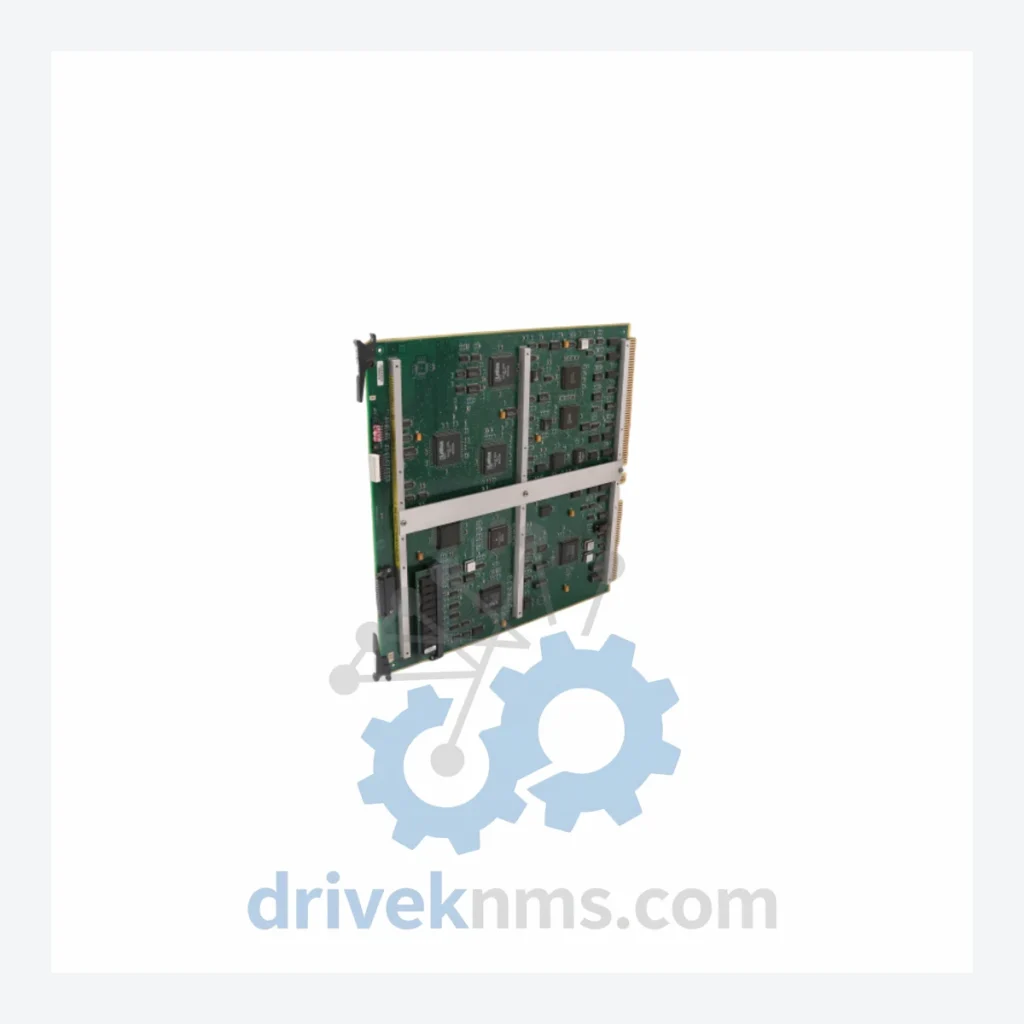
Model: K2LCN-4 51402615-400
Product Overview
Commercial availability is handled through direct RFQ, model verification and export-oriented follow-up rather than public cart checkout.
Datasheet Preview
Use attached product manuals when available. If the manual is not public yet, request the full file directly through RFQ.
Commercial Path
Product pages on DRIVEKNMS are designed to verify model, brand and series first, then move the buyer into one clean quotation path.
Technical Dossier
When a Honeywell TDC 3000 Local Control Network (LCN) circuit board fails, the consequences extend far beyond a single module replacement. The TDC 3000 platform — deployed across refineries, chemical plants, and power generation facilities worldwide — was engineered for decades of continuous operation. Its architecture is deeply embedded in process logic, historian configurations, and operator workflows that cannot be migrated overnight. A forced system retirement triggered by a single unavailable board can expose plant operators to capital expenditure demands exceeding several million dollars: new DCS hardware, re-engineering of control strategies, operator retraining, and weeks of production downtime. The K2LCN-4 51402615-400 is one of those boards. DriveKNMS maintains verified stock of this discontinued component specifically to protect facilities from that scenario.
| Manufacturer | Honeywell |
| Part Number | K2LCN-4 / 51402615-400 |
| Description | LCN (Local Control Network) Circuit Board |
| Compatible Platform | Honeywell TDC 3000 Distributed Control System |
| Series | TDC 3000 / LCN Network |
| Product Status | Discontinued / Obsolete – No longer manufactured by Honeywell |
| Country of Origin | United States |
| Condition Available | New Old Stock (NOS) / Professionally Refurbished |
Note: Electrical parameters are verified on a per-unit basis during our QA process. Specific values are confirmed at time of order to ensure accuracy and equipment safety.
The Honeywell TDC 3000 platform entered service in the 1980s and remained a dominant DCS architecture through the 1990s and into the 2000s. Honeywell has formally discontinued manufacturing support for the LCN hardware layer, including the K2LCN series boards. For facilities still operating TDC 3000 infrastructure, this creates a structural supply risk that grows more acute with each passing year.
The K2LCN-4 board serves as a core communication and processing node within the LCN network. Its failure disrupts data exchange between controllers, operator stations, and historian nodes — effectively degrading or halting process visibility across the affected network segment. There is no modern drop-in equivalent from Honeywell's current portfolio that integrates without significant re-engineering of the control architecture.
Facilities that have attempted full DCS migration to replace TDC 3000 infrastructure report project timelines of 18 to 36 months and capital costs that routinely exceed $3–8 million USD per unit, depending on process complexity. Sourcing a verified replacement K2LCN-4 board extends the operational life of the existing system at a fraction of that cost — preserving the engineering investment already embedded in the platform and deferring capital expenditure to a planned, budget-controlled timeline.
For plant managers and reliability engineers facing board-level failures, the calculus is straightforward: a verified spare part purchased today is not a maintenance cost. It is asset protection.
DriveKNMS applies a structured 5-step qualification process to all obsolete and legacy circuit boards before shipment:
Step 1 – Electrolytic Capacitor Inspection: Aged boards are assessed for capacitor bulging, electrolyte leakage, and ESR degradation. Capacitors showing end-of-life characteristics are replaced with specification-matched components before the board is cleared.
Step 2 – Firmware Version Verification: Where applicable, firmware revision is confirmed against known-compatible versions for the target TDC 3000 configuration. Boards with incompatible or corrupted firmware are flagged and not shipped.
Step 3 – Pin and Connector Corrosion Audit: All edge connectors, backplane pins, and I/O interfaces are inspected under magnification for oxidation, pitting, and mechanical deformation. Contact surfaces are cleaned and treated where required.
Step 4 – Functional Bench Test: Each board undergoes powered functional verification in a controlled test environment prior to packaging.
Step 5 – Anti-Static Packaging and Documentation: Units are sealed in ESD-protective packaging with a condition report and traceability record included in the shipment.
The K2LCN-4 51402615-400 is a direct hardware replacement for the existing board position within the TDC 3000 LCN chassis. No reprogramming of the LCN network configuration is required for a like-for-like board swap. The replacement procedure does not trigger re-engineering of control strategies, historian tags, or operator display configurations.
This matters operationally. Engineering labor for DCS reconfiguration is expensive and introduces risk. A board-level replacement that preserves the existing software environment eliminates that exposure entirely. Maintenance teams familiar with TDC 3000 procedures can execute the swap within established change management protocols, without involvement from system integration contractors.
For facilities maintaining a critical spare inventory strategy, the K2LCN-4 is a high-priority item. Its failure mode is typically sudden rather than gradual, and lead times for sourcing verified units on the open market can extend to weeks or months. Holding one or two units on-site eliminates that exposure for the operational life of the system.
The decision to retire a TDC 3000 system is rarely driven by the system's inability to perform its control function. It is almost always driven by the inability to source replacement hardware when failures occur. This is a supply chain problem, not an engineering problem — and it has a supply chain solution.
A structured critical spare inventory program for TDC 3000 LCN hardware — covering boards such as the K2LCN-4, along with power supplies, communication modules, and operator station components — can realistically extend the operational life of a well-maintained system by 5 to 10 years beyond what would otherwise be forced retirement. The investment required is a small fraction of the cost of a DCS migration project.
The approach is straightforward: identify the failure-critical boards in your LCN network, establish minimum stock levels for each, and source verified units while they remain available on the secondary market. Availability of obsolete Honeywell TDC 3000 hardware is finite and declining. Facilities that act on this now retain optionality. Those that wait until a failure event do not.
DriveKNMS specializes in sourcing and qualifying exactly this category of hardware. Our inventory is maintained specifically for facilities that have made a deliberate decision to protect their automation assets rather than be forced into premature capital expenditure.
What warranty applies to this obsolete part?
All units shipped by DriveKNMS carry a 90-day warranty against defects in materials and workmanship under normal operating conditions. Warranty terms are confirmed in writing at time of order.
How do I know the unit is genuine and not counterfeit?
DriveKNMS sources exclusively from traceable supply channels. Each unit is inspected for authenticity markers including board markings, component date codes, and construction characteristics consistent with genuine Honeywell manufacture. Our QA documentation is provided with each shipment.
Is this a new or refurbished unit?
We will confirm the specific condition — New Old Stock or professionally refurbished — at time of inquiry based on current inventory. Both conditions are subject to the same 5-step qualification process. Condition is disclosed in full before any order is confirmed.
Can you supply multiple units for a critical spare program?
Yes. We recommend contacting us directly to discuss quantity requirements and long-term supply arrangements. Bulk availability varies and early engagement is advisable given the finite supply of this discontinued component.
How long does shipping take?
Shipping timelines depend on destination and logistics method. We serve customers globally and will confirm lead times at time of order. Express options are available for urgent requirements.
Related Paths
Honeywell XC Series: Comprehensive Module Range and Technical Overview The Honeywell XC Series represents a core control platform deployed across…
Honeywell MP-DNCF02-200 Single-Phase Power Controller – Obsolete Limitrol Series Spare Part When a single-phase power controller fails inside a legacy…
Honeywell XDL Series: Comprehensive Module Range and Technical Overview The Honeywell XDL series is a core component family within the…