
Honeywell XC Series Modules | XC5010C CPU Module
Honeywell XC Series: Comprehensive Module Range and Technical Overview The Honeywell XC Series represents a core control platform deployed across…
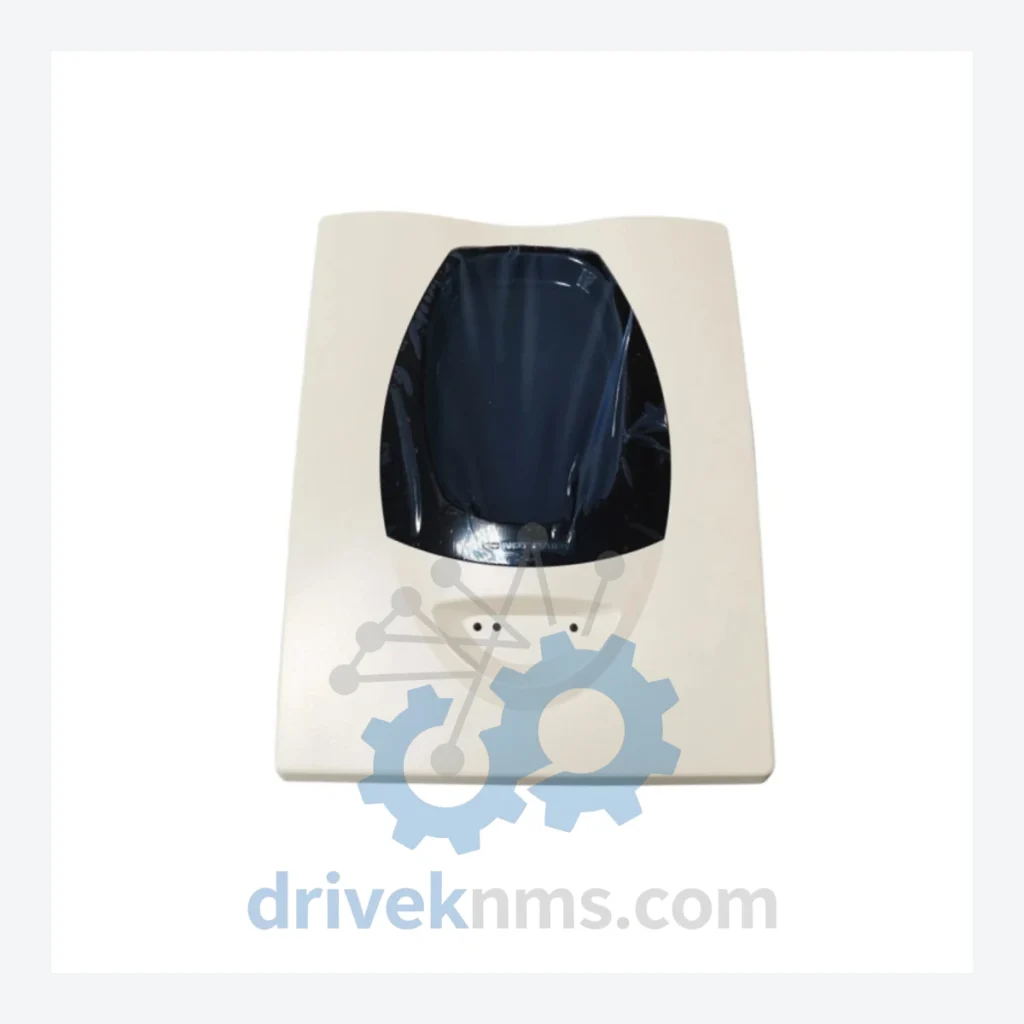
Model: FSB-200
Product Overview
Commercial availability is handled through direct RFQ, model verification and export-oriented follow-up rather than public cart checkout.
Datasheet Preview
Use attached product manuals when available. If the manual is not public yet, request the full file directly through RFQ.
Commercial Path
Product pages on DRIVEKNMS are designed to verify model, brand and series first, then move the buyer into one clean quotation path.
Technical Dossier
The Honeywell FSB Series of reflected beam smoke detectors represents one of the most widely deployed optical detection platforms in global heavy industry. Installations span petrochemical refineries, offshore platforms, nuclear power stations, chemical processing plants, and large-scale warehousing facilities where conventional point detectors are impractical due to ceiling height, airflow patterns, or structural obstructions. The FSB Series operates on the projected beam principle: an infrared transmitter projects a modulated beam across a protected zone (up to 100 m), and a receiver monitors beam attenuation caused by smoke particulate. This architecture eliminates the need for detector placement at the point of origin and provides area coverage that point detectors cannot achieve in high-bay environments. The series is listed under EN 54-12 (Europe) and compatible with Honeywell's Galaxy, Notifier, and Morley-IAS fire control panels, making it a standard specification item in global EPC (Engineering, Procurement & Construction) contracts for industrial facilities.
The FSB Series has undergone several architectural generations since its introduction. Early variants required precise optical alignment using external alignment tools and were sensitive to building movement and thermal expansion — a significant limitation in steel-framed industrial structures. Honeywell addressed this with the introduction of automatic gain control (AGC) circuitry, which compensates for gradual lens contamination and minor beam drift without triggering false alarms. Subsequent revisions introduced a wider acceptance angle at the receiver, reducing installation time and sensitivity to structural flex. The FSB-200 and FSB-500 represent the mature mid-generation platform, offering dual-wavelength discrimination to differentiate between smoke obscuration and dust or steam — a critical requirement in cement plants, flour mills, and paper manufacturing environments. The FSB-200R introduced a reflector-based configuration, eliminating the need for a separate receiver unit and reducing cabling infrastructure by approximately 50% in retrofit scenarios. Modern compatibility considerations include integration with addressable loop protocols (via interface modules) and BACnet/IP gateways for building management system (BMS) convergence. End-of-life planning for legacy FSB variants should account for the discontinuation of certain transmitter/receiver matched pairs; replacement requires re-commissioning of the entire beam path.
The following SKUs represent verified models within the Honeywell FSB Series. Each entry includes a concise functional descriptor for procurement and maintenance reference.
FSB-200: Projected beam smoke detector, 8–100 m range, EN 54-12 listed, standard transmitter/receiver pair.
FSB-200R: Reflective beam detector, single-unit installation, 5–50 m range, reduced cabling requirement.
FSB-500: Long-range projected beam detector, up to 100 m, dual-wavelength discrimination, high-bay industrial use.
FSB-500R: Reflective variant of FSB-500, single-end installation, 5–100 m range, AGC-equipped.
FSB-200T: Transmitter unit for FSB-200 pair configuration, field-replaceable, 12–30 VDC operation.
FSB-200RE: Receiver unit for FSB-200 pair, with relay output and alarm/fault LED indicators.
FSB-500T: Transmitter unit for FSB-500 long-range pair, modulated IR beam, tamper-resistant housing.
FSB-500RE: Receiver unit for FSB-500, programmable sensitivity thresholds, 4-wire connection.
FSB-AM: Alignment mirror/reflector accessory for FSB-200R and FSB-500R reflective configurations.
FSB-MB: Mounting bracket assembly, universal, compatible with FSB-200 and FSB-500 series housings.
FSB-HB: High-bay mounting bracket, adjustable tilt, for ceiling heights above 12 m.
FSB-WB: Wall-mount bracket for side-wall beam installations in narrow aisle or racking environments.
FSB-200-EX: ATEX/IECEx-rated variant of FSB-200 for Zone 1/Zone 2 hazardous area classification.
FSB-500-EX: ATEX/IECEx-rated long-range beam detector for Zone 1/Zone 2 explosive atmospheres.
FSB-TI: Test instrument/alignment tool for commissioning FSB Series transmitter-receiver pairs.
FSB-IM: Interface module for connecting FSB Series conventional output to addressable fire loop protocols.
FSB-PS: Dedicated power supply module for FSB Series installations requiring isolated 24 VDC feed.
The FSB Series presents specific quality verification challenges due to its optical alignment sensitivity and AGC calibration state. DriveKNMS applies the following test protocol to all FSB Series units prior to dispatch. Optical integrity verification: each transmitter is powered at rated voltage and beam output intensity is measured against factory specification using a calibrated optical power meter. Receiver sensitivity calibration: the receiver's alarm threshold is verified at the 25%, 50%, and 75% obscuration levels using a calibrated neutral density filter set. AGC circuit function: units with AGC are tested for correct compensation response over a simulated contamination cycle. Relay output verification: alarm, pre-alarm, and fault relay contacts are tested for correct switching under each trigger condition. Housing and connector inspection: IP rating integrity is verified by visual inspection of gaskets, cable glands, and connector seating. ATEX-rated units undergo additional inspection of flameproof enclosure integrity and certification label legibility. Units that do not meet all test criteria are quarantined and not offered for sale.
Related Paths
Honeywell XC Series: Comprehensive Module Range and Technical Overview The Honeywell XC Series represents a core control platform deployed across…
Honeywell MP-DNCF02-200 Single-Phase Power Controller – Obsolete Limitrol Series Spare Part When a single-phase power controller fails inside a legacy…
Honeywell XDL Series: Comprehensive Module Range and Technical Overview The Honeywell XDL series is a core component family within the…