
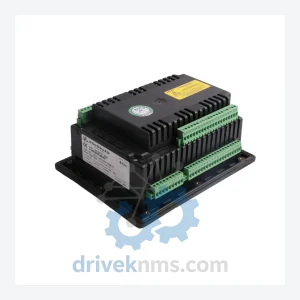
WOODWARD SA1509-24 Solenoid – Governor Control Series
WOODWARD SA1509-24 Solenoid: Supply Continuity Strategy for a Discontinued Governor Control Component The WOODWARD SA1509-24 is a 24VDC solenoid designed…
Model: UMT1 UMT145B A3 LR20523
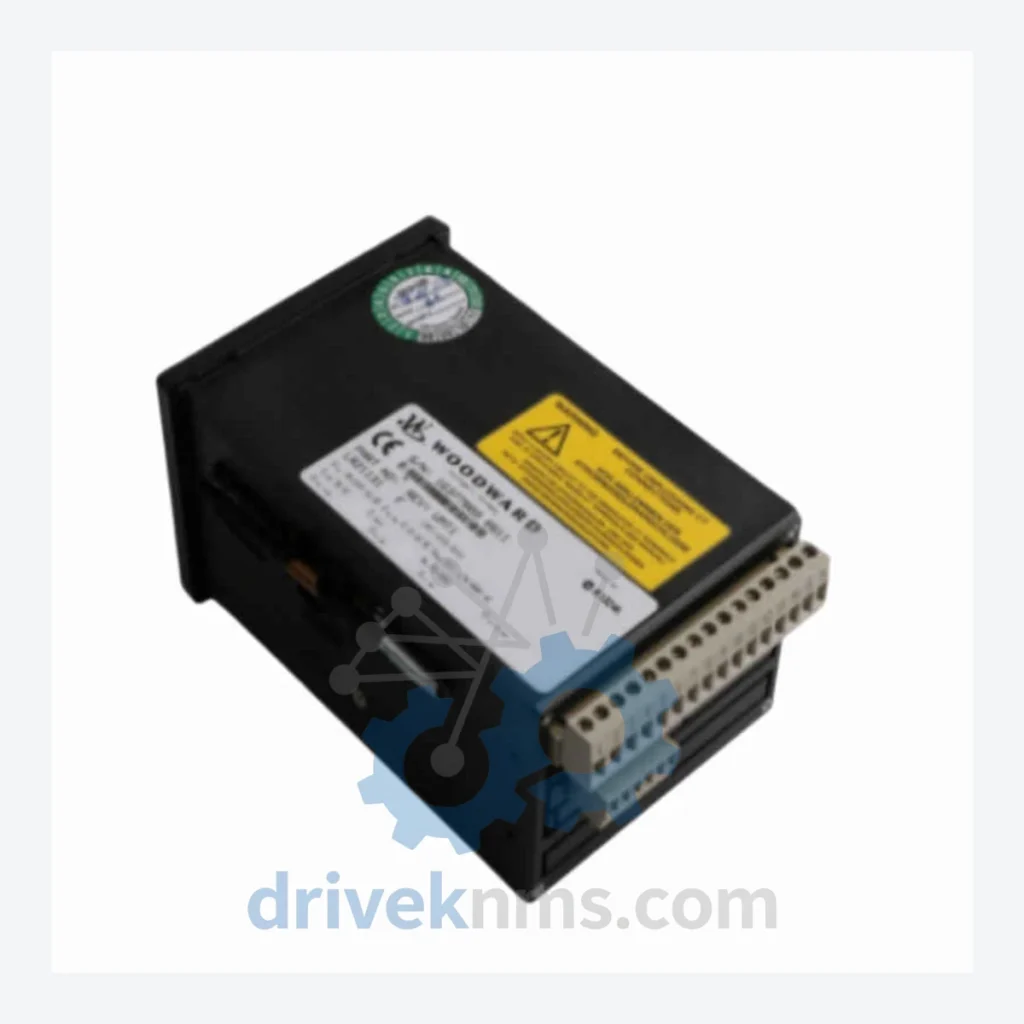
Product Overview
Commercial availability is handled through direct RFQ, model verification and export-oriented follow-up rather than public cart checkout.
Datasheet Preview
Use attached product manuals when available. If the manual is not public yet, request the full file directly through RFQ.
Commercial Path
Product pages on DRIVEKNMS are designed to verify model, brand and series first, then move the buyer into one clean quotation path.
Technical Dossier
The Woodward UMT (Universal Microprocessor-based Turbine) series represents one of the most widely deployed turbine control platforms in global heavy industry. Installed across gas turbine power plants, steam turbine-driven compressors, combined-cycle facilities, petrochemical refineries, and nuclear auxiliary systems, the UMT architecture has maintained a continuous field presence since the early 1990s. Its modular backplane design, deterministic scan cycle, and compatibility with Woodward's proprietary communication protocols made it the reference standard for OEM turbine control packages from GE, Siemens, Solar Turbines, and Dresser-Rand. Installed base estimates place active UMT-controlled turbines in the tens of thousands globally, with significant concentrations in the Middle East, Southeast Asia, and North American LNG infrastructure.
The UMT series was introduced by Woodward as a successor to the analog-based EG and TG governor families. The first-generation UMT1 platform (circa 1991–1998) used a single-board CPU with discrete I/O expansion via a passive backplane. Communication was limited to RS-232/RS-485 serial links. The UMT2 generation (1998–2006) introduced redundant CPU configurations, expanded analog I/O density, and early Modbus TCP support. The UMT3 and subsequent MicroNet Plus transition (2006–present) added IEC 61131-3 programming compatibility, Ethernet-based supervisory links, and hot-standby redundancy.
Compatibility across generations is constrained by backplane bus architecture: UMT1 modules are not electrically compatible with UMT2 backplanes without adapter kits. Firmware versioning is critical — modules must match the application software revision loaded on the master CPU. Field engineers replacing modules must verify the hardware revision suffix (e.g., /A3, /B1) against the site-specific bill of materials. The LR20523 designation on the subject module (UMT145B/A3/LR20523) refers to Woodward's internal engineering release number, which tracks PCB revision history and component substitution approvals.
As of 2024, the UMT1 and UMT2 product lines are classified by Woodward as End-of-Life (EOL). Woodward no longer manufactures replacement modules for these series. Long-term maintenance support is exclusively available through authorized third-party MRO suppliers and independent service organizations (ISOs) such as DriveKNMS.
CPU / Controller Modules
Analog Input Modules
Digital Input / Output Modules
Communication & Network Modules
Power Supply Modules
With Woodward's official EOL declaration for the UMT1 and UMT2 series, the primary supply channel for replacement modules has shifted entirely to the secondary market. DriveKNMS maintains a dedicated inventory of tested UMT series modules sourced from decommissioned turbine control panels, OEM overstock, and controlled teardowns of retired systems. All modules are catalogued by part number, hardware revision, and firmware version where applicable.
For operators running UMT1-based systems with no near-term upgrade budget, DriveKNMS provides lifecycle extension support including: module-level repair and component replacement, firmware archiving and restoration, backplane bus diagnostics, and cross-reference mapping to compatible MicroNet Plus equivalents where direct substitution is feasible. Lead times for common UMT2 modules are typically 3–10 business days from stock. Rare UMT1 CPU boards such as the UMT145B/A3/LR20523 are sourced on request with a 2–4 week procurement window.
UMT series modules present specific test challenges due to their proprietary backplane bus protocol and the absence of publicly available test fixtures. DriveKNMS employs a multi-stage verification process for all UMT modules entering inventory:
Each module ships with a test report documenting pass/fail results per channel and the hardware revision confirmed during inspection.
Related Paths
WOODWARD SA1509-24 Solenoid: Supply Continuity Strategy for a Discontinued Governor Control Component The WOODWARD SA1509-24 is a 24VDC solenoid designed…
Woodward PCU1000 PCI Serial Network Interface Card – Obsolete MicroNet Spare Part When a Woodward PCU1000 fails inside an active…
Woodward SST-DN4-102-2 VME Bus Interface – Obsolete MicroNet Spare Part When a VME bus interface module fails inside a Woodward…