
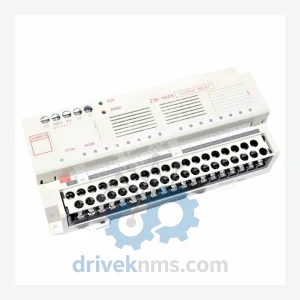
SHARP ZW Series Modules: ZW-164S
SHARP ZW Series: Comprehensive Module Range and Technical Overview The SHARP ZW series represents one of Japan's most widely deployed…
Model: JW-214SA
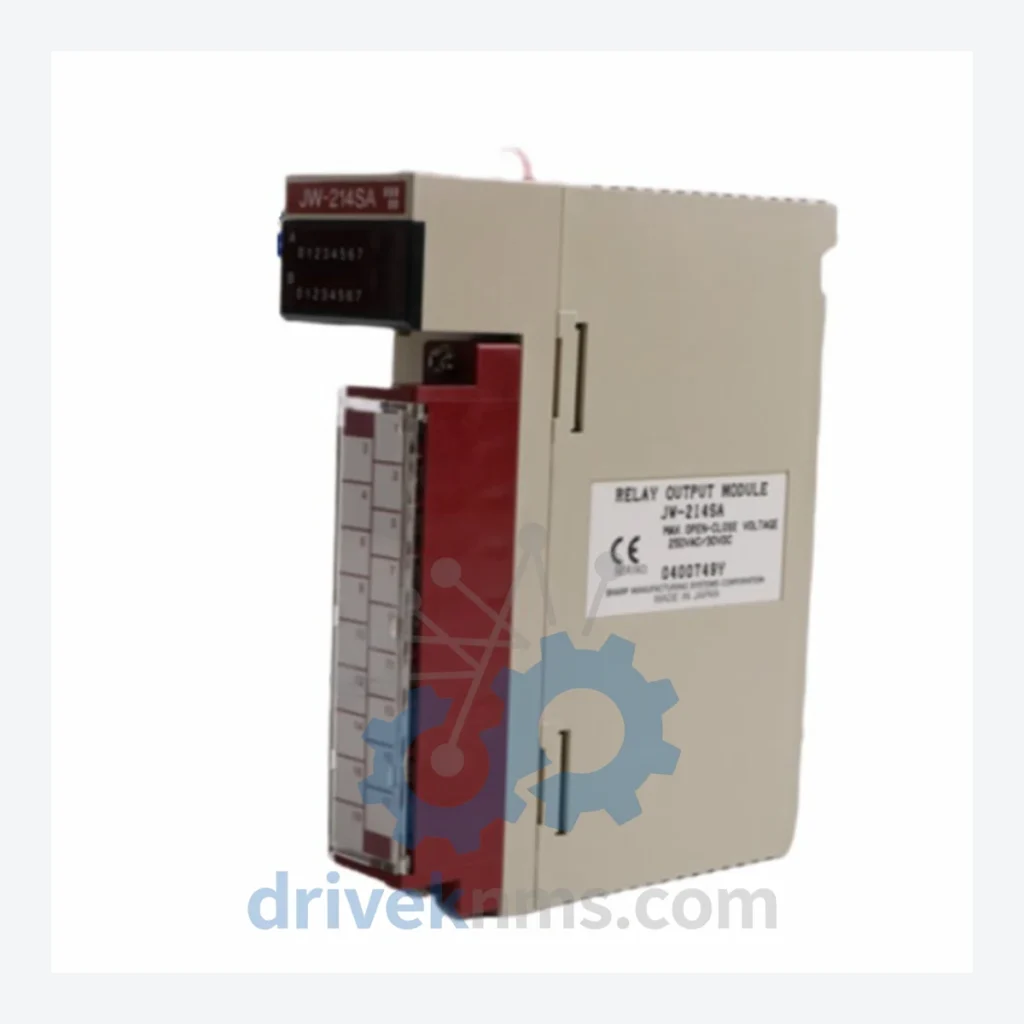
Product Overview
Commercial availability is handled through direct RFQ, model verification and export-oriented follow-up rather than public cart checkout.
Datasheet Preview
Use attached product manuals when available. If the manual is not public yet, request the full file directly through RFQ.
Commercial Path
Product pages on DRIVEKNMS are designed to verify model, brand and series first, then move the buyer into one clean quotation path.
Technical Dossier
When a discrete output module fails inside a Sharp JW-series PLC system, the clock starts immediately. Every hour of unplanned downtime on a production line carries a measurable cost—lost throughput, idle labor, and the looming threat of a forced system migration. Replacing an entire JW-series control architecture—including rewiring, re-engineering, operator retraining, and new SCADA integration—routinely runs into the hundreds of thousands of dollars, and in complex multi-axis or multi-zone installations, costs can exceed seven figures. The Sharp JW-214SA is a discrete output module that has been out of production for years. Finding a verified, functional unit is no longer a matter of placing a standard purchase order. DriveKNMS maintains a limited inventory of this component, sourced through controlled channels, for facilities that cannot afford to treat a single module failure as a trigger for full system retirement.
| Parameter | Detail |
|---|---|
| Part Number | JW-214SA |
| Manufacturer | Sharp Corporation (Industrial Automation Division) |
| Module Type | Discrete Output Module |
| Compatible PLC Series | Sharp JW-20, JW-50, JW-100 |
| Country of Origin | Japan |
| Production Status | Discontinued / Obsolete |
| Condition Available | New Old Stock (NOS) / Refurbished – Grade A |
| Electrical Parameters | Subject to system configuration – contact us for datasheet confirmation |
The Sharp JW-series PLCs were deployed extensively across Japanese and Asian manufacturing facilities from the 1980s through the early 2000s, particularly in automotive sub-assembly, food processing, and textile machinery. The JW-214SA output module sits at the interface between the controller's logic and the physical actuators—relays, solenoids, motor starters—that drive the production process. There is no modern drop-in equivalent from Sharp's current product line. The company's industrial automation division has been absorbed and restructured, and official spare parts support has long since ended.
For a plant manager operating a facility built around JW-series infrastructure, the options are stark: locate a verified spare part, or begin the process of ripping out and replacing a control system that may be deeply integrated into the facility's electrical and mechanical design. The latter path is not simply expensive—it is disruptive in ways that extend well beyond the capital expenditure. Re-engineering a control system requires halting production, often for weeks. It requires re-validating processes in regulated industries. It requires retraining operators who have worked with the existing interface for years. A single JW-214SA module, properly sourced and verified, eliminates all of that risk for a fraction of the cost.
Facilities that have extended the operational life of their JW-series systems by 5 to 10 years through strategic spare parts procurement have done so by treating critical modules as capital assets, not consumables. The approach is straightforward: identify the highest-failure-risk components in the system, secure verified spares before failure occurs, and maintain a documented inventory. The cost of this strategy is a small fraction of the cost of a single unplanned shutdown, let alone a forced migration. For plant managers facing pressure to justify continued operation of legacy systems, a documented spare parts reserve is also a defensible position in budget discussions—it demonstrates that the risk of continued operation is being actively managed.
Sourcing a discontinued module from the open market carries real risk. Components that have been stored improperly, subjected to voltage spikes, or stripped from failed systems without documentation can introduce new failure modes rather than resolving existing ones. DriveKNMS applies a five-step verification process to every JW-214SA unit before it is offered for sale:
1. Electrolytic Capacitor Assessment: Capacitors are the primary age-related failure point in modules of this era. Each unit is inspected for visible swelling, leakage, and ESR deviation. Units with degraded capacitors are either recapped with equivalent-spec components or removed from inventory.
2. Firmware Version Verification: Where applicable, firmware or EPROM versions are documented and matched against known-compatible revisions for the target PLC series. Mismatched firmware versions can cause silent communication errors that are difficult to diagnose in the field.
3. Pin and Connector Inspection: All edge connectors and I/O pins are inspected under magnification for oxidation, corrosion, and mechanical deformation. Affected contacts are cleaned using appropriate methods; units with structural pin damage are rejected.
4. Functional Output Test: Each output channel is exercised under controlled load conditions to verify switching behavior and confirm that all outputs respond correctly to control signals.
5. Final Documentation: Each unit shipped is accompanied by a condition report noting the inspection findings, the firmware version (if applicable), and the test results. This documentation supports traceability requirements in regulated manufacturing environments.
The JW-214SA is a direct replacement for the original module position in any compatible JW-series rack. Installation does not require PLC reprogramming, I/O address reassignment, or modification of the existing ladder logic. The module slots into the existing backplane and operates within the existing system configuration. This is the defining advantage of sourcing the correct obsolete part rather than attempting a cross-brand substitution: there is no engineering work, no validation cycle, and no risk of introducing incompatibilities into a system that is otherwise stable. The total cost of the repair is the cost of the module and the time to install it. For a facility running a JW-series system, that is the lowest-risk, lowest-cost path back to full production.
What warranty applies to a discontinued module?
DriveKNMS provides a 90-day functional warranty on all refurbished units and a 30-day warranty on New Old Stock units. The warranty covers failure under normal operating conditions and excludes damage resulting from installation errors or electrical faults in the host system.
How do I confirm the unit is genuine and not a counterfeit?
All units are sourced through documented channels. We provide the unit's physical markings, date codes where present, and our inspection report. We do not sell units that cannot be traced to a verifiable source. If you require additional authentication documentation, contact us before purchase.
Should I buy more than one unit?
For any facility operating more than one JW-series rack, holding at least two JW-214SA units in reserve is a defensible maintenance strategy. The module is no longer manufactured. Current market availability is finite and declining. The cost of a second unit is negligible relative to the cost of a production stoppage caused by a second module failure while waiting for sourcing.
Can you source other JW-series modules?
Yes. Contact us with your full parts list. We maintain inventory across multiple JW-series module types and can advise on availability and lead times.
© 2026 DriveKNMS. Status: DRAFT
Related Paths
SHARP ZW Series: Comprehensive Module Range and Technical Overview The SHARP ZW series represents one of Japan's most widely deployed…
SHARP ZW-161S Output Module – Obsolete ZW Series Spare Part When a SHARP ZW-161S output module fails on your production…
SHARP JW-213S AC Output Module Board: Supply Continuity Strategy for Procurement Managers The SHARP JW-213S is an AC output module…