
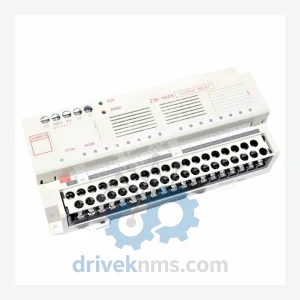
SHARP ZW Series Modules: ZW-164S
SHARP ZW Series: Comprehensive Module Range and Technical Overview The SHARP ZW series represents one of Japan's most widely deployed…
Model: ZW-161S
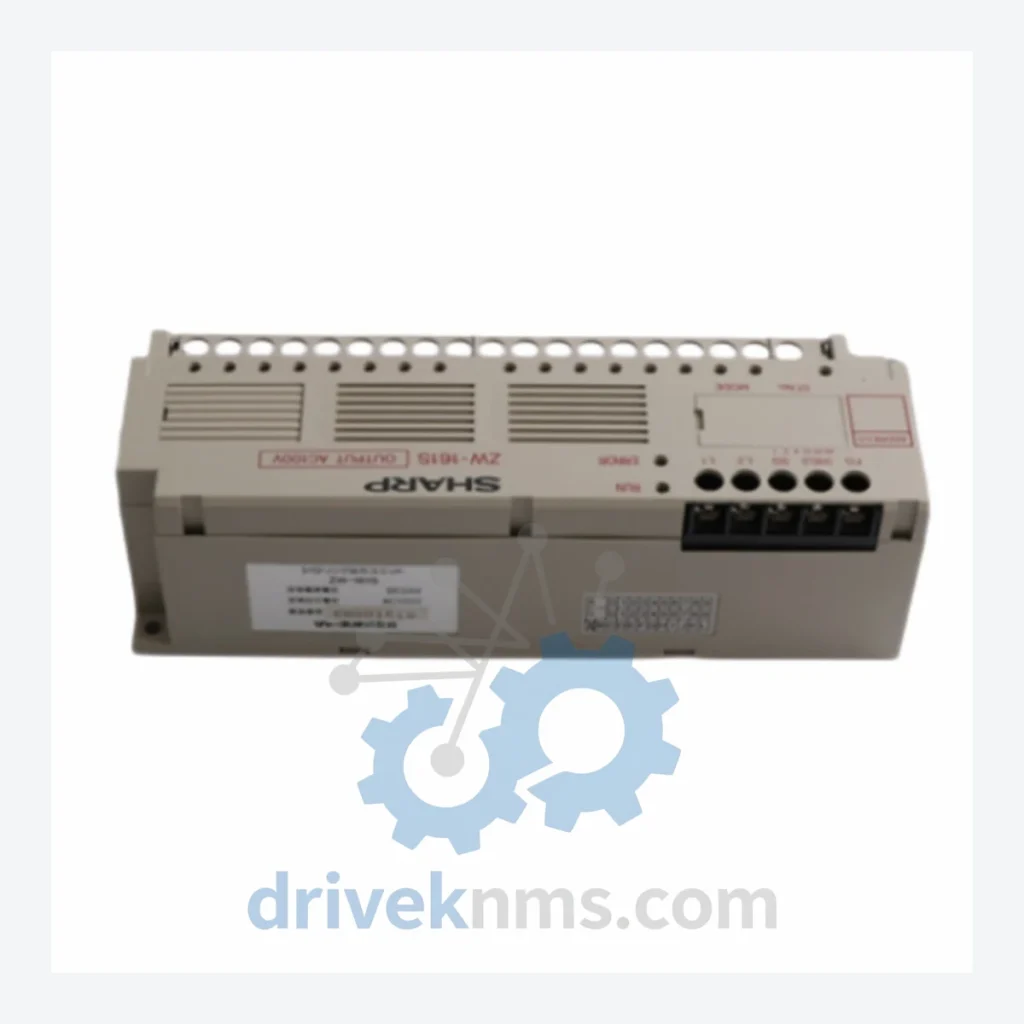
Product Overview
Commercial availability is handled through direct RFQ, model verification and export-oriented follow-up rather than public cart checkout.
Datasheet Preview
Use attached product manuals when available. If the manual is not public yet, request the full file directly through RFQ.
Commercial Path
Product pages on DRIVEKNMS are designed to verify model, brand and series first, then move the buyer into one clean quotation path.
Technical Dossier
When a SHARP ZW-161S output module fails on your production floor, the clock starts immediately. This is not a component you can source from a distributor's shelf. The ZW series was discontinued years ago, and the industrial control systems built around it — still running in food processing plants, automotive stamping lines, and chemical facilities worldwide — have no straightforward migration path. A full system upgrade to a modern PLC platform carries engineering costs that routinely exceed USD $500,000 when you factor in rewiring, software redevelopment, operator retraining, and production downtime. Against that backdrop, a single verified spare module represents a fraction of the cost and months of operational continuity.
DriveKNMS maintains a carefully managed inventory of hard-to-find legacy automation components. The SHARP ZW-161S is one of the most requested items from facilities still operating ZW-series control architectures. Stock is finite and does not replenish.
| Manufacturer | SHARP Corporation |
|---|---|
| Part Number | ZW-161S |
| Series | ZW Series (SHARP PLC) |
| Module Type | Output Module |
| Compatible Systems | SHARP ZW-series PLC platforms |
| Discontinuation Status | Confirmed Discontinued – No OEM production |
| Country of Origin | Japan |
| Electrical Parameters | Refer to OEM documentation (ZW-161S datasheet). Parameters are not reproduced here to prevent specification errors in safety-critical applications. |
Note: For safety-critical installations, always cross-reference electrical parameters against the original OEM datasheet before installation.
The SHARP ZW-series PLC was a workhorse of 1980s and 1990s industrial automation. Facilities that built their control infrastructure around these systems made sound engineering decisions at the time. The problem is not the original design — it is the supply chain reality that follows discontinuation.
When SHARP exited the PLC market, the aftermarket for ZW-series components contracted sharply. Third-party repair services dried up. Spare parts inventories at regional distributors were consumed without replenishment. Today, a plant manager facing a failed ZW-161S output module has three options: locate a verified spare, attempt a board-level repair with no guarantee of long-term reliability, or commit to a full system migration.
The migration path is the option most frequently cited by automation vendors — because it generates the most revenue for them. The reality for the plant is different. A ZW-series migration touches every I/O point, every ladder logic routine, every HMI screen, and every safety interlock. For a mid-size production line, that is a 12-to-18-month project with no guarantee of zero production loss during cutover. The SHARP ZW-161S spare module eliminates that conversation entirely. The existing system continues to run. Engineering resources stay focused on value-generating projects rather than forced migrations.
Facilities that maintain a strategic reserve of ZW-161S modules routinely extend their control system asset life by 5 to 10 years beyond what their OEM support contracts would suggest is possible. The math is straightforward: the cost of three spare modules is a rounding error compared to the capital expenditure of a forced upgrade.
Sourcing a discontinued module from an unverified channel introduces risk that can exceed the cost of the part itself. DriveKNMS applies a five-step quality assurance process to every ZW-161S unit before it leaves our facility.
Step 1 – Visual and Mechanical Inspection: Each board is examined under magnification for physical damage, cracked solder joints, and connector pin integrity. Units with visible corrosion on edge connectors are rejected at this stage.
Step 2 – Electrolytic Capacitor Assessment: Aged electrolytic capacitors are the primary failure mode in legacy output modules. Every capacitor on the ZW-161S board is tested for capacitance drift and ESR. Units showing degradation beyond acceptable tolerance are either recapped with equivalent-spec components or rejected.
Step 3 – Firmware and Configuration Verification: Where applicable, firmware version is confirmed against known ZW-series compatibility matrices. No unauthorized firmware modifications are present on any unit we ship.
Step 4 – Pin and Connector Corrosion Screening: All I/O connectors and backplane interface pins are cleaned, inspected, and tested for continuity. Oxidation that would cause intermittent contact faults is addressed before shipment.
Step 5 – Functional Burn-In: Units are powered and cycled through output switching sequences to confirm stable operation before packaging.
Units that pass all five stages are classified as Tested Serviceable. Units in original factory-sealed packaging are classified as New Old Stock (NOS) and are not subjected to invasive testing unless the customer requests it.
The ZW-161S installs as a direct drop-in replacement for the original module position in any ZW-series rack. No rewiring. No PLC program modifications. No engineering hours spent on I/O remapping. The existing ladder logic, HMI configuration, and field wiring remain untouched.
This is the defining advantage of maintaining a legacy spare strategy over pursuing premature system migration. The cost of a verified ZW-161S spare is measured in hundreds of dollars. The cost of a single unplanned production stoppage while waiting for a migration project to complete is measured in days of lost output. For high-throughput manufacturing environments, that comparison is not abstract — it is a line item on a P&L statement.
Facilities managing multiple ZW-series installations are advised to maintain a minimum of two ZW-161S spares per production line. This provides coverage for simultaneous failures during peak production periods and eliminates single-point-of-failure exposure in the spare parts inventory itself.
Q: What warranty applies to a discontinued module like the ZW-161S?
A: DriveKNMS provides a 90-day warranty on all tested serviceable units covering functional failure under normal operating conditions. New Old Stock units carry a 30-day warranty. Warranty claims are handled directly — no third-party processing delays.
Q: How do I confirm the unit is genuine and not a counterfeit?
A: Every ZW-161S we ship includes documentation of its sourcing channel and condition classification. We do not source from unverified brokers. Customers requiring additional authentication documentation should request it at the time of order.
Q: Should we stock multiple units as long-term reserves?
A: Yes. For any facility running ZW-series PLCs as primary production control, a minimum reserve of two ZW-161S output modules per line is a defensible maintenance strategy. The global supply of these units is not growing. Prices for verified stock trend upward as remaining inventory is consumed. Purchasing reserve stock now is a lower-cost decision than sourcing under emergency conditions 18 months from now.
Q: Can you source additional ZW-161S units if we need more than you currently have in stock?
A: Contact us with your quantity requirement. We maintain sourcing relationships across multiple regions and can often locate additional units, though lead times for obsolete parts are not guaranteed.
© 2026 DriveKNMS. (Status: DRAFT)
Related Paths
SHARP ZW Series: Comprehensive Module Range and Technical Overview The SHARP ZW series represents one of Japan's most widely deployed…
SHARP ZW Series: Comprehensive Module Range and Technical Overview The SHARP ZW Series represents SHARP Corporation's dedicated line of programmable…
SHARP JW-213S AC Output Module Board: Supply Continuity Strategy for Procurement Managers The SHARP JW-213S is an AC output module…