
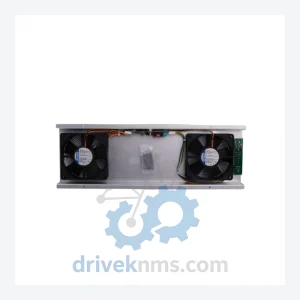
HIMA K Series Modules – K9202 Cabinet Roof Fan
HIMA K Series: Comprehensive Module Range and Technical Overview The HIMA K Series represents one of the most widely deployed…
Model: F3DIO16/801
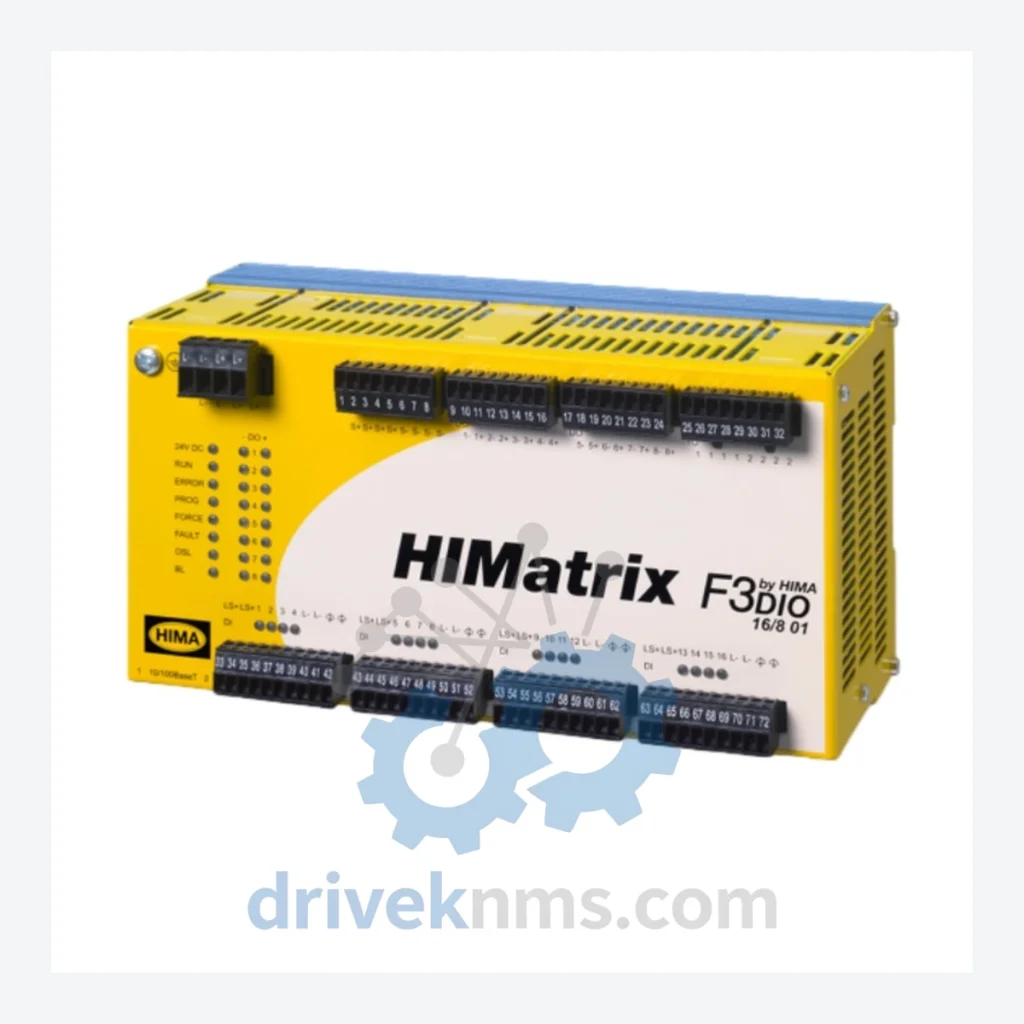
Product Overview
Commercial availability is handled through direct RFQ, model verification and export-oriented follow-up rather than public cart checkout.
Datasheet Preview
Use attached product manuals when available. If the manual is not public yet, request the full file directly through RFQ.
Commercial Path
Product pages on DRIVEKNMS are designed to verify model, brand and series first, then move the buyer into one clean quotation path.
Technical Dossier
The HIMA F3 series represents one of the most widely deployed safety-rated programmable controller platforms in global heavy industry. Certified to IEC 61508 SIL 3 and IEC 61511, F3 installations are documented across petrochemical complexes, nuclear power generation facilities, offshore oil and gas platforms, and large-scale refinery operations. The architecture is based on HIMA's proprietary HIMax/HIMatrix safety bus, with redundant backplane communication and deterministic scan cycles suited to emergency shutdown (ESD), fire and gas (F&G), and burner management systems (BMS). The F3 series has accumulated decades of installed base across Europe, the Middle East, and Asia-Pacific, making long-term spare parts availability a critical operational requirement for plant maintenance teams.
The HIMA F3 platform was introduced as a successor to earlier relay-based and first-generation PLC safety systems, targeting applications requiring certified functional safety without the complexity of full DCS integration. Early F3 variants used parallel redundancy at the I/O module level, with each module independently executing safety logic and cross-checking outputs via internal voting circuits. As industrial communication standards evolved, HIMA extended the F3 series to support PROFIBUS-DP, Modbus RTU/TCP, and later OPC-UA gateways, enabling integration with third-party DCS platforms from Honeywell, Emerson, and ABB without replacing the safety core.
The F3 series entered its mature phase in the 2010s, with HIMA progressively migrating new projects to the HIMax platform. However, the F3 installed base remains extensive, and HIMA has maintained backward-compatible firmware and hardware support. For plants operating F3 systems beyond their original design life, the primary challenges are: sourcing discontinued I/O modules, maintaining certified spare inventory, and managing firmware version compatibility between CPU and peripheral modules. DriveKNMS specializes in addressing all three constraints.
The following represents a structured index of commonly sourced F3 series modules, organized by functional category. Each entry reflects a real, documented part number within the HIMA F3 product family.
Safety Controllers / CPU Modules
Digital I/O Modules
Analog I/O Modules
Communication & Gateway Modules
Power Supply Modules
HIMA's transition toward the HIMax platform has resulted in several F3 module variants being formally discontinued. For plant operators with F3 systems under long-term service agreements or operating under regulatory frameworks that prohibit mid-lifecycle platform migration (common in nuclear and chemical sectors), sourcing certified replacement modules is a persistent challenge.
DriveKNMS maintains a dedicated inventory program for the F3 series, covering both current-production and end-of-life part numbers. Our sourcing network spans authorized distributor overstock, decommissioned plant buybacks, and factory-refurbished units. All F3 modules sourced through DriveKNMS are accompanied by full traceability documentation, including original manufacturer certificates where available. For obsolete CPU and communication modules — which carry the highest replacement risk — we maintain buffer stock specifically to support emergency shutdown system maintenance windows.
The F3 series employs a multi-layer backplane bus architecture with internal cross-checking between redundant processing channels. Standard bench testing is insufficient to validate the integrity of these modules. DriveKNMS applies a dedicated F3 test protocol that includes: powered backplane simulation to verify bus communication handshake, channel-by-channel I/O verification against HIMA-published signal specifications, firmware version identification and compatibility mapping, and thermal cycling to screen latent component failures. For digital output modules, each output channel is load-tested at rated current. For analog modules, linearity and offset error are measured across the full 4–20mA range. Communication modules are validated against live PROFIBUS or Modbus test networks before dispatch.
Related Paths
HIMA K Series: Comprehensive Module Range and Technical Overview The HIMA K Series represents one of the most widely deployed…
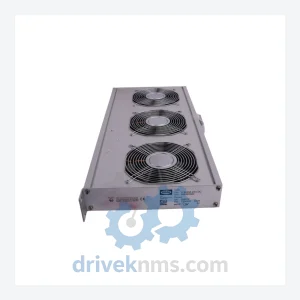
HIMA K9203 Fan Module: Securing Cooling Redundancy for Safety-Critical Control Systems The HIMA K9203 Fan Module is a purpose-built cooling…
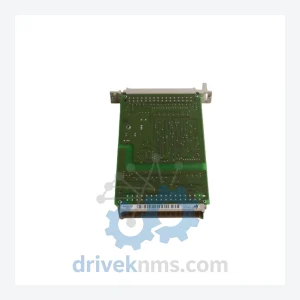
HIMA ZI006 Input Module – Obsolete F3 Series Spare Part When a HIMA ZI006 input module fails in an active…