
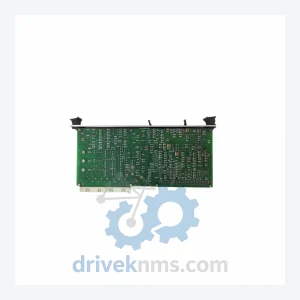
Yokogawa K9634DA-01 TCD Card Modules
Yokogawa K9634DA Series: Comprehensive Module Range and Technical Overview The Yokogawa K9634DA series TCD (Thermocouple/mV Input) cards are field-proven I/O…
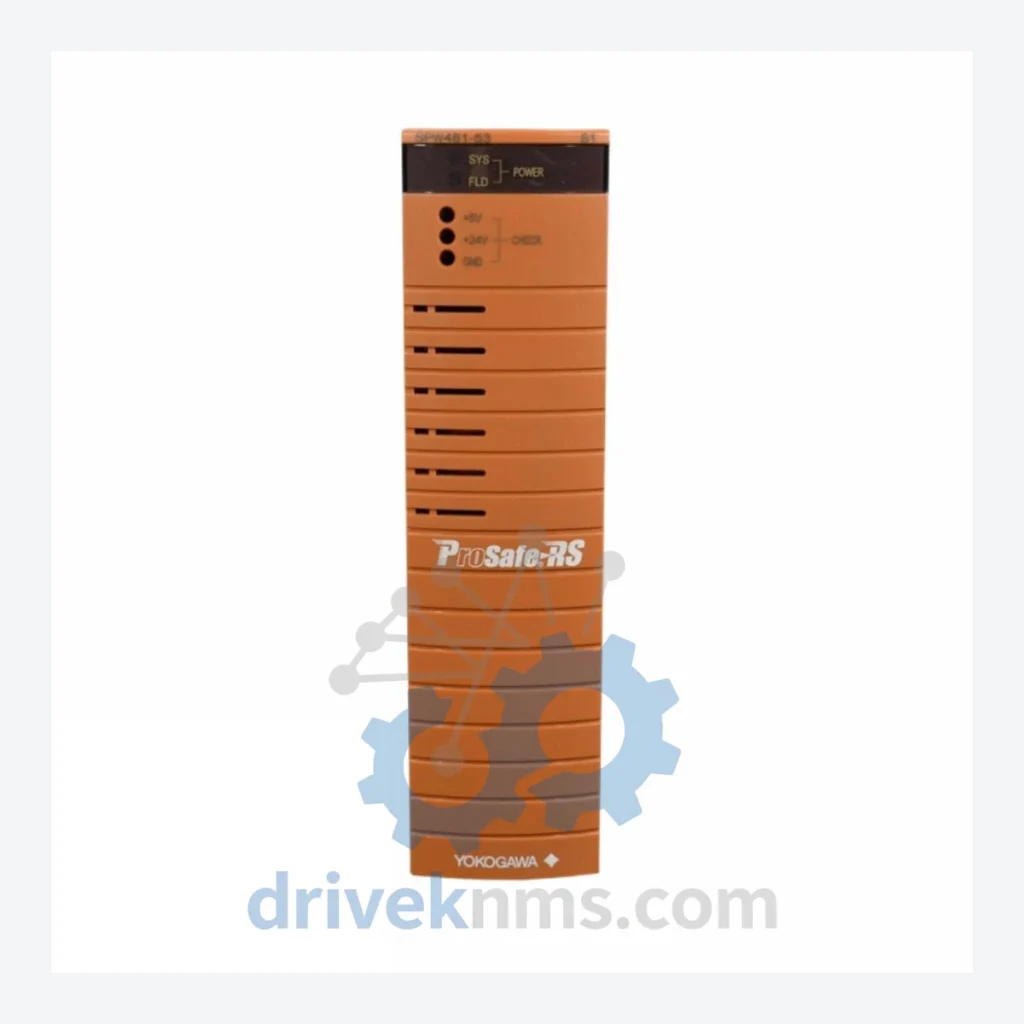
Model: SPW481-53 S1
Product Overview
Commercial availability is handled through direct RFQ, model verification and export-oriented follow-up rather than public cart checkout.
Datasheet Preview
Use attached product manuals when available. If the manual is not public yet, request the full file directly through RFQ.
Commercial Path
Product pages on DRIVEKNMS are designed to verify model, brand and series first, then move the buyer into one clean quotation path.
Technical Dossier
The YOKOGAWA SPW481 series power supply modules are core infrastructure components deployed across the CENTUM VP and CENTUM CS 3000 distributed control systems (DCS). These units are installed in field control stations (FCS) and engineering workstations across critical heavy industries including petroleum refining, petrochemical complexes, nuclear power generation, LNG terminals, and large-scale chemical manufacturing. The SPW481 series provides regulated DC power to I/O modules, communication buses, and processor cards within the YOKOGAWA nest architecture. Their redundant-capable design makes them a standard specification in safety-critical continuous process environments where unplanned downtime carries significant operational and financial consequences. Global installed base spans facilities in Asia-Pacific, the Middle East, Europe, and the Americas, with many sites operating hardware commissioned in the early 2000s that remains in active service.
The SPW481 series was introduced as part of YOKOGAWA's CENTUM CS 3000 platform, which succeeded the CENTUM-XL and CENTUM CS systems in the late 1990s. The architecture centers on a nest-based backplane design where power supply modules slot into dedicated positions and deliver regulated voltage rails to co-located I/O and CPU cards. Early variants were designed for single-supply configurations; subsequent suffix variants (e.g., -53, -54) introduced enhanced input voltage tolerance ranges and improved thermal derating characteristics to accommodate tropical and desert installation environments.
With the transition to CENTUM VP (circa 2008 onward), YOKOGAWA maintained backward hardware compatibility for SPW481-series units within existing nest assemblies, allowing brownfield sites to upgrade control software without replacing power infrastructure. This cross-generation compatibility is a defining characteristic of the SPW481 line and a primary reason units remain in service well beyond their original design lifecycle. As CENTUM CS 3000 entered its end-of-active-development phase, the SPW481 series transitioned into a long-term maintenance and spare parts support posture. New installations default to CENTUM VP-native power architectures, but the SPW481 remains the correct replacement part for any CS 3000 or early VP nest that has not been hardware-upgraded.
The following SKUs represent the documented SPW481 series range. Each unit is a field-replaceable module (FRM) designed for hot-swap or cold-swap installation depending on nest redundancy configuration.
SPW481-53 S1: 100–240 V AC input power supply module, standard nest fit, CENTUM CS 3000 / VP compatible
SPW481-54 S1: Wide-range AC input variant with extended voltage tolerance for unstable grid environments
SPW481-11: Early-generation 100–120 V AC input power supply, single-voltage input range
SPW481-12: 200–240 V AC input variant of the -11 generation, common in European and Asian installations
SPW481-21: DC input power supply module, 24 V DC nominal, for battery-backed or DC-bus installations
SPW481-22: DC input variant, 48 V DC nominal, used in telecom-adjacent process control environments
SPW481-31: Redundant-pair primary unit, designed for dual-supply nest configurations requiring automatic failover
SPW481-32: Redundant-pair secondary/standby unit, paired with SPW481-31 in high-availability nests
SPW481-41: Enhanced output current capacity variant for high-density I/O nests with elevated load requirements
SPW481-42: Dual-output rail variant supplying both logic and field power within a single module footprint
SPW481-51: Predecessor to the -53 suffix line; 100–240 V AC input, earlier thermal management design
SPW481-52: Intermediate revision with revised inrush current limiting circuitry
SPW481-53: Standard production variant, 100–240 V AC universal input, current production baseline
SPW481-53 S1: Factory-configured variant of SPW481-53 with S1 suffix denoting specific regional or application certification
SPW481-54: Extended input range variant, -10% to +15% voltage tolerance beyond nominal
SPW481-55: High-efficiency revision incorporating updated switching topology for reduced heat dissipation
SPW481-61: Conformal-coated variant for high-humidity or corrosive-atmosphere installations (offshore platforms, coastal chemical plants)
DriveKNMS maintains a dedicated inventory program for YOKOGAWA SPW481 series modules, with particular focus on suffix variants that YOKOGAWA has discontinued from active production. For facilities operating CENTUM CS 3000 systems beyond their original support window, sourcing replacement power supply modules through the OEM channel is frequently not possible on short lead times. DriveKNMS sources SPW481 units through verified secondary market channels, decommissioned plant asset liquidations, and long-term stocking agreements with industrial surplus distributors globally.
All units are inspected, tested, and documented prior to dispatch. For emergency breakdown situations, DriveKNMS offers priority processing for SPW481 orders with same-day quotation and expedited international shipping via DHL Express, FedEx International Priority, and air freight consolidation from Xiamen, China. Customers in the Middle East, Southeast Asia, and Europe are served from regional logistics hubs to minimize customs clearance delays.
Power supply modules in the SPW481 series require functional validation beyond basic visual inspection due to their role in supplying regulated voltage to backplane bus architectures. DriveKNMS applies the following test protocol to all SPW481 units processed through its facility:
Input voltage sweep test: Unit is energized across its full rated input voltage range to verify regulation stability and absence of oscillation at voltage extremes.
Output voltage and ripple measurement: DC output rails are measured under no-load and full-rated-load conditions using calibrated bench instruments. Ripple voltage is verified against YOKOGAWA published tolerances.
Inrush current verification: Startup inrush profile is captured to confirm limiting circuitry is functional and within specification.
Thermal soak: Unit operates at full load for a minimum of 30 minutes in an ambient temperature-controlled environment to identify latent thermal failures.
Backplane connector inspection: Edge connector pins are inspected under magnification for oxidation, mechanical deformation, and solder joint integrity.
Functional nest integration test: Where test fixtures are available, the unit is installed in a representative CENTUM CS 3000 or CENTUM VP nest assembly and powered up with a live FCS configuration to verify bus communication and alarm-free operation.
Test records are retained and available to customers upon request. Units that fail any stage of the protocol are quarantined and not offered for sale.
Related Paths
Yokogawa K9634DA Series: Comprehensive Module Range and Technical Overview The Yokogawa K9634DA series TCD (Thermocouple/mV Input) cards are field-proven I/O…
Yokogawa UT350-01 Digital Indicating Controller – Obsolete UT Series Spare Part When a Yokogawa UT350-01 fails on the plant floor,…
YOKOGAWA K9403 Series: Comprehensive Module Range and Technical Overview The YOKOGAWA K9403 series Field Indication Device (FID) cards are deployed…