
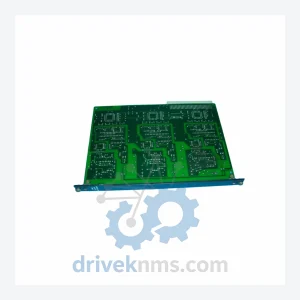
GE IS200 Modules | IS200BPIBG1AEB Driver Board
GE IS200 Series: Comprehensive Module Range and Technical Overview The GE IS200 series constitutes the core I/O, control, and communication…
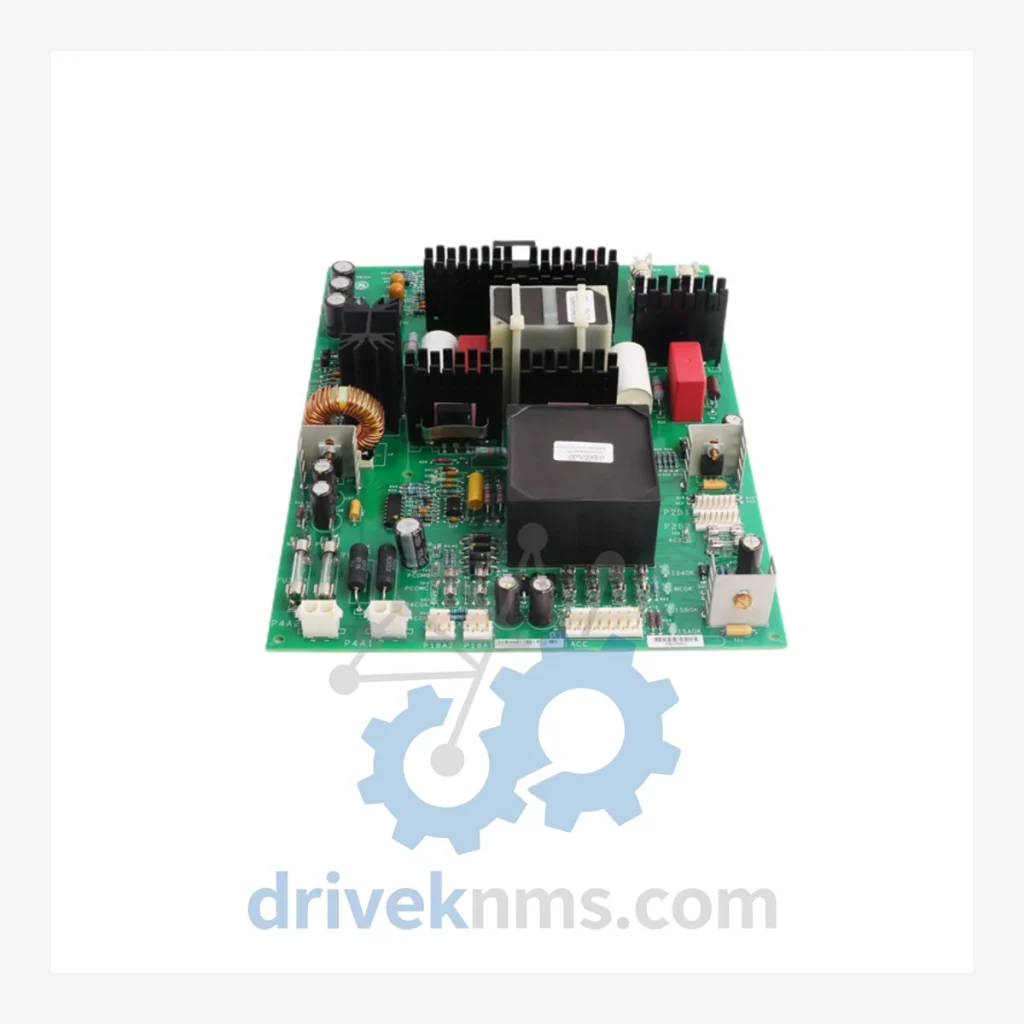
Model: IS210AEPSG1AFC IS210AEPSG1
Product Overview
Commercial availability is handled through direct RFQ, model verification and export-oriented follow-up rather than public cart checkout.
Datasheet Preview
Use attached product manuals when available. If the manual is not public yet, request the full file directly through RFQ.
Commercial Path
Product pages on DRIVEKNMS are designed to verify model, brand and series first, then move the buyer into one clean quotation path.
Technical Dossier
The GE IS210 series represents a core hardware family within GE's Mark VI and EX2100 turbine and excitation control platforms. These modules are deployed across heavy industrial installations globally, including gas turbine power plants, combined-cycle facilities, nuclear auxiliary systems, petrochemical refineries, and offshore oil and gas platforms. The IS210 series provides the I/O backbone, communication infrastructure, and processor-level control for GE's distributed control architecture. Installed base spans hundreds of facilities across North America, Europe, the Middle East, and Asia-Pacific, with many units operating continuously for 15–25 years. The longevity of these deployments makes reliable spare parts sourcing a critical operational requirement.
The IS210 hardware family was introduced as part of GE's transition from the earlier Mark V platform (IS200 series) to the Mark VI distributed control system in the late 1990s. The Mark VI architecture introduced triple-redundant I/O (TMR — Triple Modular Redundancy) and dual-redundant (DMR) configurations, with IS210 modules serving as the primary field interface layer. Early IS210 variants used parallel backplane communication; later revisions adopted the IONet serial communication bus, improving noise immunity and diagnostic capability. The EX2100 excitation control system, introduced in the early 2000s, incorporated IS210 modules for generator excitation regulation, replacing the older Analog Voltage Regulator (AVR) designs. Compatibility between IS210 hardware revisions (suffix variants such as A, B, C, AFC, BFC) is not always guaranteed — firmware version, backplane slot assignment, and jumper configuration must be verified before substitution. As of 2026, the IS210 series is in the mature-to-end-of-life phase. GE (now GE Vernova) has transitioned new installations to the Mark VIe platform (IS420 series). However, the installed base of Mark VI and EX2100 systems remains extensive, and OEM support for IS210 hardware has been progressively reduced, making third-party lifecycle support essential for continued plant operation.
The following SKUs represent verified, commonly sourced IS210 series modules. Each entry reflects the module's primary functional role within the Mark VI / EX2100 control architecture.
IS210AEPSG1AFC (IS210AEPSG1): Analog/Excitation Power Supply module for EX2100 excitation control systems; provides regulated DC power to excitation I/O boards.
IS210BPPCH1A: Backup Power Protection Card; manages power redundancy switching and fault isolation in Mark VI TMR configurations.
IS210CCCAH1A: Core Controller Card A; primary CPU module for Mark VI simplex and TMR control racks.
IS210CCCBH1A: Core Controller Card B; secondary CPU module used in redundant Mark VI controller configurations.
IS210CVGH1A: Vibration and Speed Input module; processes proximity probe and velocity sensor signals for turbine shaft monitoring.
IS210DSPXH1A: Digital Signal Processor Expansion module; handles high-speed discrete I/O processing for turbine sequencing logic.
IS210ERBPG1A: Ethernet Remote Bus Processor; provides IONet-to-Ethernet gateway functionality for remote I/O communication.
IS210HSLAH1A: High-Speed Link Adapter; interfaces Mark VI controllers with high-speed serial data networks including UDH (Unit Data Highway).
IS210MVRBH1A: Mark VI Voltage Regulator Board; regulates excitation field voltage in EX2100 generator excitation systems.
IS210PDBPG1A: Power Distribution Board; distributes 28VDC and 5VDC logic power across Mark VI I/O racks.
IS210REGPG1A: Regulator Processor module; executes closed-loop PID control algorithms for turbine speed and load regulation.
IS210SBCIH1A: Serial Bus Communication Interface; provides RS-485/RS-232 serial communication links to field devices and HMI systems.
IS210SRTDH1A: RTD (Resistance Temperature Detector) Input module; processes 2-wire, 3-wire, and 4-wire RTD signals for temperature monitoring.
IS210TCPSH1A: Thermocouple Power Supply module; provides excitation current for thermocouple cold-junction compensation circuits.
IS210VAICH1A: Voltage and Analog Input Card; accepts 4–20mA and 0–10VDC analog signals from field transmitters and transducers.
IS210VCRCH1A: Voltage Control and Regulation Card; manages AC voltage regulation feedback loops in EX2100 excitation systems.
IS210VTCCH1A: Voltage and Thermocouple Combination Card; dual-function module accepting both thermocouple and millivolt analog inputs.
DriveKNMS maintains a dedicated inventory of IS210 series modules, including discontinued and hard-to-source variants. As GE Vernova has reduced OEM support for Mark VI and EX2100 hardware, procurement lead times through standard channels have extended significantly — in many cases exceeding 26–52 weeks for new manufacture, where available at all. DriveKNMS sources IS210 modules through certified surplus channels, decommissioned plant inventories, and authorized refurbishment programs. All units are individually serialized, and provenance documentation is available on request. For end-users operating Mark VI or EX2100 systems beyond their original design life, DriveKNMS provides lifecycle extension support including cross-reference analysis (identifying compatible substitute part numbers across IS210 suffix revisions), firmware compatibility verification, and long-term consignment stocking agreements. Emergency same-day dispatch is available for critical plant outage situations.
IS210 series modules present specific test challenges due to their multi-layer backplane communication architecture and mixed analog/digital signal processing. DriveKNMS applies a structured test protocol to all IS210 units prior to dispatch. Functional verification is performed using GE Mark VI rack simulators, confirming correct IONet communication handshake, I/O channel response, and power rail stability under load. Analog input modules (VAICH, SRTDH, VTCCH) are tested against calibrated signal sources traceable to NIST standards, with channel-by-channel accuracy verification across the full input range. Excitation-related modules (AEPSG, MVRBH, VCRCH) undergo dielectric withstand testing and output voltage regulation verification. All modules are inspected for capacitor aging, solder joint integrity, and connector pin condition. Units exhibiting marginal performance are either reconditioned to specification or rejected. Test records are retained and available for customer review.
Related Paths
GE IS200 Series: Comprehensive Module Range and Technical Overview The GE IS200 series constitutes the core I/O, control, and communication…
GE IS200 Series: Comprehensive Module Range and Technical Overview The GE IS200 series is the core I/O and control module…
GE IS215 Series: Comprehensive Module Range and Technical Overview The GE IS215 series represents a core hardware family within GE's…