
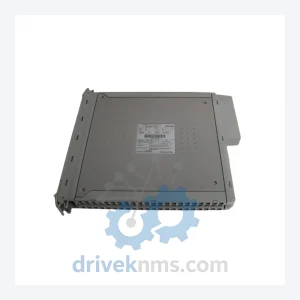
ICS T8151 Trusted Communications Interface – Obsolete Legacy Spare Part
ICS T8151 Trusted Communications Interface – Obsolete Legacy Spare Part When the ICS T8151 Trusted Communications Interface fails in a…
Model: T8122C
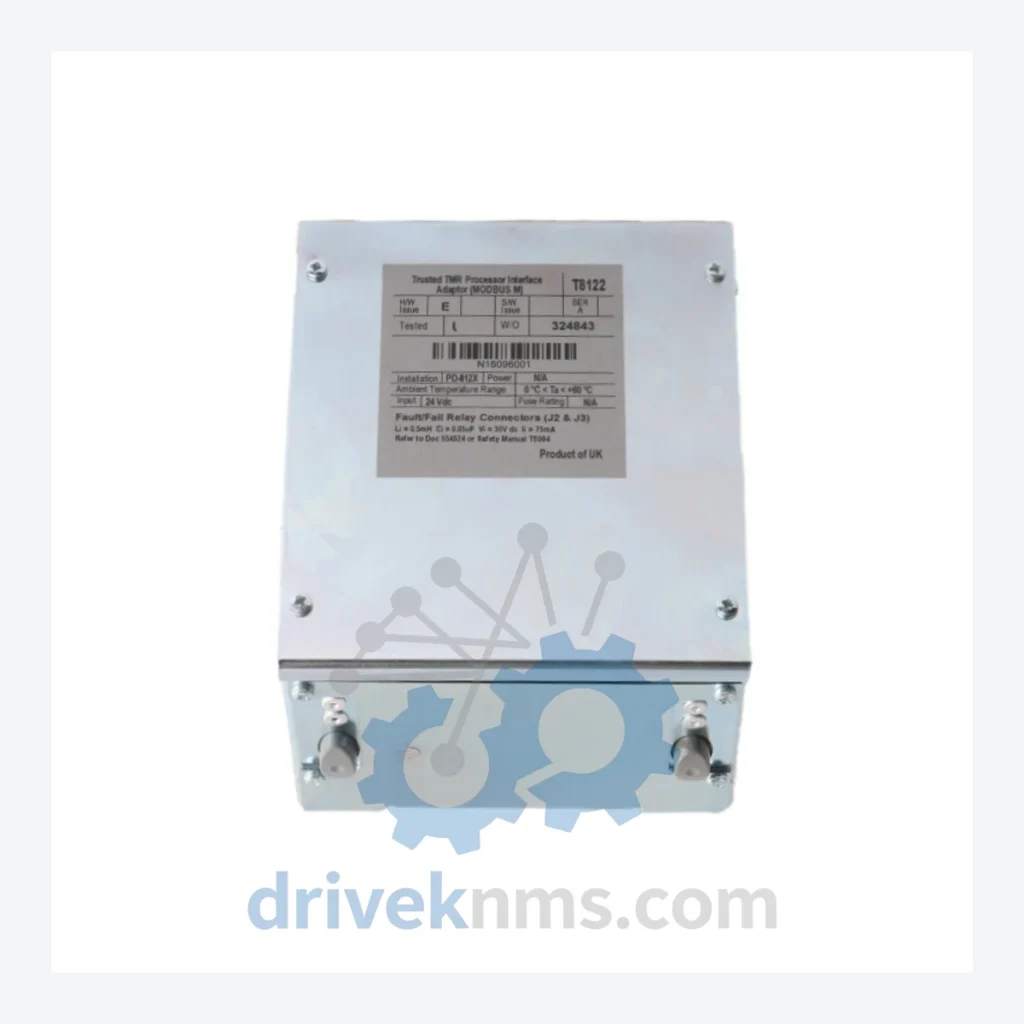
Product Overview
Commercial availability is handled through direct RFQ, model verification and export-oriented follow-up rather than public cart checkout.
Datasheet Preview
Use attached product manuals when available. If the manual is not public yet, request the full file directly through RFQ.
Commercial Path
Product pages on DRIVEKNMS are designed to verify model, brand and series first, then move the buyer into one clean quotation path.
Technical Dossier
The ICS Triplex Trusted TMR (Triple Modular Redundancy) platform is a safety-rated programmable controller system designed for deployment in high-consequence industrial environments. It holds SIL 3 certification under IEC 61508 and is installed across global heavy industry sectors including offshore oil & gas platforms, onshore refineries, petrochemical complexes, nuclear power generation facilities, and LNG terminals. The architecture employs three independent processing channels with continuous cross-comparison and fault-tolerant voting logic, enabling the system to sustain a single-channel failure without process interruption. This design characteristic makes the Trusted TMR the reference platform for Emergency Shutdown Systems (ESD), High Integrity Pressure Protection Systems (HIPPS), and Burner Management Systems (BMS) where unplanned downtime carries regulatory and safety consequences.
The platform has accumulated decades of installed base across facilities operated by major energy companies in the North Sea, Middle East, Southeast Asia, and the Americas. Its long service life means a significant proportion of operational units are running hardware that has been discontinued by the OEM, creating sustained demand for certified spare parts and lifecycle extension services.
The Trusted TMR platform originated from ICS Triplex's proprietary TMR safety controller development in the late 1980s and early 1990s, targeting the North Sea oil & gas sector where regulatory requirements for functional safety were becoming codified. The original architecture used dedicated backplane buses with parallel processing across three independent CPU channels, each running identical application logic and comparing outputs via a hardware voter module before actuating field devices.
Through successive hardware generations, the platform evolved to incorporate faster processor modules (transitioning from early CISC-based CPUs to more capable architectures), expanded I/O density per chassis slot, and improved diagnostics coverage. Communication capabilities were extended from proprietary serial links to support Modbus RTU, Modbus TCP/IP, and OPC DA/UA interfaces, enabling integration with modern DCS and SCADA layers without replacing the core safety logic.
Following Rockwell Automation's acquisition of ICS Triplex, the Trusted TMR product line was maintained under the Allen-Bradley Trusted brand. Rockwell has continued to support the installed base while positioning the AADvance and GuardLogix platforms as migration targets for new projects. As a result, the Trusted TMR series is now in a mature-to-end-of-life phase for new hardware sales, with OEM support focused on software maintenance and critical spare supply. For operators committed to long-term operation of existing Trusted TMR installations, third-party certified spare parts sourcing has become a primary strategy for lifecycle cost management.
The following represents a reference index of commonly deployed Trusted TMR modules across processor, I/O, communication, and power supply categories. Each module is a discrete field-replaceable unit (FRU) within the Trusted TMR chassis architecture.
Processor & Controller Modules
Digital Input (DI) Modules
Digital Output (DO) Modules
Analog Input (AI) Modules
Communication & Network Modules
Power Supply Modules
With the Trusted TMR series in its end-of-life phase for new OEM hardware, the primary challenge for plant maintenance teams is securing certified replacement modules for units that fail in service. OEM lead times for remaining new-old-stock (NOS) inventory are unpredictable, and the alternative of full system migration to a current-generation safety PLC carries capital expenditure and re-validation costs that are not justifiable for facilities with defined decommissioning timelines.
DriveKNMS maintains a dedicated inventory of Trusted TMR modules sourced through controlled channels including decommissioned plant equipment, authorized distributor surplus, and direct procurement from verified industrial asset liquidators. All units are subject to pre-sale inspection and functional verification before dispatch. DriveKNMS provides documentation packages including test records and traceability information to support customer incoming inspection and quality assurance requirements.
For modules confirmed as discontinued with no remaining OEM supply, DriveKNMS offers a priority sourcing service: customers submit their required part numbers and quantities, and DriveKNMS conducts a targeted procurement search across its global supplier network. Response time for sourcing confirmation is typically 3–5 business days for standard Trusted TMR modules.
The Trusted TMR backplane and inter-module bus architecture requires that replacement modules pass functional verification under conditions that replicate the operational environment of the target chassis. DriveKNMS applies a structured test protocol to all Trusted TMR modules prior to shipment.
For processor and interface adapter modules (including the T8122C and T8110 series), testing includes power-on self-test (POST) verification, backplane communication handshake validation, and cross-channel voter logic confirmation using a reference chassis. For I/O modules, each channel is individually stimulated and the output verified against specification tolerances. Analog modules are tested across the full 4–20 mA range with linearity and offset measurements recorded. Digital modules are tested for correct state switching, response time, and output current capacity.
Communication modules are verified for protocol compliance using a Modbus master simulator and Ethernet packet analysis. Power supply modules are load-tested at rated current with input voltage varied across the specified operating range, and hold-up time is measured against the module datasheet specification.
All test results are documented and retained. Customers requiring copies of test records for their incoming inspection or safety case documentation can request these at the time of order.
Related Paths
ICS T8151 Trusted Communications Interface – Obsolete Legacy Spare Part When the ICS T8151 Trusted Communications Interface fails in a…
ICS Triplex T8310CX Expander Processor: Supply Continuity Strategy for Safety-Critical Operations The ICS Triplex T8310CX is an Expander Processor module…
ICS Triplex T8271 Fan Bracket – Obsolete TMR Series Spare Part When a single mechanical component fails inside a safety-critical…