
GE IS200 Modules | IS200BPIBG1AEB Driver Board
GE IS200 Series: Comprehensive Module Range and Technical Overview The GE IS200 series constitutes the core I/O, control, and communication…
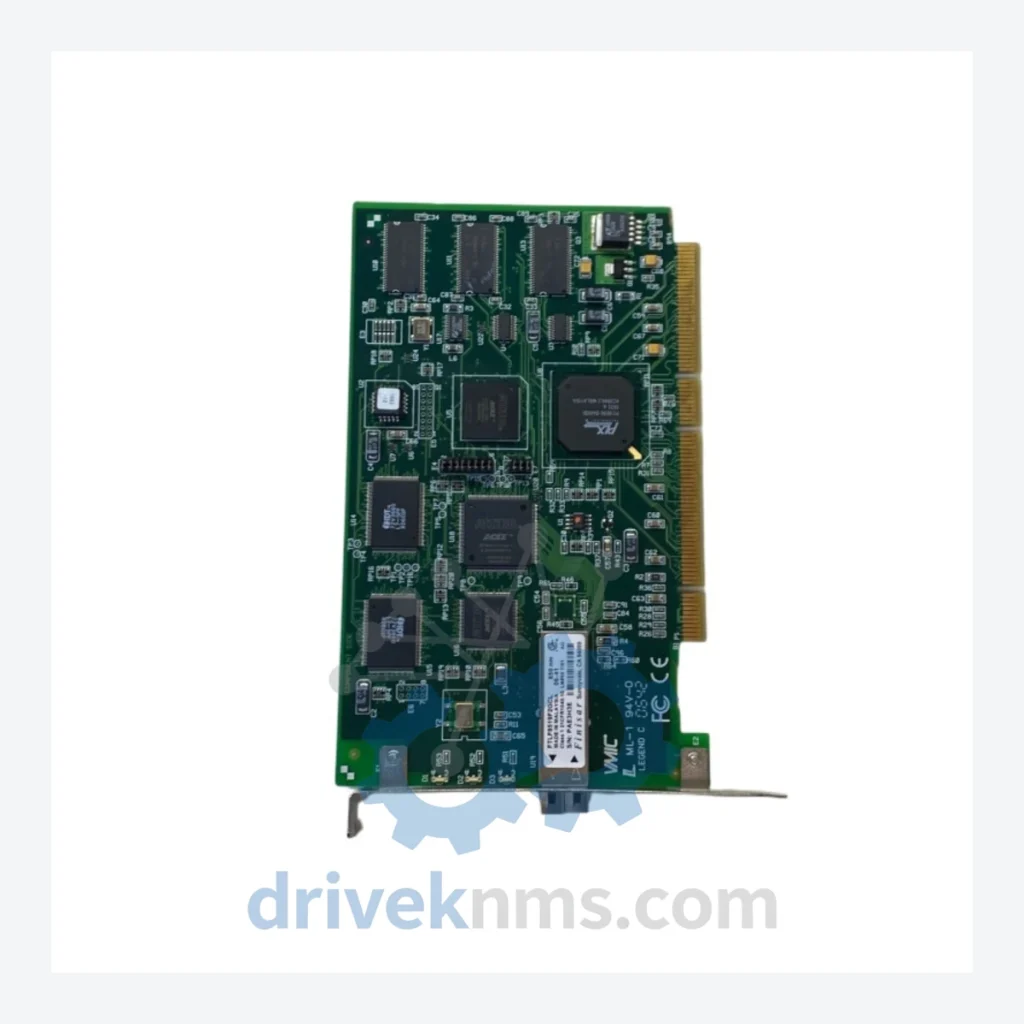
Model: VMIPCI-5565-110000
Product Overview
Commercial availability is handled through direct RFQ, model verification and export-oriented follow-up rather than public cart checkout.
Datasheet Preview
Use attached product manuals when available. If the manual is not public yet, request the full file directly through RFQ.
Commercial Path
Product pages on DRIVEKNMS are designed to verify model, brand and series first, then move the buyer into one clean quotation path.
Technical Dossier
The GE VMIPCI-5565 series is a PCI-bus Reflective Memory (RFM) interface product line developed by GE Intelligent Platforms (formerly VMIC). It is deployed across safety-critical and high-availability industrial environments including chemical processing plants, nuclear power stations, petroleum refineries, and large-scale distributed control systems (DCS). Reflective Memory technology enables deterministic, low-latency shared-memory networking between multiple nodes without CPU intervention, making the VMIPCI-5565 a foundational component in real-time control architectures where inter-node synchronization latency must remain below 1 microsecond. The series supports fiber-optic ring topologies with data rates up to 174 MB/s and memory sizes from 64 MB to 256 MB depending on variant. Its long production lifecycle and broad OS driver support (VxWorks, Linux, Windows, LynxOS, QNX) have made it a standard spare parts catalog item for plant maintenance teams worldwide.
The VMIPCI-5565 series traces its lineage to VMIC's VMEbus Reflective Memory boards (VMIVME-5565), which were introduced in the early 1990s to address the need for deterministic shared-memory communication in VME-based real-time systems. As PCI bus adoption expanded in industrial computing platforms during the late 1990s, VMIC ported the RFM architecture to the PCI form factor, producing the VMIPCI-5565 family. The core innovation — a dual-port RAM architecture where local writes are simultaneously broadcast over a fiber-optic ring to all other nodes — remained unchanged across generations, ensuring backward compatibility at the application software level.
GE Fanuc acquired VMIC in 2005, rebranding the product line under GE Intelligent Platforms. The VMIPCI-5565 continued in active production through the 2010s, with firmware and driver updates extending compatibility to 64-bit operating systems. By the mid-2010s, the series entered a mature/end-of-active-production phase. GE's successor platform, the VMIPCIE-5565 (PCIe form factor), was introduced as the forward migration path. However, the installed base of VMIPCI-5565 nodes in legacy DCS and SCADA systems remains substantial, and long-term maintenance support — including spare board procurement and repair — remains a primary market requirement through at least 2035 for most plant operators.
Key architectural milestones: VMIVME-5565 (VMEbus, 1990s origin) → VMIPCI-5565 (PCI bus, late 1990s) → VMIPCI-5565-110000 and variant matrix (2000s production) → VMIPCIE-5565 (PCIe, modern replacement). The option code suffix (e.g., -110000) encodes memory size, fiber type, and feature flags, allowing precise configuration matching for replacement procurement.
The following SKUs represent the documented VMIPCI-5565 variant matrix. Each model is differentiated by memory capacity, fiber-optic interface type, and optional feature set. All are PCI 2.2-compliant, 3.3V/5V universal, and operate in a fiber-optic ring topology.
VMIPCI-5565-110000: 64 MB RFM, single-mode fiber, standard interrupt, no redundancy option — the baseline production variant for most DCS node deployments.
VMIPCI-5565-110001: 64 MB RFM, single-mode fiber, with hardware-assisted redundancy failover support.
VMIPCI-5565-110002: 64 MB RFM, single-mode fiber, extended temperature range (-40°C to +85°C) for harsh environment enclosures.
VMIPCI-5565-210000: 128 MB RFM, single-mode fiber, standard interrupt — mid-range memory variant for larger shared-data applications.
VMIPCI-5565-210001: 128 MB RFM, single-mode fiber, hardware redundancy option enabled.
VMIPCI-5565-210002: 128 MB RFM, single-mode fiber, extended temperature variant.
VMIPCI-5565-310000: 256 MB RFM, single-mode fiber, standard interrupt — maximum memory configuration for high-data-volume real-time applications.
VMIPCI-5565-310001: 256 MB RFM, single-mode fiber, with hardware redundancy failover.
VMIPCI-5565-110100: 64 MB RFM, multi-mode fiber (850 nm), standard interrupt — for shorter inter-node distances within a single facility building.
VMIPCI-5565-210100: 128 MB RFM, multi-mode fiber, standard interrupt — mid-range memory with multi-mode fiber topology.
VMIPCI-5565-310100: 256 MB RFM, multi-mode fiber, standard interrupt — maximum memory with multi-mode fiber.
VMIPCI-5565-110000-000: OEM-designated variant of the 64 MB single-mode baseline, supplied under specific integrator agreements.
VMIPCI-5565-110000-001: Factory-configured variant with pre-loaded node address for rapid deployment in pre-engineered DCS packages.
VMIPCI-5565-210000-000: OEM 128 MB single-mode variant for system integrator supply chains.
VMIPCI-5565-310000-000: OEM 256 MB single-mode variant, typically found in nuclear and defense-adjacent control system builds.
VMIPCI-5565-110002-000: Extended temperature, 64 MB, OEM-designated, for offshore and outdoor cabinet installations.
The VMIPCI-5565 series has transitioned out of active GE production. New factory stock is no longer available through standard distribution channels. For plant operators and system integrators requiring replacement boards, the procurement options are: surplus new-in-box (NIB) stock from authorized secondary market suppliers, factory-refurbished units with full test certification, and repair/exchange programs for boards with repairable fault conditions.
DriveKNMS maintains a dedicated inventory program for the VMIPCI-5565 series, sourcing NIB and tested-serviceable units globally. Our procurement team cross-references option codes to ensure exact configuration matching — critical for RFM networks where memory size and fiber type must be uniform across all ring nodes. We support single-unit emergency replacement orders as well as bulk procurement for planned maintenance outages. Lead times for common variants (e.g., VMIPCI-5565-110000, -210000) are typically 3–10 business days from confirmed stock. For low-volume or rare option codes, our global sourcing network is activated with a target response time of 5 business days for availability confirmation.
For plants operating under IEC 61511 (functional safety) or nuclear QA programs (10 CFR 50 Appendix B), DriveKNMS can provide full traceability documentation including country of origin, test records, and serialization data upon request.
The VMIPCI-5565 presents specific test challenges due to its dual-port SRAM architecture, fiber-optic transceiver subsystem, and PCI bus interface logic. DriveKNMS applies a structured test protocol to all VMIPCI-5565 units processed through our facility:
PCI Bus Compliance Test: Full PCI 2.2 enumeration and BAR mapping verification using a dedicated test host with known-good configuration.
Dual-Port SRAM Integrity: Walking-ones, walking-zeros, and checkerboard patterns applied across the full addressable memory range (64/128/256 MB depending on variant) to detect cell failures, stuck bits, and address line faults.
Fiber-Optic Transceiver Verification: Optical power output measured at the TX port; RX sensitivity tested against minimum threshold. Loopback test performed to confirm end-to-end data integrity at rated line speed.
Ring Topology Functional Test: Minimum two-node ring assembled in test bench. Write-propagation latency measured and compared against GE specification (<1 µs node-to-node). Interrupt generation on remote write verified.
Thermal Burn-In: Units operated at 50°C ambient for 48 hours under continuous RFM traffic to screen for early-life failures in SRAM and transceiver components.
Final Inspection: Connector integrity, PCB visual inspection (IPC-A-610 Class 2 criteria), and label/serialization verification before packaging.
All units are shipped with a test report summary. Units that do not pass all stages are quarantined and not offered for sale.
Related Paths
GE IS200 Series: Comprehensive Module Range and Technical Overview The GE IS200 series constitutes the core I/O, control, and communication…
GE IS200 Series: Comprehensive Module Range and Technical Overview The GE IS200 series is the core I/O and control module…
GE IS215 Series: Comprehensive Module Range and Technical Overview The GE IS215 series represents a core hardware family within GE's…