
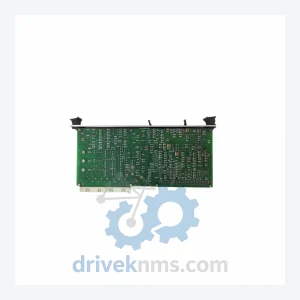
Yokogawa K9634DA-01 TCD Card Modules
Yokogawa K9634DA Series: Comprehensive Module Range and Technical Overview The Yokogawa K9634DA series TCD (Thermocouple/mV Input) cards are field-proven I/O…
Model: PW482-11
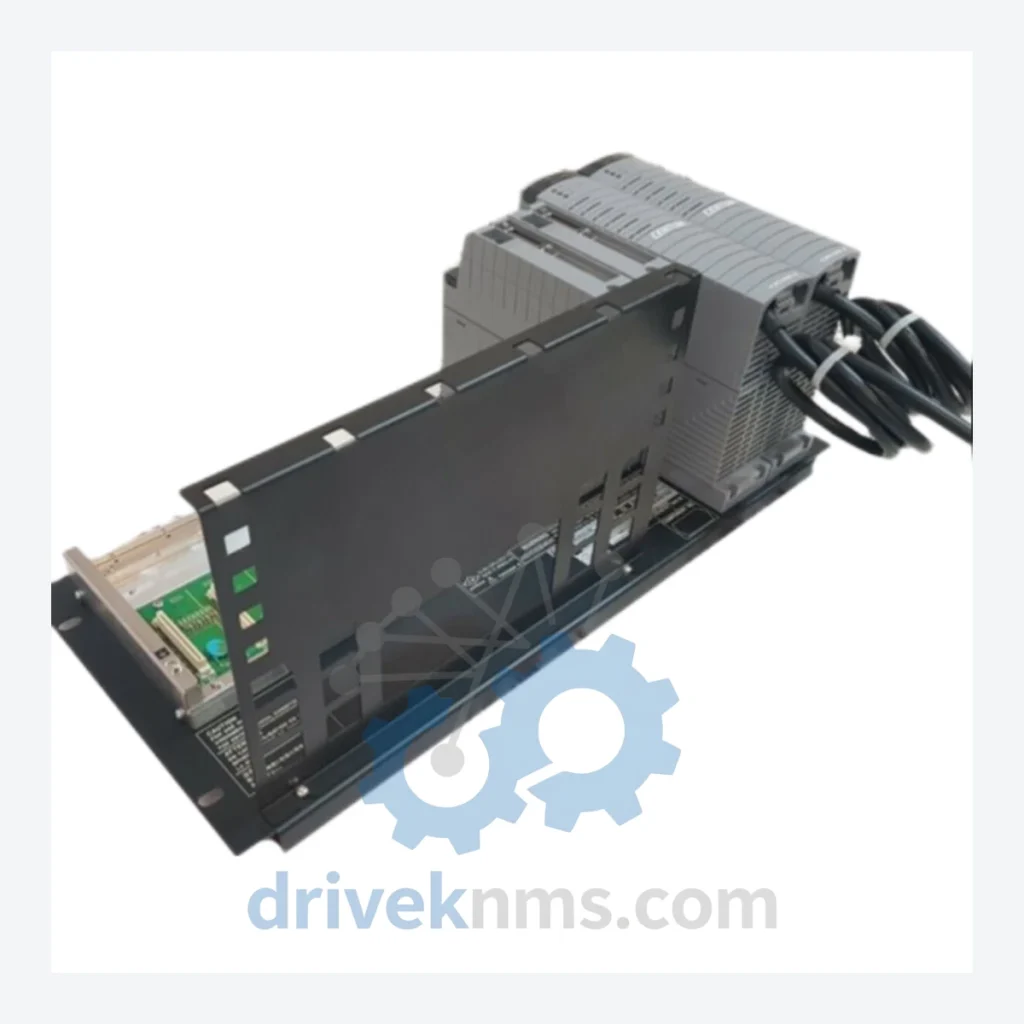
Product Overview
Commercial availability is handled through direct RFQ, model verification and export-oriented follow-up rather than public cart checkout.
Datasheet Preview
Use attached product manuals when available. If the manual is not public yet, request the full file directly through RFQ.
Commercial Path
Product pages on DRIVEKNMS are designed to verify model, brand and series first, then move the buyer into one clean quotation path.
Technical Dossier
When a power supply module fails inside a legacy Yokogawa CENTUM distributed control system, the consequences extend far beyond a line stoppage. A full DCS platform migration — including engineering, commissioning, operator retraining, and process validation — routinely costs between USD 2,000,000 and USD 8,000,000, and takes 18 to 36 months to execute. The PW482-11 is a discontinued module. Finding a verified, functional unit on the open market is not straightforward. DriveKNMS maintains allocated stock of hard-to-source Yokogawa legacy modules specifically to protect facilities from this scenario.
If your plant is still operating on a CENTUM CS, CENTUM CS 1000, or CENTUM CS 3000 platform, the PW482-11 is a critical single point of failure that warrants immediate spare coverage.
| Attribute | Detail |
|---|---|
| Manufacturer | Yokogawa Electric Corporation |
| Part Number | PW482-11 |
| Module Type | Power Supply Module |
| Compatible Platform | Yokogawa CENTUM CS / CS 1000 / CS 3000 DCS |
| Country of Origin | Japan |
| Product Status | Discontinued / Obsolete – No longer manufactured |
| Electrical Parameters | Contact DriveKNMS for verified datasheet confirmation |
Note: Electrical parameters for discontinued modules vary by hardware revision. DriveKNMS does not publish unverified specifications. Confirmed parameters are provided upon request with unit inspection report.
The Yokogawa CENTUM platform has a decades-long installed base across refining, petrochemical, power generation, and pharmaceutical facilities. Many of these systems remain in production service well past their original design lifecycle — not because operators are unaware of the age, but because the cost and risk of replacement outweigh the cost of maintenance.
The PW482-11 power supply sits at the foundation of rack power distribution within these systems. A failure here does not degrade performance gradually — it causes an immediate, uncontrolled shutdown of the I/O subsystem it feeds. In process industries, an unplanned shutdown of this nature carries direct costs in lost production, off-spec product, and emergency response, typically ranging from USD 50,000 to USD 500,000 per incident depending on process type.
The module is no longer available through Yokogawa's standard distribution channels. Facilities that have not pre-positioned spares are exposed to extended mean-time-to-repair (MTTR) measured in weeks, not hours, while sourcing is attempted through the secondary market under emergency conditions — the worst possible procurement posture.
Facilities that have secured verified PW482-11 spares in advance reduce their MTTR for this failure mode to under four hours. That is the operational difference between a managed maintenance event and a production crisis.
The decision to retire a legacy DCS platform is rarely driven by the platform's inability to perform its control function. It is driven by the inability to source replacement parts when failures occur. This is a supply chain problem, not an engineering problem — and it has a supply chain solution.
A structured obsolete-parts reserve program for a CENTUM CS or CS 3000 system typically covers four categories of high-failure-risk modules: power supplies, communication cards, I/O modules, and processor cards. The total capital commitment for a comprehensive spare set is a fraction — often less than 1% — of the cost of a platform migration.
The practical framework is straightforward. First, conduct a criticality audit: identify every module in the system for which no replacement is available through standard channels. Second, establish minimum stock levels based on failure history and lead time risk. Third, source verified units from qualified secondary-market suppliers with documented QA processes. Fourth, implement a scheduled inspection cycle for stored spares to confirm storage integrity.
Facilities that execute this program consistently report the ability to extend legacy DCS operational life by five to ten years beyond what would otherwise be the forced retirement date. The capital cost of the spare program is recovered in full by avoiding a single unplanned shutdown event.
DriveKNMS applies a five-stage inspection protocol to all discontinued power supply modules before they are offered for sale.
Stage 1 – Visual and Mechanical Inspection: Full external examination for physical damage, connector pin corrosion, PCB contamination, and label integrity. Units with evidence of prior field damage are quarantined.
Stage 2 – Electrolytic Capacitor Assessment: Power supply modules are particularly vulnerable to electrolytic capacitor degradation over time. Each unit undergoes capacitance and ESR measurement. Units with out-of-tolerance capacitors are flagged and not offered as functional spares.
Stage 3 – Firmware and Revision Verification: Hardware revision and firmware version are documented and disclosed to the buyer prior to sale. Compatibility with the target system revision is confirmed where possible.
Stage 4 – Functional Power-On Test: Where test fixtures are available for the platform, units are powered and output parameters are verified against known-good reference values.
Stage 5 – Packaging and Storage Certification: Units are packaged in anti-static materials with desiccant and stored in climate-controlled conditions. Each unit ships with an inspection record.
The PW482-11 is a direct hardware replacement for the original module position within the CENTUM rack architecture. No software reconfiguration, no engineering workstation intervention, and no system re-commissioning is required for a like-for-like swap. This is a drop-in replacement in the strictest sense of the term.
For maintenance teams operating under time pressure during an unplanned outage, this matters. The alternative — sourcing a non-original replacement that requires I/O mapping changes, configuration uploads, or loop checks — adds hours to the restoration timeline and introduces change-management risk in a safety-critical environment.
Holding a verified PW482-11 spare eliminates that risk entirely. The module goes in, the system comes back up, and the incident is closed.
What warranty applies to a discontinued module?
DriveKNMS provides a 90-day functional warranty on all tested spare modules. This covers failure under normal operating conditions and excludes damage caused by installation error or system fault conditions external to the module.
How do I know the unit is genuine and not counterfeit?
All Yokogawa modules sourced by DriveKNMS are inspected for label authenticity, PCB markings, and component consistency against known-genuine reference units. Inspection records are available upon request. We do not source from unverified brokers.
Should I buy more than one unit?
For any power supply module in a legacy DCS with no active manufacturer support, the standard recommendation is a minimum of two units on hand: one active spare and one long-term reserve. Power supplies have a finite service life, and a second failure before the first spare is replenished leaves the facility exposed. If your system has multiple racks drawing from PW482-11 units, scale your reserve accordingly.
What is the lead time?
Units in current stock ship within 3–5 business days after order confirmation and payment. Stock levels are limited and not replenished on a predictable schedule. Availability should not be assumed.
Related Paths
Yokogawa K9634DA Series: Comprehensive Module Range and Technical Overview The Yokogawa K9634DA series TCD (Thermocouple/mV Input) cards are field-proven I/O…
Yokogawa UT350-01 Digital Indicating Controller – Obsolete UT Series Spare Part When a Yokogawa UT350-01 fails on the plant floor,…
YOKOGAWA NFDR Series: Comprehensive Module Range and Technical Overview The YOKOGAWA NFDR series relay output modules are core field control…