
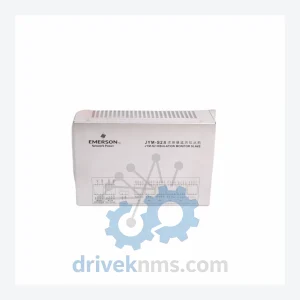
Emerson JYM Series Insulation Monitors
Emerson JYM Series: Comprehensive Module Range and Technical Overview The Emerson JYM Series insulation monitoring devices occupy a critical position…
Model: 1X01047H01L1
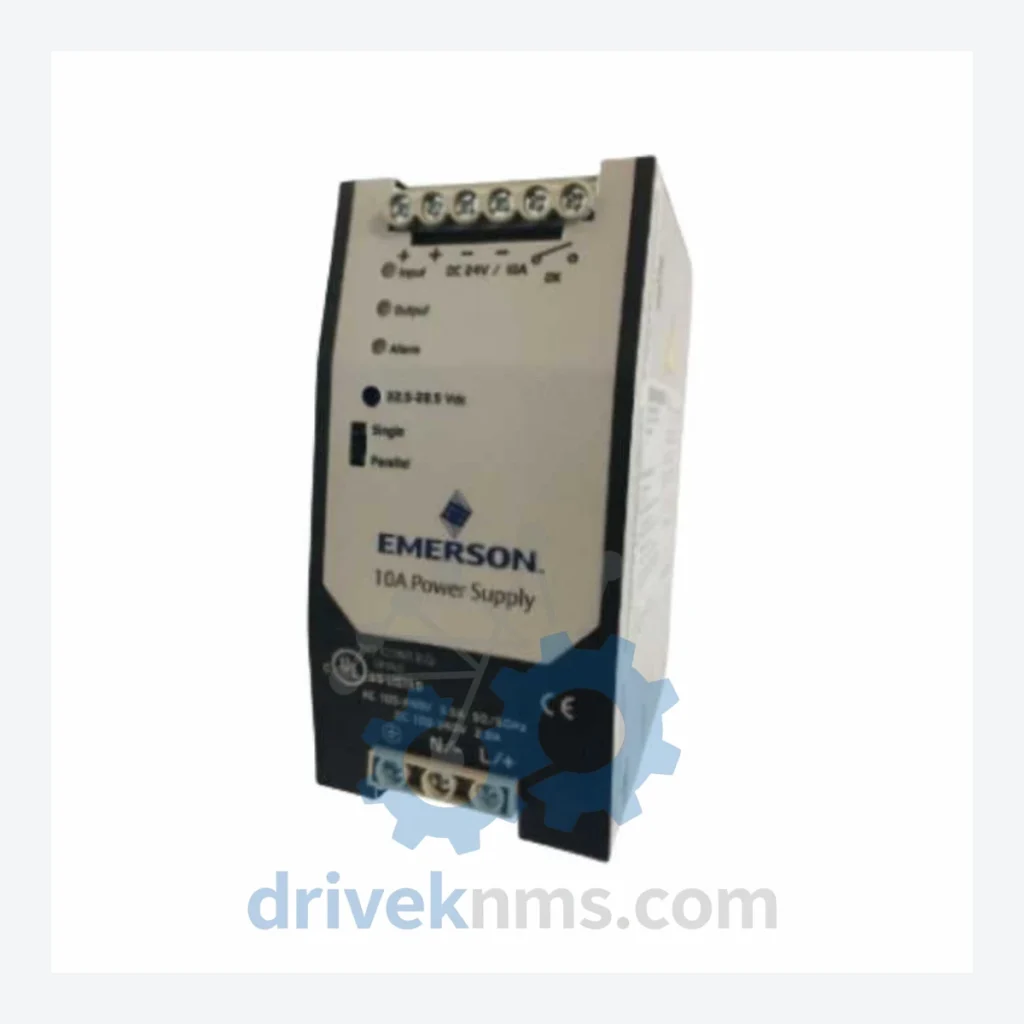
Product Overview
Commercial availability is handled through direct RFQ, model verification and export-oriented follow-up rather than public cart checkout.
Datasheet Preview
Use attached product manuals when available. If the manual is not public yet, request the full file directly through RFQ.
Commercial Path
Product pages on DRIVEKNMS are designed to verify model, brand and series first, then move the buyer into one clean quotation path.
Technical Dossier
When a power supply module fails inside an Emerson Ovation Distributed Control System, the consequences extend far beyond a single line stoppage. A full platform migration — hardware, engineering, commissioning, operator retraining, and production downtime — routinely costs between $2 million and $8 million USD for a mid-scale process plant. The 1X01047H01L1 is a discontinued module with no direct OEM replacement path. Every day without a verified spare on the shelf is a day of unquantified exposure. DriveKNMS holds physical stock of this unit. This is not a broker listing — we own the inventory.
| Parameter | Detail |
|---|---|
| Part Number | 1X01047H01L1 |
| Manufacturer | Emerson Electric / Ovation Controls |
| Product Category | Power Supply Module |
| Compatible Platform | Emerson Ovation DCS |
| Country of Origin | United States |
| OEM Status | Discontinued – No longer manufactured or supported by Emerson |
| Condition Available | New Old Stock (NOS) / Professionally Refurbished |
Note: Specific electrical parameters (input voltage range, output ratings, current capacity) are verified against physical unit documentation at time of order. We do not publish unverified specifications — contact us for a full datasheet.
The Emerson Ovation platform has been the backbone of power generation, water treatment, and petrochemical process control for decades. Its architecture — built around deterministic scan cycles and proprietary I/O backplanes — cannot be replicated by simply swapping in a modern PLC. The power supply module is the foundation of that architecture. Without a stable, correctly-rated supply, the entire controller chassis becomes unreliable: intermittent faults, spurious trips, and ultimately uncontrolled shutdowns.
When Emerson discontinued this module, it did not provide a drop-in successor. Plants that have not secured spare inventory face a binary choice: source the original part from the secondary market, or commit to a full system replacement. The cost gap between those two options is not marginal — it is measured in millions. For facilities operating on fixed maintenance budgets under regulatory oversight, that gap is often the difference between continued operation and a forced capital project that consumes three to five years of engineering resources.
Procurement teams that act before a failure — rather than after — consistently achieve better outcomes: lower unit cost, verified condition, and time to properly bench-test the spare before it is needed. Reactive sourcing under production pressure produces the opposite: inflated prices, unverified units, and installation risk.
For plant managers facing pressure to retire aging Ovation systems, the following maintenance strategy has been applied successfully across multiple facilities to defer capital expenditure while maintaining system integrity:
1. Failure Mode Mapping: Identify the three to five module types that have historically caused the longest unplanned downtime in your specific Ovation configuration. Power supply modules, communication cards, and I/O termination assemblies are the most common failure points in systems over 15 years old. Build minimum stock levels around those failure modes, not around general spare parts budgets.
2. Electrolytic Capacitor Lifecycle Planning: Electrolytic capacitors in power supply modules have a finite service life — typically 10 to 15 years under rated conditions, shorter in high-ambient-temperature environments. Modules approaching or exceeding this age should be treated as consumables, not capital assets. Scheduled replacement before failure is significantly cheaper than emergency sourcing.
3. Firmware Version Control: Ovation systems are sensitive to firmware mismatches between modules. Before installing any replacement unit — new or refurbished — verify that the firmware revision matches the existing chassis configuration. A version mismatch can cause communication errors that are difficult to diagnose under production pressure.
4. Environmental Condition Audit: Corrosion on connector pins and backplane contacts is the leading cause of intermittent faults in legacy DCS hardware. Annual inspection and cleaning of module connectors, combined with humidity control in the control room, extends module service life measurably.
5. Documented Spare Parts Register: Maintain a living register of all critical spare modules, including serial numbers, firmware versions, and storage conditions. This register becomes essential during audits, insurance assessments, and when negotiating with secondary market suppliers.
Plants that implement these five practices consistently report 5 to 10 additional years of reliable operation from Ovation systems that would otherwise have been flagged for replacement.
DriveKNMS applies a five-step quality process to all discontinued power supply modules before shipment:
Step 1 – Visual and Mechanical Inspection: Full external inspection for physical damage, case deformation, and label integrity. Units with evidence of thermal events or mechanical stress are rejected at this stage.
Step 2 – Electrolytic Capacitor Assessment: Capacitors are the primary aging component in power supply modules. Each unit is assessed for capacitor condition using ESR measurement. Units with out-of-specification capacitors are either recapped by certified technicians or removed from inventory.
Step 3 – Connector and Pin Inspection: All edge connectors and backplane pins are inspected under magnification for oxidation, corrosion, and mechanical deformation. Affected contacts are cleaned or the unit is rejected.
Step 4 – Firmware Version Verification: Where accessible, firmware revision is read and documented. This information is provided to the customer at time of shipment to support installation planning.
Step 5 – Functional Burn-In: Units are powered and monitored under load conditions prior to packaging. Output stability and protection circuit response are verified. Only units that pass all five steps are released for sale.
Drop-in Replacement: The 1X01047H01L1 installs directly into the existing Ovation chassis without mechanical modification. No new mounting hardware, no backplane adapter, no wiring changes.
No Reprogramming Required: The module operates within the existing Ovation system configuration. There is no requirement to modify controller logic, I/O mapping, or HMI configuration upon replacement.
No Engineering Rework: Unlike a platform migration, installing a like-for-like spare generates zero engineering change orders. The maintenance event is documented as a module swap — not a system modification — which simplifies regulatory and safety case documentation in regulated industries.
Immediate Operational Continuity: A verified spare on the shelf converts a potential multi-week production outage into a planned maintenance window measured in hours.
Q: What warranty applies to discontinued modules?
A: DriveKNMS provides a 90-day warranty covering functional performance under normal operating conditions. New Old Stock units carry a 180-day warranty. Warranty terms are confirmed in writing at time of purchase.
Q: How do I know the unit is genuine and not counterfeit?
A: All units are sourced through documented supply chains. Physical markings, date codes, and board-level construction are verified against known-good reference units. We provide full traceability documentation upon request.
Q: Should I buy more than one unit?
A: For any Ovation system that is more than 10 years old and has no planned migration within the next five years, holding a minimum of two spare power supply modules is standard practice. The secondary market for discontinued Emerson modules tightens each year as installed base units age out. Current pricing will not hold.
Q: Can you source other Ovation modules?
A: Yes. DriveKNMS specializes in hard-to-find Emerson Ovation, DeltaV, and legacy Fisher Controls components. Submit your full BOM for a consolidated quote.
Status: DRAFT
Related Paths
Emerson JYM Series: Comprehensive Module Range and Technical Overview The Emerson JYM Series insulation monitoring devices occupy a critical position…
EMERSON PR6426 Series: Comprehensive Module Range and Technical Overview The EMERSON PR6426 series is a line of eddy current (non-contact)…
EMERSON KJ2201X1-BA1 12P3162X242 SLS1508 Logic I/O Module: Supply Continuity Strategy for Discontinued Process Automation Components The EMERSON KJ2201X1-BA1 (assembly ref:…