
Honeywell XC Series Modules | XC5010C CPU Module
Honeywell XC Series: Comprehensive Module Range and Technical Overview The Honeywell XC Series represents a core control platform deployed across…
Model: MLE?TN16A
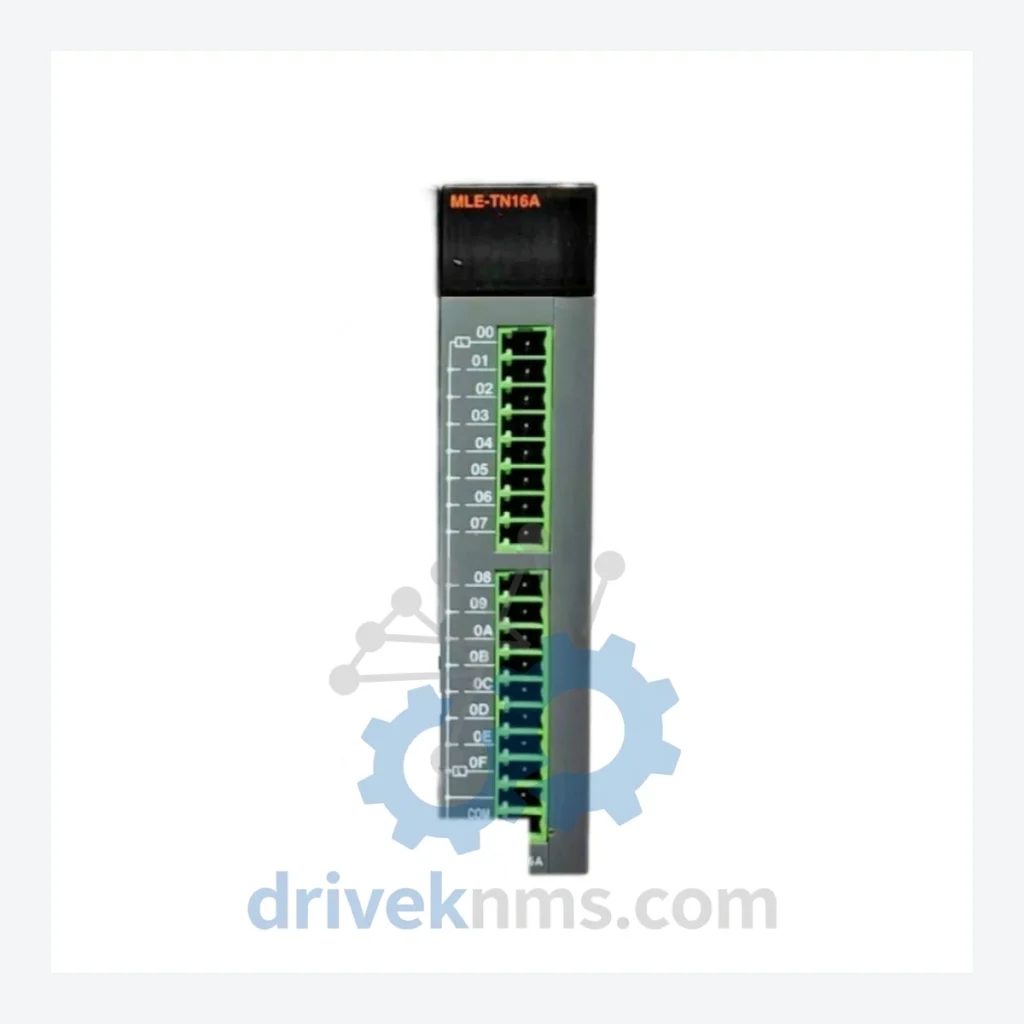
Product Overview
Commercial availability is handled through direct RFQ, model verification and export-oriented follow-up rather than public cart checkout.
Datasheet Preview
Use attached product manuals when available. If the manual is not public yet, request the full file directly through RFQ.
Commercial Path
Product pages on DRIVEKNMS are designed to verify model, brand and series first, then move the buyer into one clean quotation path.
Technical Dossier
The Honeywell MLE (Modular Logic Engine) series is a core subsystem of the Honeywell TotalPlant Solution (TPS) and PlantScape distributed control architecture. Deployed extensively across global heavy industry — including petrochemical complexes, nuclear power stations, offshore platforms, and crude oil refineries — the MLE series provides deterministic I/O scanning, high-availability redundancy, and tight integration with Honeywell's Universal Control Network (UCN) and Local Control Network (LCN). Installed base counts in the tens of thousands of nodes across facilities in North America, the Middle East, and Asia-Pacific, making MLE one of the most widely maintained legacy DCS module families in active industrial service.
The MLE platform was introduced as part of Honeywell's TDC 3000 / TPS ecosystem in the late 1980s and matured through the 1990s alongside the PlantScape and Experion PKS migration path. Early MLE modules operated on the Honeywell LCN (Local Control Network) at 5 Mbit/s token-ring topology, with backplane addressing fixed at the rack level. Mid-generation revisions introduced firmware-selectable channel configurations and expanded the supported I/O count per rack from 8 to 16 channels per module slot.
By the early 2000s, Honeywell began transitioning customers toward the Experion PKS C200/C300 controller platform, positioning MLE as a mature/legacy tier. However, the installed base remained too large for rapid migration, and Honeywell extended lifecycle support through authorized third-party maintenance programs. Today, MLE modules are classified as mature/end-of-life by Honeywell, with OEM new-stock availability severely constrained. Long-term maintenance relies on certified refurbished inventory, functional testing against original factory specifications, and cross-reference to compatible Experion migration kits where applicable.
Compatibility note: MLE modules are backplane-specific and are not hot-swappable across all rack generations without firmware alignment. Mixing MLE-TN (16-channel) and MLE-TN08 (8-channel) variants in the same rack requires slot-address verification against the rack's configuration database.
Analog Input Modules
Analog Output Modules
Digital Input Modules
Digital Output Modules
Communication & Controller Modules
DriveKNMS maintains a dedicated inventory program for Honeywell MLE series modules classified as discontinued or allocation-constrained by the OEM. Our sourcing network covers decommissioned plant assets, authorized surplus channels, and tested-pull inventory from controlled shutdowns. For end-users operating TPS or PlantScape systems beyond the OEM support window, DriveKNMS provides:
All MLE modules sourced through DriveKNMS are accompanied by full traceability documentation and test records.
MLE modules present specific test challenges due to their backplane-coupled bus architecture and UCN token-ring communication protocol. DriveKNMS applies a structured test protocol for each MLE unit processed:
Modules that fail any stage are quarantined, documented, and either repaired to specification or scrapped. No module is shipped without a completed test record.
Related Paths
Honeywell XC Series: Comprehensive Module Range and Technical Overview The Honeywell XC Series represents a core control platform deployed across…
Honeywell MP-DNCF02-200 Single-Phase Power Controller – Obsolete Limitrol Series Spare Part When a single-phase power controller fails inside a legacy…
Honeywell XDL Series: Comprehensive Module Range and Technical Overview The Honeywell XDL series is a core component family within the…