
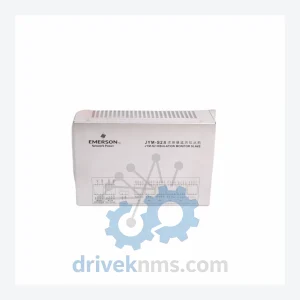
Emerson JYM Series Insulation Monitors
Emerson JYM Series: Comprehensive Module Range and Technical Overview The Emerson JYM Series insulation monitoring devices occupy a critical position…
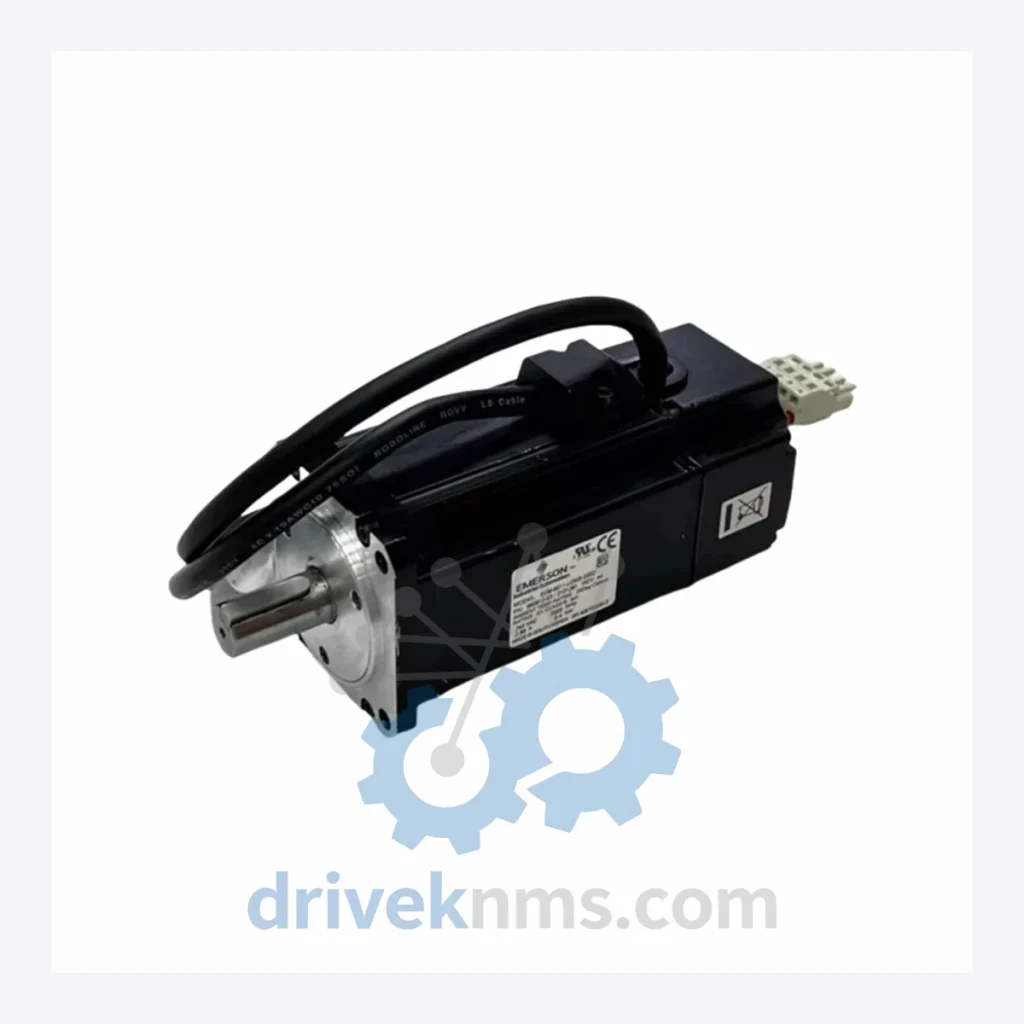
Model: XVM-8017-LONS-D001
Product Overview
Commercial availability is handled through direct RFQ, model verification and export-oriented follow-up rather than public cart checkout.
Datasheet Preview
Use attached product manuals when available. If the manual is not public yet, request the full file directly through RFQ.
Commercial Path
Product pages on DRIVEKNMS are designed to verify model, brand and series first, then move the buyer into one clean quotation path.
Technical Dossier
When an Emerson XVM-8017-LONS-D001 servo motor fails on a production line, the clock starts immediately. This is not a component that can be sourced from a distributor's shelf. It is a discontinued unit tied to legacy motion control architectures — the kind of hardware that, when it goes down, forces plant managers into a binary choice: locate a genuine replacement within days, or commit to a full-system retrofit that routinely runs into the hundreds of thousands of dollars in engineering, downtime, and revalidation costs. DriveKNMS maintains verified stock of this unit. That stock is finite.
| Parameter | Detail |
|---|---|
| Manufacturer | Emerson (Control Techniques) |
| Part Number | XVM-8017-LONS-D001 |
| Product Type | AC Servo Motor |
| Series | XVM Series |
| Discontinuation Status | Discontinued / Obsolete – No longer in OEM production |
| Country of Origin | United States |
| Typical System Compatibility | Control Techniques Unidrive SP / Digitax ST drive platforms; legacy Emerson motion control systems |
| Shaft Configuration | LONS (Long Shaft, No Seal) – per part number suffix |
| Feedback Type | Encoder (type per D001 suffix; verify against your drive configuration before ordering) |
Note: Electrical parameters such as rated torque, rated speed, and power rating are not published here to prevent specification mismatch. Please provide your application requirements when contacting us — our technical team will cross-reference against verified documentation.
The Emerson XVM series was engineered for precision motion control in demanding industrial environments — packaging lines, CNC machining centers, material handling systems, and process automation cells. These motors were paired with Control Techniques Unidrive SP and Digitax ST servo drives, platforms that remain operational in thousands of facilities worldwide despite being outside active OEM support cycles.
The core problem is structural: the OEM has discontinued the XVM-8017-LONS-D001, but the systems it powers have not been retired. A single motor failure in a multi-axis servo system does not just stop one axis — it halts the entire cell. In high-throughput manufacturing, unplanned downtime at this level costs between $5,000 and $50,000 per hour depending on the industry. A full system migration — new drives, new motors, new cabling, new PLC logic, new safety validation — routinely exceeds $300,000 for a mid-size cell, and that figure does not account for the 6–18 month engineering timeline.
Holding verified spare units of the XVM-8017-LONS-D001 is not a procurement luxury. It is a risk management decision. One spare motor on the shelf converts a potential week-long production stoppage into a two-hour swap. The math is straightforward.
Plant managers operating legacy servo systems face a predictable pressure cycle: the OEM withdraws support, integrators push for upgrades, and capital budgets are insufficient to justify full replacement of functional equipment. The following strategy has been applied successfully across automotive, food processing, and semiconductor manufacturing environments:
1. Conduct a failure mode audit. Identify the three to five components in your servo system with the highest failure frequency and the longest lead time for replacement. For Emerson XVM-series systems, the motor itself and the encoder feedback assembly are typically the highest-risk items.
2. Establish a minimum viable spare inventory. For a system running two or three shifts, one verified spare motor per critical axis is the baseline. For single-shift operations with longer acceptable downtime windows, a shared spare across two to three identical axes may be acceptable.
3. Source from verified secondary market suppliers, not auction platforms. Counterfeit and misrepresented parts are endemic in the obsolete parts market. Every unit DriveKNMS supplies undergoes documented inspection before shipment. Provenance matters when the alternative is a second failure within 90 days.
4. Document your installed base now. As OEM documentation becomes harder to access, maintaining your own records of firmware versions, encoder types, and drive parameter files becomes critical. This documentation is what makes a drop-in replacement possible without re-engineering.
5. Budget for spares as capital protection, not maintenance expense. A $3,000–$8,000 investment in a verified spare motor protects a production asset worth ten to fifty times that figure. Framing this correctly in capital planning conversations changes the approval dynamic.
This approach consistently delivers 5–10 additional years of productive life from automation systems that would otherwise face premature retirement driven by a single unavailable component.
Sourcing a discontinued servo motor from the secondary market carries real risk. DriveKNMS applies a structured 5-step inspection protocol to every XVM-series unit before it leaves our facility:
Step 1 – Visual and mechanical inspection. Full external examination for shaft damage, housing cracks, connector pin corrosion, and mounting surface integrity. Units with physical damage that could affect installation or operation are rejected at this stage.
Step 2 – Electrolytic capacitor assessment. Where accessible, capacitor condition is evaluated. Aged electrolytic capacitors are a primary failure mode in stored servo motors and drive components. Units showing evidence of capacitor degradation are flagged for disclosure or remediation.
Step 3 – Encoder and feedback verification. The encoder assembly is tested for signal integrity. Feedback errors are the most common cause of immediate drive fault on installation of a replacement motor. We verify this before shipment, not after.
Step 4 – Insulation resistance check. Winding insulation is tested to confirm it meets minimum resistance thresholds. This step identifies motors with moisture ingress or winding degradation that would not be visible externally.
Step 5 – Documentation and traceability. Each unit is logged with inspection results, condition grade, and any findings. This record accompanies the shipment and supports your incoming inspection process.
Condition grades (New, Refurbished-Tested, Used-Tested) are disclosed at the time of quotation. We do not ship units without a declared condition grade.
Drop-in mechanical replacement. The XVM-8017-LONS-D001 uses standard IEC frame dimensions and a defined shaft configuration. A verified replacement unit installs into the existing mounting without mechanical modification.
No drive reprogramming required. Provided the replacement unit carries the same encoder type and pole count as the original, your existing Unidrive SP or Digitax ST parameter set remains valid. There is no requirement to engage a motion control engineer for recommissioning.
Avoids system-wide engineering costs. Substituting a compatible replacement motor eliminates the need to revalidate the entire servo loop, remap I/O, or modify PLC logic. The cost difference between a spare motor and a system retrofit is not marginal — it is structural.
Supports phased migration planning. Maintaining operational continuity with verified spares gives your engineering team the time to plan a controlled, budgeted migration on your schedule — not under emergency conditions.
What warranty applies to a discontinued part?
DriveKNMS provides a 90-day warranty against defects in the supplied unit under normal operating conditions. Warranty terms are confirmed in writing at the time of sale. Extended warranty arrangements are available for volume purchases — contact us to discuss.
How do I know the unit is genuine and not counterfeit?
Every unit we supply is physically inspected by our technical team. We provide condition documentation with each shipment. We do not list units we have not physically verified. If you require third-party inspection or specific incoming QC documentation, advise us at the time of inquiry.
Should I buy more than one unit?
For any system where this motor is a single point of failure on a critical production line, holding at least one spare on-site is the minimum prudent position. For facilities with multiple axes using this motor, we recommend discussing a small buffer stock. Lead times on obsolete parts are unpredictable by definition — the unit available today may not be available in six months.
© 2026 DriveKNMS. (Status: DRAFT)
Related Paths
Emerson JYM Series: Comprehensive Module Range and Technical Overview The Emerson JYM Series insulation monitoring devices occupy a critical position…
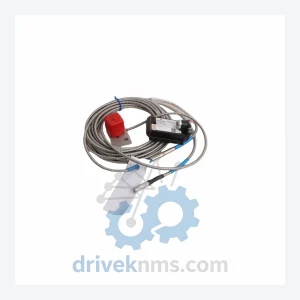
EMERSON PR6426 Series: Comprehensive Module Range and Technical Overview The EMERSON PR6426 series is a line of eddy current (non-contact)…
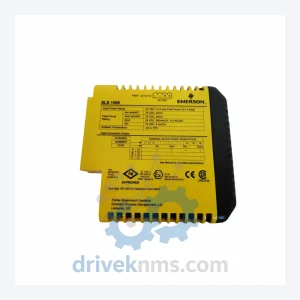
EMERSON KJ2201X1-BA1 12P3162X242 SLS1508 Logic I/O Module: Supply Continuity Strategy for Discontinued Process Automation Components The EMERSON KJ2201X1-BA1 (assembly ref:…