
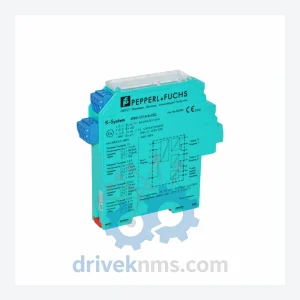
PEPPERL+FUCHS KFD2-STC4-EX1.2O Signal Isolator – NAMUR Series
PEPPERL+FUCHS KFD2-STC4-EX1.2O Signal Isolator: Sourcing Strategy & Asset Return Value in a Constrained Global Supply Chain The KFD2-STC4-EX1.2O is a…
Model: KFD2-STC5-1
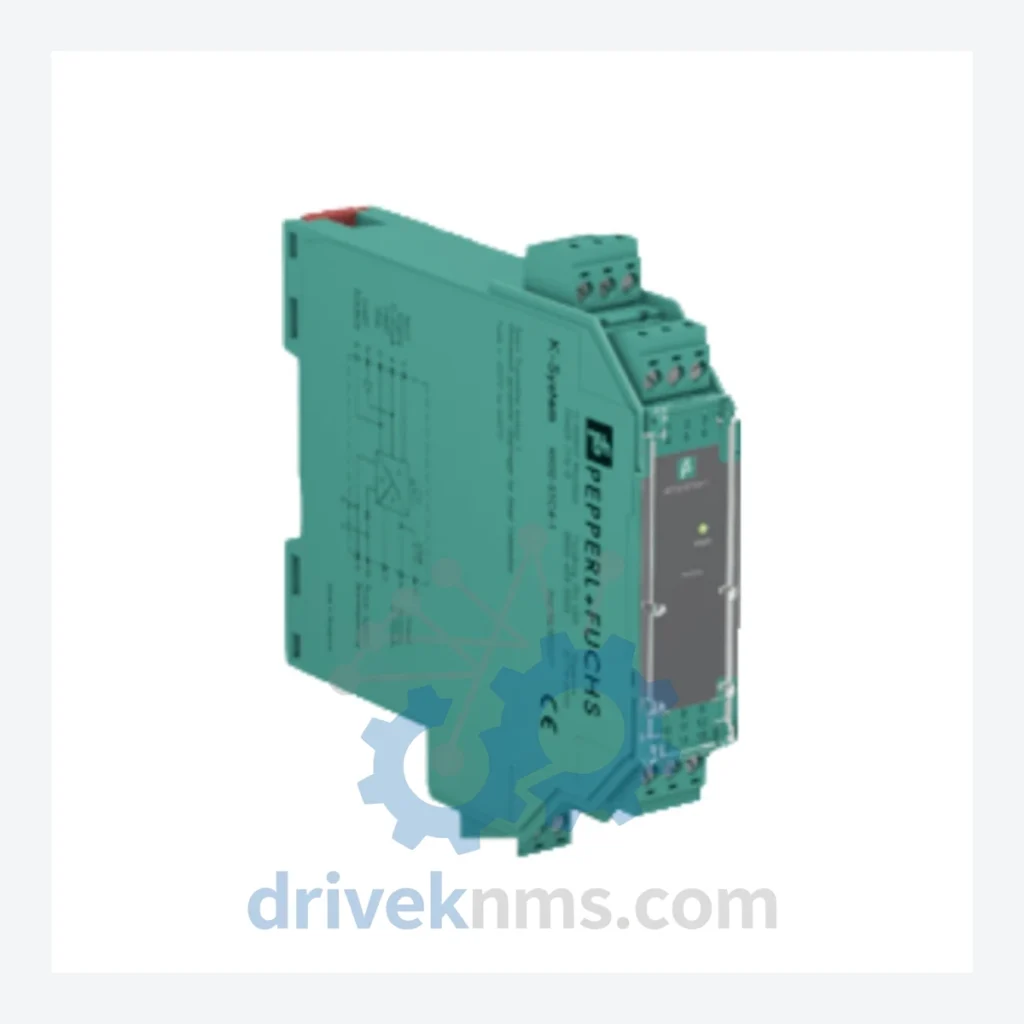
Product Overview
Commercial availability is handled through direct RFQ, model verification and export-oriented follow-up rather than public cart checkout.
Datasheet Preview
Use attached product manuals when available. If the manual is not public yet, request the full file directly through RFQ.
Commercial Path
Product pages on DRIVEKNMS are designed to verify model, brand and series first, then move the buyer into one clean quotation path.
Technical Dossier
When a Pepperl+Fuchs KFD2-STC5-1 fails in an operating plant, the immediate consequence is not simply a module replacement — it is a potential cascade event. This unit sits at the boundary between field instrumentation and the control system. Its failure interrupts the 4–20 mA HART signal loop that feeds process data to the DCS. In facilities running legacy Honeywell TDC 3000, Foxboro I/A Series, or ABB Advant OCS architectures, a single failed KFD2-STC5-1 can take an entire measurement loop offline. Replacing the surrounding infrastructure to accommodate a modern substitute is not a matter of days — it is a capital project measured in months and millions of dollars. DriveKNMS maintains sourced inventory of the KFD2-STC5-1 specifically to prevent that scenario.
| Manufacturer | Pepperl+Fuchs |
| Part Number / SKU | KFD2-STC5-1 |
| Series | KFD2 |
| Function | SMART Transmitter Power Supply with HART communication pass-through |
| Signal Type | 4–20 mA, HART protocol |
| Mounting | DIN rail, K-System |
| Supply Voltage | 20–35 V DC (loop-powered from K-System bus) |
| Output | 4–20 mA isolated analog output |
| Hazardous Area Classification | Suitable for use with Ex ia field devices (intrinsically safe interface) |
| Country of Origin | Germany |
| Lifecycle Status | Discontinued / Obsolete – No longer in active production |
| Compatible Legacy Systems | Honeywell TDC 3000, Foxboro I/A Series, ABB Advant OCS, Siemens TELEPERM M |
The KFD2-STC5-1 belongs to Pepperl+Fuchs' K-System DIN rail isolator family — a product line that became a de facto standard in process industries throughout the 1990s and 2000s. Refineries, chemical plants, and offshore platforms built their field wiring infrastructure around K-System modules. The KFD2-STC5-1 specifically handles SMART transmitter loops, providing galvanic isolation and HART signal conditioning between field devices and the control room.
Pepperl+Fuchs has since transitioned its portfolio toward the KFD2-STC5-Ex1 and the newer KFD0/KFD3 platform families. However, the physical form factor, terminal assignments, and bus communication protocol of the KFD2-STC5-1 are not directly interchangeable with these successors without engineering rework. In a plant where hundreds of these modules are installed across multiple marshalling cabinets, a like-for-like replacement is the only operationally viable option.
Facilities that attempt to migrate away from the KFD2-STC5-1 mid-lifecycle face a compounding problem: the field wiring, the DCS I/O card assignments, and the HART device management software are all calibrated to the existing module's signal characteristics. Substituting a different module family requires loop-by-loop recalibration, updated as-built documentation, and in many jurisdictions, re-certification of the hazardous area installation. The engineering cost per loop can exceed USD 3,000–8,000. For a plant with 200 affected loops, the total exposure exceeds USD 1 million — before accounting for production downtime.
Maintaining a strategic stock of KFD2-STC5-1 units is not a procurement inefficiency. It is a documented risk mitigation measure that extends the operational life of the surrounding automation asset by 5–10 years at a fraction of the cost of a forced migration.
All KFD2-STC5-1 units sourced by DriveKNMS undergo a structured 5-step quality verification process before dispatch:
Q: What warranty applies to an obsolete part like the KFD2-STC5-1?
A: DriveKNMS provides a 90-day functional warranty on all tested units. The warranty covers verified electrical failure under normal operating conditions. It does not cover damage resulting from incorrect installation or operation outside rated parameters.
Q: Are these new-in-box units or refurbished?
A: Stock condition varies. DriveKNMS will specify the exact condition — new surplus, tested used, or professionally refurbished — at the time of quotation. All units, regardless of condition, pass the 5-step QA process described above before shipment.
Q: How many units should we hold as strategic spares?
A: For a plant with 20–50 installed KFD2-STC5-1 units, a minimum buffer of 3–5 spares is a standard industry practice. For larger installations or facilities with extended lead times for emergency procurement, 8–10 units is a more defensible position. The cost of holding spares is negligible compared to the cost of a single unplanned shutdown.
Q: Can the KFD2-STC5-1 be used with modern HART 7 field devices?
A: The KFD2-STC5-1 supports HART communication as a pass-through conduit. Compatibility with specific HART 7 device features depends on the host DCS HART master implementation, not the isolator module itself. Consult your DCS vendor documentation for HART revision support details.
Related Paths
PEPPERL+FUCHS KFD2-STC4-EX1.2O Signal Isolator: Sourcing Strategy & Asset Return Value in a Constrained Global Supply Chain The KFD2-STC4-EX1.2O is a…
Pepperl+Fuchs KFD2-STC4-1 Transmitter Power Supply – Obsolete KFD2 Series Spare Part When a KFD2-STC4-1 fails in an operating plant, the…
Pepperl+Fuchs KFD2 Series: Comprehensive Module Range and Technical Overview The Pepperl+Fuchs KFD2 series is a family of DIN-rail-mounted signal conditioners…