
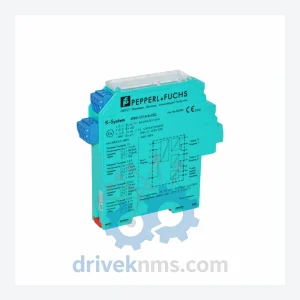
PEPPERL+FUCHS KFD2-STC4-EX1.2O Signal Isolator – NAMUR Series
PEPPERL+FUCHS KFD2-STC4-EX1.2O Signal Isolator: Sourcing Strategy & Asset Return Value in a Constrained Global Supply Chain The KFD2-STC4-EX1.2O is a…
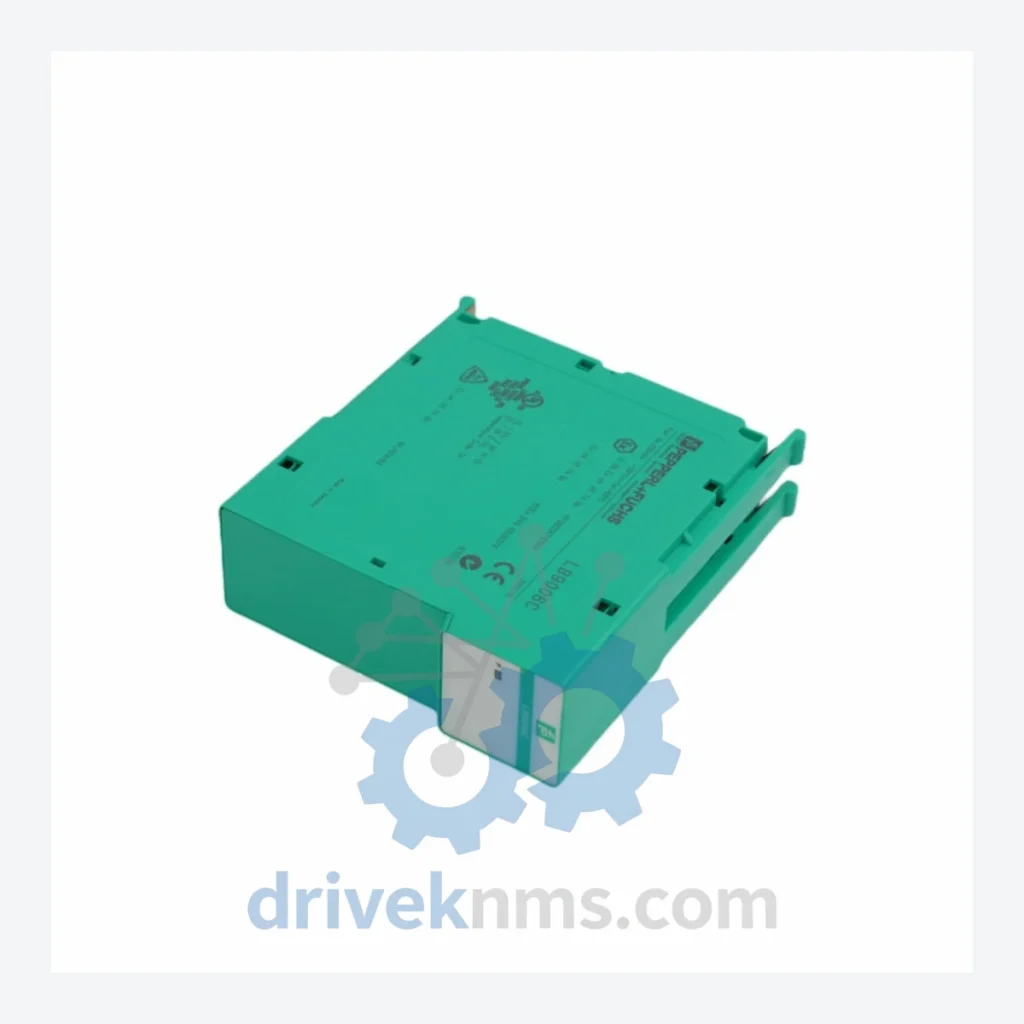
Model: LB9006C
Product Overview
Commercial availability is handled through direct RFQ, model verification and export-oriented follow-up rather than public cart checkout.
Datasheet Preview
Use attached product manuals when available. If the manual is not public yet, request the full file directly through RFQ.
Commercial Path
Product pages on DRIVEKNMS are designed to verify model, brand and series first, then move the buyer into one clean quotation path.
Technical Dossier
When a single signal conditioning module fails in a legacy process control architecture, the consequences extend far beyond the cost of the component itself. Plants running Pepperl+Fuchs LB Series infrastructure — often integrated with distributed control systems such as Honeywell TDC 3000, ABB Advant, or Siemens TELEPERM — face a stark choice when critical modules become unavailable: source the original part, or commit to a full system migration. A full migration on a mid-size process line routinely exceeds USD 500,000 once engineering, downtime, revalidation, and retraining costs are factored in. The LB9006C, now discontinued by Pepperl+Fuchs, remains a load-bearing component in thousands of installed systems worldwide. DriveKNMS maintains verified stock of this module for facilities that cannot afford to gamble on system continuity.
| Parameter | Detail |
|---|---|
| Manufacturer | Pepperl+Fuchs |
| Model / Part Number | LB9006C |
| Series | LB Series (Isolating Switching Amplifier) |
| Function | Isolating switching amplifier for NAMUR sensors and mechanical contacts |
| Output | Relay output (SPDT) |
| Supply Voltage | 20–35 V DC (nominal 24 V DC) |
| Mounting | DIN rail, LB remote I/O system |
| Approvals | ATEX, IECEx (intrinsically safe input circuit) |
| Country of Origin | Germany |
| Discontinuation Status | Discontinued by manufacturer – no longer in production |
| Compatible Systems | Honeywell TDC 3000, ABB Advant / MasterPiece, Siemens TELEPERM, Foxboro I/A Series |
Note: Electrical parameters listed above are based on published Pepperl+Fuchs LB Series documentation. Parameters not confirmed by original datasheet are intentionally omitted. Do not rely on unverified third-party specifications for safety-critical installations.
The LB9006C occupies a specific and non-trivial role in legacy field signal conditioning racks. It provides galvanic isolation between hazardous-area NAMUR sensors or dry contacts and the safe-area control system, while simultaneously delivering relay switching output to the DCS or PLC input card. In systems designed around the LB remote I/O architecture, each slot is assigned a fixed function — there is no software-configurable substitution. Replacing the LB9006C with a module from a different product family requires physical rewiring, updated loop drawings, re-ATEX certification of the modified barrier assembly, and in regulated industries, a formal Management of Change (MOC) process.
For plant managers operating under capital expenditure constraints, this is not a theoretical risk. A single unplanned outage on a process line while awaiting a discontinued component can cost more in lost production per day than the entire annual maintenance budget for that system. The LB9006C is not a commodity item that can be substituted from a general distributor's shelf. Facilities that have not pre-positioned spare stock are exposed to lead times measured in months — if the part can be sourced at all through conventional channels.
DriveKNMS specializes in the procurement and verification of exactly this category of component: modules that the original manufacturer no longer produces, that standard distributors have exhausted, and that system integrators cannot easily replace without triggering expensive re-engineering. Our sourcing network covers decommissioned plant inventories, authorized surplus channels, and long-term storage stock — all subject to the inspection protocol described below.
Discontinued modules present specific reliability risks that new production parts do not. A component that has been in storage for five to fifteen years, or removed from a decommissioned system, requires structured evaluation before it can be trusted in a safety-related or production-critical application. DriveKNMS applies a five-stage inspection protocol to all obsolete parts prior to dispatch:
1. Visual and Mechanical Inspection: Full examination of housing integrity, connector pins, and PCB surface. Pin corrosion, oxidation on relay contacts, and physical damage are assessed under magnification. Units with compromised connectors are rejected.
2. Electrolytic Capacitor Assessment: Aged electrolytic capacitors are a primary failure mode in modules stored beyond their design service life. Each unit is evaluated for capacitor condition; where capacitor degradation is identified, the unit is either reconditioned by a qualified technician or removed from serviceable stock.
3. Firmware and Configuration Verification: Where applicable, firmware version is confirmed against the last published Pepperl+Fuchs release for the LB9006C. Configuration DIP switch positions are documented and reset to factory default unless otherwise specified by the customer.
4. Functional Bench Test: Each unit is powered at rated supply voltage and tested for correct switching behavior across the relay output under simulated NAMUR input conditions. Response time and output state transitions are verified.
5. Final Documentation: A test record is issued with each unit, confirming inspection date, technician ID, test results, and observed condition grade (New Surplus / Refurbished / Tested Used). This documentation supports customer MOC and audit requirements.
The LB9006C is a direct drop-in replacement for any existing LB9006C position within a Pepperl+Fuchs LB remote I/O rack. No reprogramming of the DCS or PLC is required. No changes to the field wiring are necessary. No re-certification of the intrinsic safety barrier assembly is triggered, provided the replacement unit carries the same ATEX approval markings as the original.
This matters operationally. Engineering change management in process industries is time-consuming and expensive. A like-for-like replacement that requires no documentation beyond a standard maintenance work order is the lowest-cost, lowest-risk path to restoring system availability. Facilities that maintain a small buffer stock of LB9006C units — typically two to four units per installed rack — can execute corrective maintenance within a single shift, without involving instrumentation engineers, safety reviewers, or procurement teams.
For facilities managing the long-term operation of legacy LB Series infrastructure, the strategic question is not whether to source spare LB9006C units, but how many to hold and for how long. Given the current scarcity of verified stock in the secondary market, procurement decisions made today directly determine the operational window available before a forced system upgrade becomes unavoidable. Each confirmed spare unit in your maintenance store represents, conservatively, six to eighteen months of additional protected operating life for the associated control loop.
What warranty applies to a discontinued LB9006C?
DriveKNMS provides a 90-day functional warranty on all tested and refurbished units, and a 180-day warranty on confirmed new surplus stock. Warranty covers failure under normal operating conditions and excludes damage resulting from incorrect installation or operation outside rated parameters.
How do I confirm the unit is genuine Pepperl+Fuchs and not a counterfeit?
All units supplied by DriveKNMS are sourced through traceable channels. Manufacturer markings, date codes, and PCB construction are verified against known-good reference units during inspection. We do not source from unverified brokers. Customers may request photographs of the physical unit and its markings prior to purchase.
Should I purchase more than one unit?
For any installed LB9006C position that is operationally critical, holding a minimum of one cold spare is advisable. For racks with multiple LB9006C positions, a ratio of one spare per four installed units is a practical starting point. Given the declining availability of verified stock in the secondary market, procurement of a multi-year buffer supply is a defensible capital allocation for facilities with no near-term plans to migrate away from LB Series infrastructure.
Can you supply other LB Series modules?
Yes. DriveKNMS maintains stock across multiple LB Series variants. Contact us with your full bill of materials for a consolidated availability check.
Related Paths
PEPPERL+FUCHS KFD2-STC4-EX1.2O Signal Isolator: Sourcing Strategy & Asset Return Value in a Constrained Global Supply Chain The KFD2-STC4-EX1.2O is a…
Pepperl+Fuchs KFD2-STC4-1 Transmitter Power Supply – Obsolete KFD2 Series Spare Part When a KFD2-STC4-1 fails in an operating plant, the…
Pepperl+Fuchs KFD2 Series: Comprehensive Module Range and Technical Overview The Pepperl+Fuchs KFD2 series is a family of DIN-rail-mounted signal conditioners…