
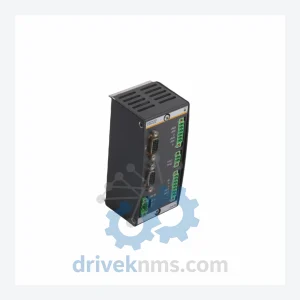
BACHMANN ISI222 Positioning Modules
BACHMANN ISI222 Series: Comprehensive Module Range and Technical Overview The BACHMANN ISI222 is a high-resolution positioning module designed for integration…
Model: 200150-05-05
Product Overview
Commercial availability is handled through direct RFQ, model verification and export-oriented follow-up rather than public cart checkout.
Datasheet Preview
Use attached product manuals when available. If the manual is not public yet, request the full file directly through RFQ.
Commercial Path
Product pages on DRIVEKNMS are designed to verify model, brand and series first, then move the buyer into one clean quotation path.
Technical Dossier
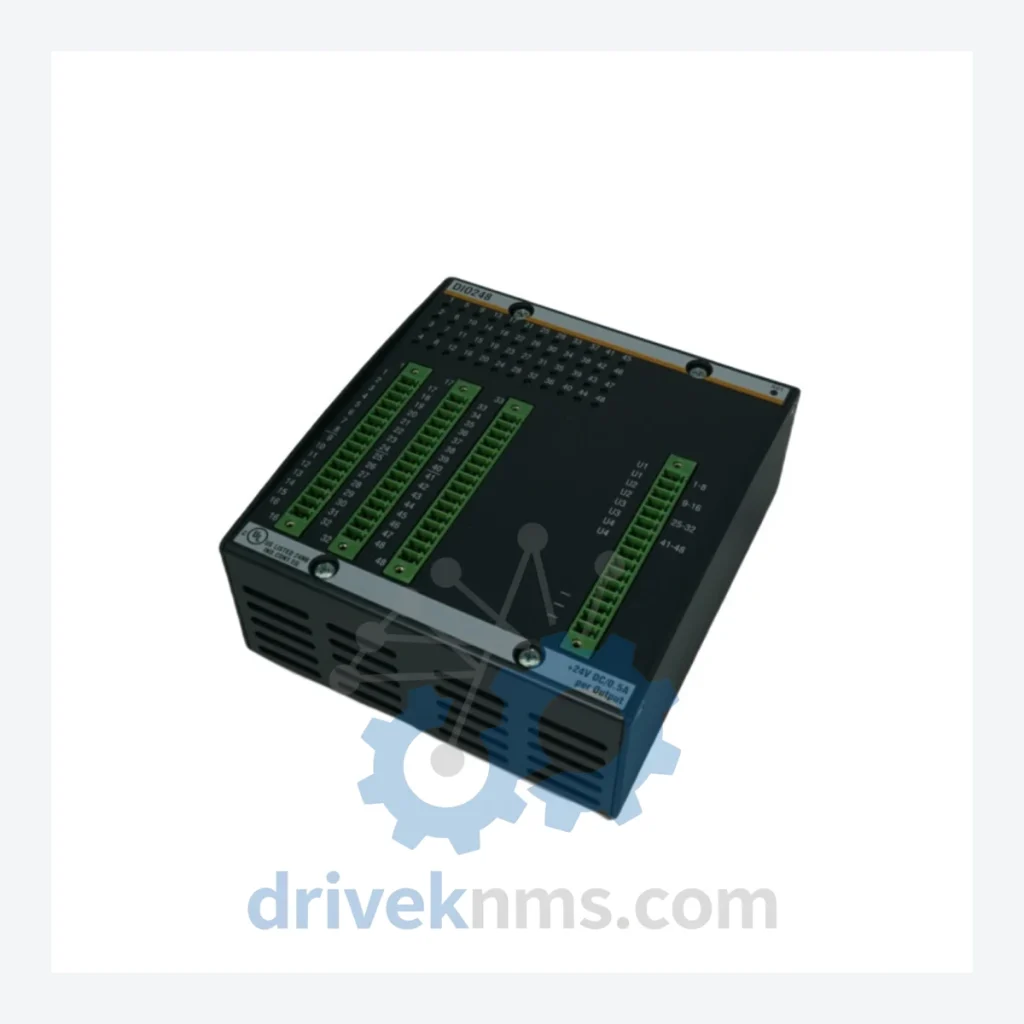
The Bachmann DIO248 is a digital input/output module within Bachmann Electronic's MPC (Modular Process Controller) platform, widely deployed in heavy industrial environments including chemical processing plants, offshore oil & gas installations, hydroelectric power stations, and wind energy facilities. Bachmann's MPC architecture is a deterministic, real-time automation platform certified to IEC 61131-3, with a global installed base spanning Europe, Asia-Pacific, and the Americas. The DIO248 module provides 24 digital inputs and 8 digital outputs on a single backplane slot, making it a high-density I/O solution for process control and machine automation applications where rack space is a critical constraint. Its 24 VDC signal compatibility and optical isolation architecture make it suitable for electrically noisy industrial environments. The platform's modular backplane design allows hot-swap capability on supported controller configurations, reducing unplanned downtime in continuous-process industries.
Bachmann Electronic GmbH, headquartered in Feldkirch, Austria, introduced the MPC controller platform in the early 2000s as a successor to proprietary single-board control architectures. The DIO248 module belongs to the second-generation MPC I/O family, which standardized on a 24 VDC digital signal level and a high-speed internal backplane bus operating at deterministic cycle times as low as 1 ms. Early MPC I/O modules used parallel backplane communication; later revisions transitioned to a serialized internal bus, improving noise immunity and increasing the maximum number of modules per rack. The DIO248 is compatible with MPC210, MPC230, MPC240, and MPC265 CPU modules, as well as the SolutionCenter rack system. Firmware compatibility is managed through Bachmann's SolutionCenter engineering software, which enforces module-to-CPU version matching. As the MPC platform has matured, Bachmann has introduced successor I/O modules with higher channel counts and integrated diagnostics; however, the DIO248 remains in active use across legacy installations where backplane slot compatibility and existing wiring infrastructure preclude direct module substitution. Facilities operating DIO248 modules should maintain a documented spare parts inventory, as lead times for new production units can extend to 16–26 weeks through standard distribution channels.
The following SKUs represent the Bachmann MPC I/O module range compatible with or directly related to the DIO248 series. Modules are classified by function. All part numbers are Bachmann Electronic OEM references.
Digital Input / Output Modules
Analog Input / Output Modules
CPU / Controller Modules
Communication & Network Modules
Power Supply Modules
Each Bachmann DIO248 module processed by DriveKNMS undergoes a structured inspection and functional verification protocol. Visual inspection covers backplane connector pin integrity, PCB surface condition, and component-level assessment for capacitor degradation or relay contact wear on relay-output variants. Functional testing is performed using a Bachmann MPC240 or MPC265 test rack running SolutionCenter firmware, verifying all 24 digital input channels and all 8 digital output channels against specified 24 VDC signal thresholds. Optical isolation integrity is verified by applying test voltages at rated levels and measuring leakage current against IEC 61131-2 limits. Backplane bus communication is validated by confirming module enumeration, cyclic data exchange, and diagnostic register readback within the SolutionCenter environment. Modules that fail any test stage are quarantined and not listed for sale. Test records are retained and available upon request for quality-critical procurement processes.
Related Paths
BACHMANN ISI222 Series: Comprehensive Module Range and Technical Overview The BACHMANN ISI222 is a high-resolution positioning module designed for integration…
BACHMANN OT115/R Operator Panel: Global Sourcing Strategy & Asset Return Value The BACHMANN OT115/R is a dedicated operator panel (HMI…
BACHMANN WT305E Series: Comprehensive Module Range and Technical Overview The BACHMANN WT305E is a panel-mount industrial HMI and controller platform…