
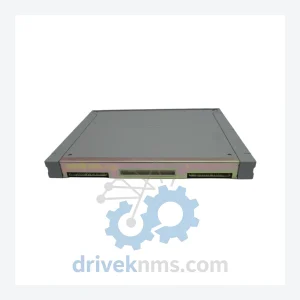
ICS T7411 Pressure Transmitter – Sensing Series
ICS T7411 Pressure Transmitter: Strategic Sourcing in a Tightening Industrial Components Market The ICS T7411 is a precision pressure transmitter…
Model: T8151
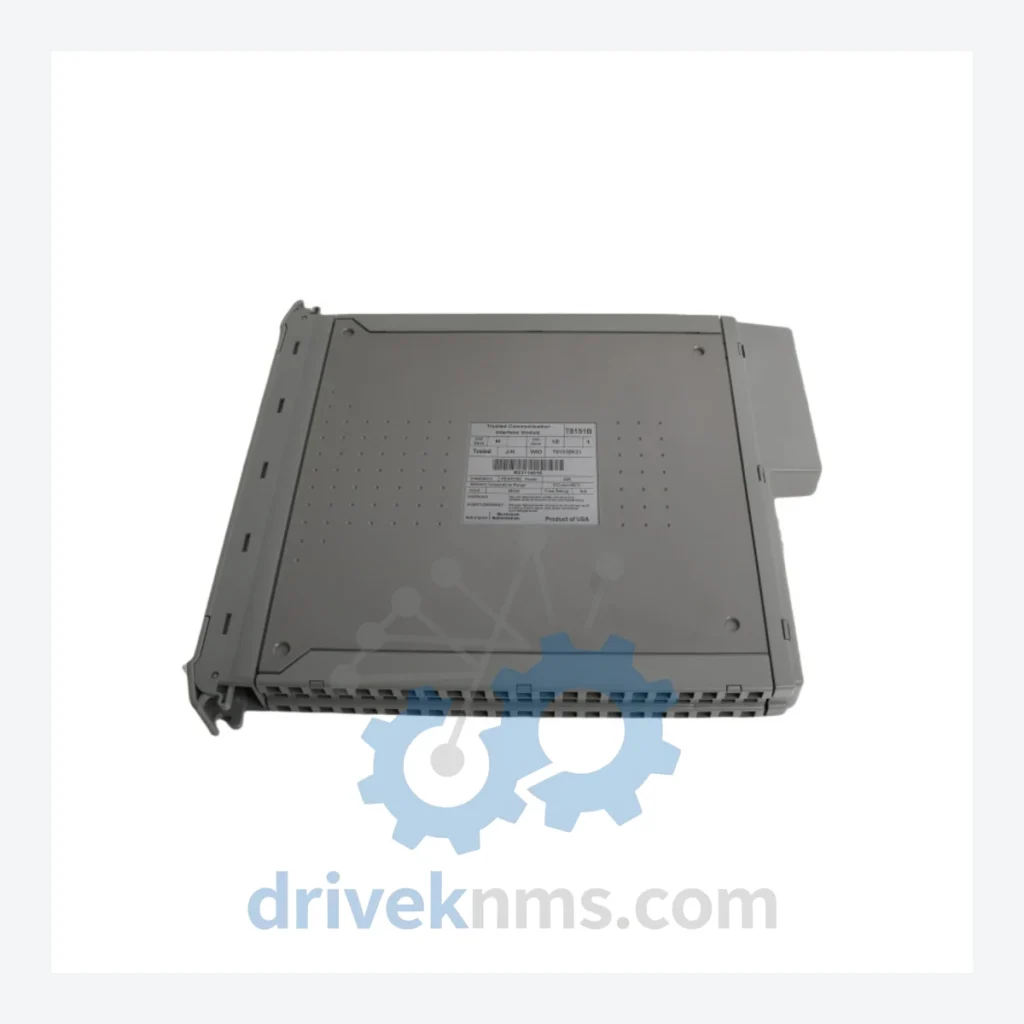
Product Overview
Commercial availability is handled through direct RFQ, model verification and export-oriented follow-up rather than public cart checkout.
Datasheet Preview
Use attached product manuals when available. If the manual is not public yet, request the full file directly through RFQ.
Commercial Path
Product pages on DRIVEKNMS are designed to verify model, brand and series first, then move the buyer into one clean quotation path.
Technical Dossier
When the ICS T8151 Trusted Communications Interface fails in a live safety or process control environment, the consequences extend far beyond a single module replacement. This card serves as the communications backbone in legacy ICS (formerly Triconex) safety instrumented systems — architectures that remain deeply embedded in petrochemical plants, power generation facilities, and continuous-process manufacturing lines worldwide. A forced system retirement triggered by one unavailable module can demand capital expenditure in the range of several hundred thousand to several million USD: new DCS/SIS hardware, re-engineering of I/O maps, re-validation of safety logic, and weeks of planned downtime. Against that backdrop, securing a verified spare T8151 is not a procurement decision — it is an asset protection decision.
DriveKNMS maintains sourced inventory of discontinued industrial control components, including the T8151, specifically to serve facilities that cannot afford unplanned obsolescence exposure.
| Parameter | Detail |
|---|---|
| Manufacturer | ICS (Integrated Control Systems / formerly Triconex) |
| Part Number | T8151 |
| Module Type | Trusted Communications Interface |
| Product Status | Discontinued / Obsolete |
| Country of Origin | United States |
| Compatible Platform | ICS Trusted / Triconex Trusted Series Safety Systems |
| Condition Available | New surplus; Refurbished (tested) |
Note: Specific electrical parameters (voltage ratings, bus speed, I/O counts) are not published here to prevent inaccurate data from being used in safety-critical decisions. Contact our technical team for verified datasheet support.
The ICS Trusted platform was engineered for high-integrity safety applications — SIL 2 and SIL 3 environments where triple modular redundancy (TMR) is not optional. The T8151 communications interface handles inter-module and host communication within this architecture. There is no generic substitute. Replacing it with a non-OEM equivalent is not a viable path in a certified safety loop without full re-validation — a process that can take months and cost more than the original system installation.
Facilities running ICS Trusted systems face a compounding problem: the original manufacturer's support lifecycle has ended, authorized repair centers have closed, and the secondary market supply of verified modules is shrinking each year. Every month that passes without a secured spare increases the probability that a single component failure becomes a full system retirement event.
The practical strategy adopted by asset-conscious plant managers is straightforward: identify every T8151 and related Trusted-series modules currently in service, calculate the minimum critical spare holding, and source those units now — before the secondary market is exhausted. DriveKNMS operates specifically within this sourcing window.
For plant management facing pressure to retire aging ICS Trusted systems, the following framework has been applied successfully across multiple facilities to defer capital replacement programs by five to ten years:
1. Conduct a full module census. Document every card type, firmware version, and slot assignment across all Trusted system cabinets. This baseline is the foundation of any obsolescence management plan.
2. Prioritize communications and processor modules. Cards like the T8151 that handle system-level communication are single points of failure. These must be held as cold spares before any other category.
3. Establish a minimum two-unit spare holding per critical module type. One spare is a risk, not a strategy. Two units provide a working replacement and a backup while sourcing is arranged.
4. Implement a scheduled preventive inspection cycle. Even stored modules degrade. Electrolytic capacitors in boards manufactured before 2010 have a finite shelf life. Annual bench testing of spare inventory prevents the scenario where a spare fails on first use.
5. Freeze firmware versions. Avoid any firmware updates that have not been validated against your specific system configuration. Incompatible firmware on a communications module can cause system-wide faults that are difficult to diagnose under pressure.
6. Negotiate a long-term supply agreement. Spot-buying obsolete parts at the moment of failure is the most expensive and least reliable approach. Structured agreements with specialist distributors like DriveKNMS lock in pricing and priority allocation before inventory is depleted.
The cost of this strategy — spare procurement, storage, and periodic testing — is typically less than 2% of the capital cost of a full system replacement. For a facility running a Trusted TMR system protecting a critical process unit, that comparison requires no further justification.
Every T8151 unit that passes through DriveKNMS inventory is subject to a structured five-step evaluation before it is offered for sale:
Step 1 – Visual and mechanical inspection. Physical examination of the PCB, connector pins, and housing for corrosion, mechanical damage, or evidence of prior field failure.
Step 2 – Electrolytic capacitor assessment. Capacitor aging is the primary failure mode in boards of this generation. Each unit is evaluated for capacitor bulge, leakage, and ESR deviation from specification.
Step 3 – Pin and connector integrity check. Backplane connector pins are inspected under magnification for oxidation, bending, and contact resistance. Corroded pins are the leading cause of intermittent communication faults in legacy systems.
Step 4 – Firmware version verification. Where readable, firmware revision is documented and disclosed to the buyer. Mismatched firmware between a replacement module and the host system is a known source of post-installation faults.
Step 5 – Functional bench test. Where test equipment is available for the platform, units are powered and communication functionality is verified prior to shipment.
Units that do not pass all applicable steps are not offered for sale. Condition grade (New Surplus or Refurbished) is disclosed on every order confirmation.
Q: What warranty applies to an obsolete part like the T8151?
A: DriveKNMS provides a 90-day warranty on all refurbished units and a 180-day warranty on new surplus units, covering functional failure under normal operating conditions. Warranty terms are confirmed in writing at the time of order.
Q: How do I know the unit is genuine and not counterfeit?
A: All units are sourced from documented industrial decommissioning projects, authorized surplus channels, or verified distributor stock. Provenance documentation is available on request. We do not source from unverified grey-market channels.
Q: Should we hold more than one spare T8151?
A: For any system where the T8151 is in active service, a minimum of two spare units is the standard recommendation. Given the declining availability of this part, facilities with multiple Trusted system cabinets should consider holding one spare per cabinet plus one additional unit as a strategic reserve.
Q: Can you supply other ICS Trusted series modules?
A: Yes. DriveKNMS maintains sourcing capability across the ICS Trusted product family. Contact us with your full bill of materials for a consolidated availability check.
© 2026 DriveKNMS. Status: DRAFT
Related Paths
ICS T7411 Pressure Transmitter: Strategic Sourcing in a Tightening Industrial Components Market The ICS T7411 is a precision pressure transmitter…
ICS T3000 Series: Comprehensive Module Range and Technical Overview The ICS (Integrated Control Systems) T3000 Series is a distributed control…
ICS Triplex T8431 Trusted TMR Digital Output Module – Obsolete Safety System Spare Part When a Trusted TMR Digital Output…