
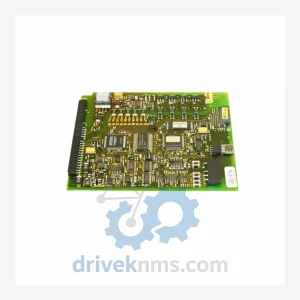
Endress+Hauser FLOWTEC 319083-0200B Amplifier Board – Flowtec Series
E+H FLOWTEC 319083-0200B Amplifier Board: Securing Supply in a Constrained Market The Endress+Hauser FLOWTEC 319083-0200B is a precision amplifier board…
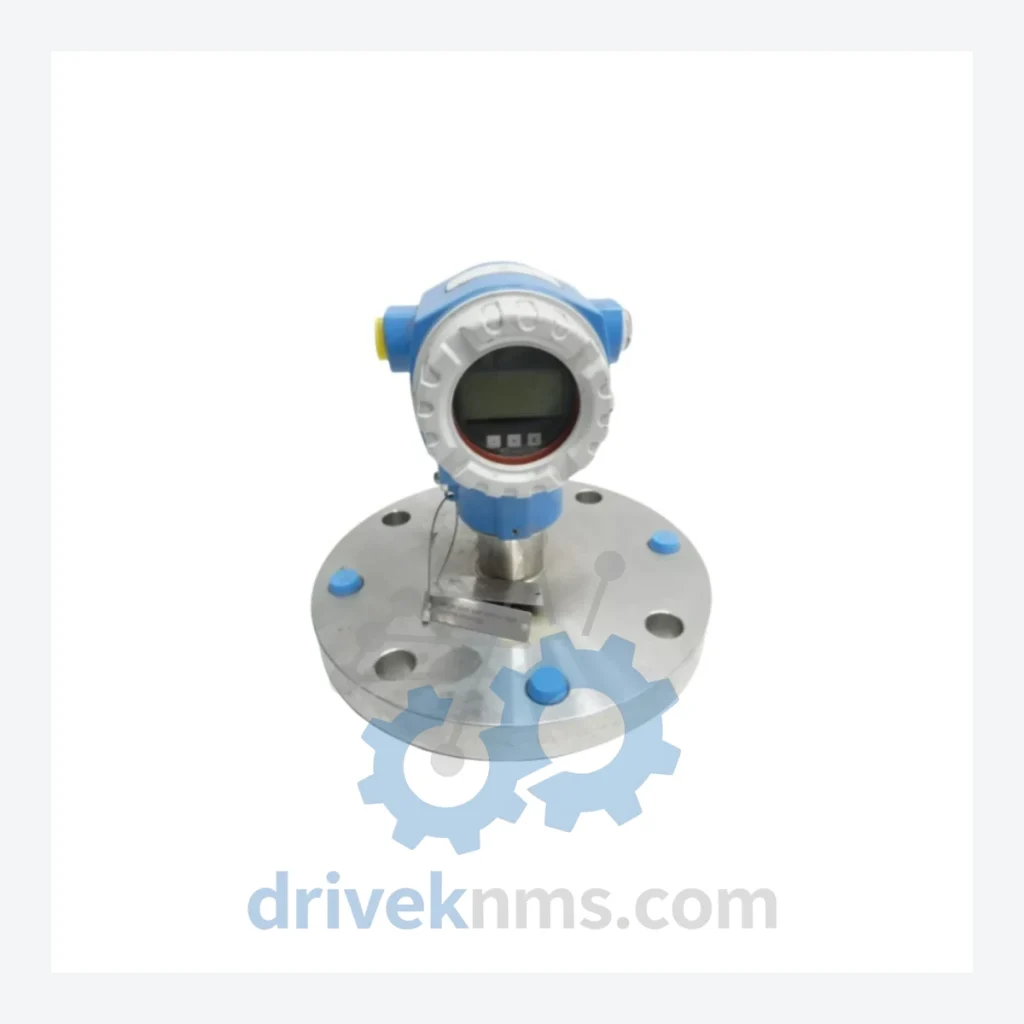
Model: FMB51-AA21RA1FGC80GGJB3A+AA
Product Overview
Commercial availability is handled through direct RFQ, model verification and export-oriented follow-up rather than public cart checkout.
Datasheet Preview
Use attached product manuals when available. If the manual is not public yet, request the full file directly through RFQ.
Commercial Path
Product pages on DRIVEKNMS are designed to verify model, brand and series first, then move the buyer into one clean quotation path.
Technical Dossier
The Endress+Hauser FMB51 Levelflex is a guided wave radar (GWR) level transmitter deployed across the full spectrum of global heavy industry. Installations span crude oil storage terminals, LNG processing facilities, chemical reactor vessels, pharmaceutical batch tanks, and nuclear auxiliary systems. The FMB51 designation covers a broad matrix of probe configurations, process connections, output protocols, and approval packages — each assembled to order using Endress+Hauser's modular ordering code structure.
In refineries and petrochemical complexes, the FMB51 is frequently specified as the primary level measurement device on high-pressure separators and distillation column sumps, where its immunity to vapor space conditions and foam layers provides measurement reliability that non-contact radar and differential pressure transmitters cannot consistently deliver. In the food and beverage sector, hygienic variants with 3-A and EHEDG certification address CIP/SIP process requirements. In water and wastewater infrastructure, the instrument's ability to measure interface levels between water and sludge layers extends its utility beyond standard point-level applications.
The FMB51 platform has accumulated a substantial installed base since its introduction, and a significant proportion of those installations are now operating with configurations that Endress+Hauser has discontinued or superseded. Sourcing exact-match replacement units for these configurations requires access to surplus and decommissioned stock — the primary service DriveKNMS provides for this product family.
The Levelflex product line was introduced by Endress+Hauser in the mid-1990s as a guided wave radar alternative to displacer-type level instruments. The FMB51 represents the second-generation platform within this line, succeeding the original FMP51 and FMP52 designations used in early catalog revisions.
Early FMB51 units shipped with HART 5 protocol as the standard digital communication layer, with 4–20 mA analog output as the primary process signal. As fieldbus adoption expanded in the 2000s, Endress+Hauser introduced PROFIBUS PA and Foundation Fieldbus H1 output variants under the same FMB51 ordering structure. These fieldbus configurations are now the most difficult to source as replacement units, as production volumes were lower and decommissioning rates have reduced available surplus stock.
The probe element — the coaxial, twin-rod, or single-rod configuration selected at time of order — determines the instrument's suitability for specific media and vessel geometries. Coaxial probes are specified for low-dielectric liquids including hydrocarbons. Twin-rod probes are the general-purpose configuration for aqueous media. Single-rod probes are used in bulk solids applications. Each probe type is manufactured to specific length tolerances and process connection specifications, and probe assemblies are not interchangeable between configurations without re-ordering.
The electronics housing — available in aluminum or stainless steel, in single-compartment or dual-compartment configurations — determines the instrument's suitability for hazardous area classifications. ATEX, IECEx, FM, and CSA approval packages were applied to specific housing and electronics combinations. Instruments with older approval revisions may not be directly replaceable with current-production units if the applicable hazardous area standard has been revised since original installation.
Endress+Hauser introduced the Levelflex M (FMP5x) series as the successor platform, followed by the Levelflex FMP51/FMP54/FMP55 range with enhanced diagnostics and Heartbeat Technology. Facilities operating original FMB51 installations that have not migrated to the successor platform are dependent on the secondary market for replacement units.
The following models represent confirmed configurations within the FMB51 ordering matrix. Each entry reflects a distinct combination of probe type, process connection, output protocol, and approval package.
Controllers / Transmitter Electronics
Coaxial Probe Configurations (Low-Dielectric / Hydrocarbon Media)
Single-Rod Probe Configurations (Bulk Solids / High-Viscosity)
Stainless Steel Housing / Hygienic Variants
The FMB51 ordering code structure generates a large number of distinct configurations. Endress+Hauser's standard spare parts program covers current-production variants and selected high-volume configurations. Discontinued ordering code combinations — particularly those with PROFIBUS PA or Foundation Fieldbus H1 outputs, older ATEX approval revisions, or non-standard probe lengths — are not available through standard distribution channels.
DriveKNMS sources FMB51 units through industrial decommissioning projects, plant shutdowns, and verified surplus distributors. Each unit is cross-referenced against the original ordering code to confirm configuration match before dispatch. For facilities where the exact ordering code is unknown, DriveKNMS can cross-reference against the instrument's nameplate data and serial number range to identify the correct replacement configuration.
For plant engineering teams managing aging Levelflex installations, DriveKNMS recommends a structured spare parts audit: identify all installed FMB51 units by ordering code, cross-reference against current Endress+Hauser availability, and establish a minimum stock position for configurations that are no longer in production. This approach converts an unmanaged obsolescence risk into a defined, budgeted maintenance liability.
DriveKNMS also supports cross-referencing FMB51 configurations against successor models (FMP51, FMP54, FMP55) where a direct functional replacement exists and the process connection geometry permits substitution without vessel modification.
The FMB51's measurement performance depends on the integrity of three interdependent subsystems: the probe element, the high-frequency electronics, and the process seal. DriveKNMS applies a structured verification protocol to each unit processed:
© 2026 DriveKNMS. Status: DRAFT
Related Paths
E+H FLOWTEC 319083-0200B Amplifier Board: Securing Supply in a Constrained Market The Endress+Hauser FLOWTEC 319083-0200B is a precision amplifier board…
Endress+Hauser AG319100-0200C / AG319100-0200D PCB Control Board: Supply Continuity Strategy for a Discontinued Industrial Component The Endress+Hauser AG319100-0200C and its…
Endress+Hauser CLM253 Series: Comprehensive Module Range and Technical Overview The Endress+Hauser CLM253 is a two-wire conductivity transmitter engineered for continuous…