
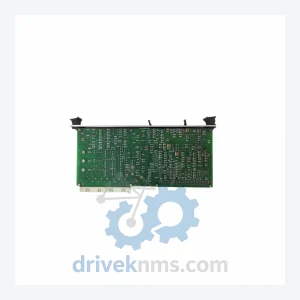
Yokogawa K9634DA-01 TCD Card Modules
Yokogawa K9634DA Series: Comprehensive Module Range and Technical Overview The Yokogawa K9634DA series TCD (Thermocouple/mV Input) cards are field-proven I/O…
Model: SDV521-S33
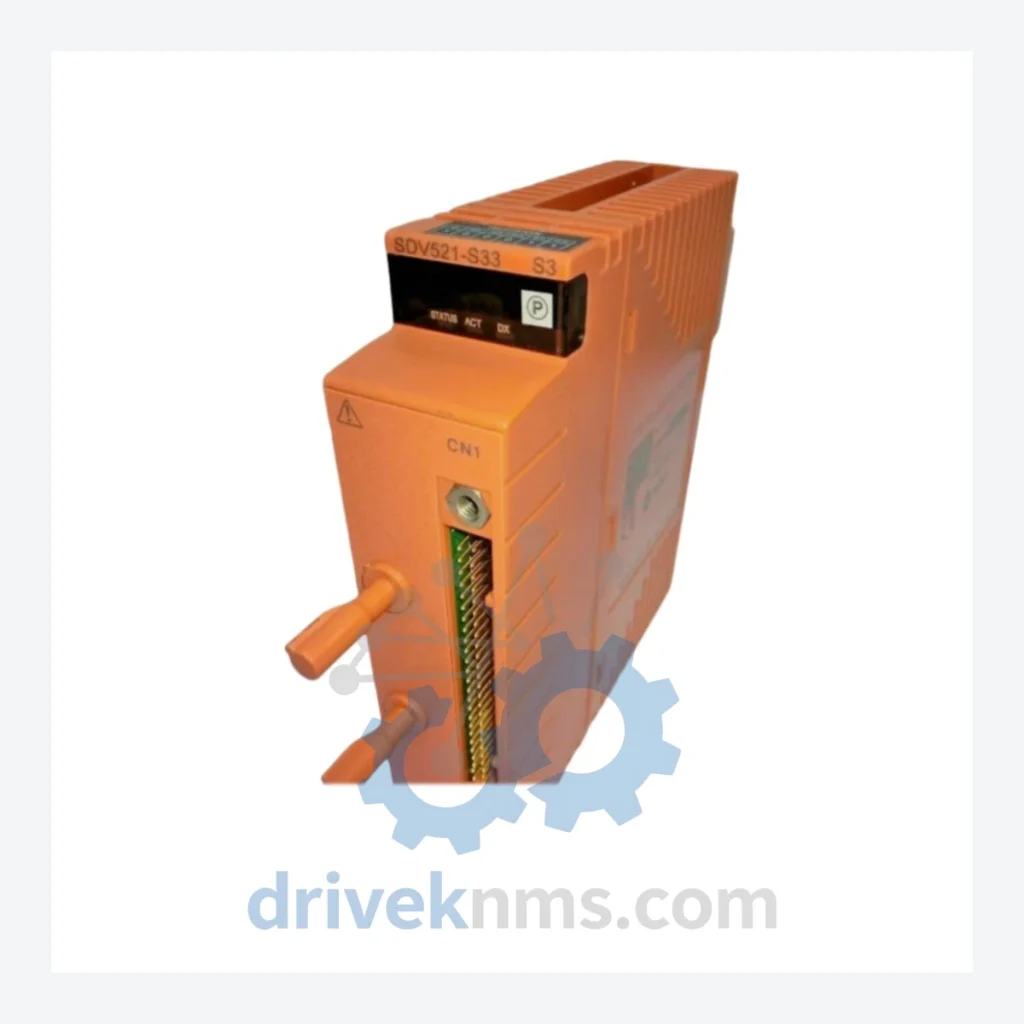
Product Overview
Commercial availability is handled through direct RFQ, model verification and export-oriented follow-up rather than public cart checkout.
Datasheet Preview
Use attached product manuals when available. If the manual is not public yet, request the full file directly through RFQ.
Commercial Path
Product pages on DRIVEKNMS are designed to verify model, brand and series first, then move the buyer into one clean quotation path.
Technical Dossier
When a digital valve positioner fails in a process control loop, the consequences extend far beyond a single instrument. In aging CENTUM VP, CENTUM CS 3000, or STARDOM-based facilities, the SDV521-S33 is a load-bearing component of the field instrument architecture. Its failure does not merely interrupt one valve — it can cascade into a full loop shutdown, triggering unplanned downtime that costs process industries between $50,000 and $500,000 per hour depending on the plant type. Replacing the entire control system to accommodate a modern positioner is not a maintenance decision; it is a capital project, often requiring months of engineering, re-wiring, re-commissioning, and operator retraining. The SDV521-S33 eliminates that path entirely.
DriveKNMS holds verified physical stock of the Yokogawa SDV521-S33. This is not a broker listing. Inventory is inspected, documented, and ready for immediate dispatch.
| Parameter | Detail |
|---|---|
| Manufacturer | Yokogawa Electric Corporation |
| Model Number | SDV521-S33 |
| Product Category | Digital Valve Positioner |
| Series | CENTUM / STARDOM Field Instrument Series |
| Country of Origin | Japan |
| Discontinuation Status | Discontinued / End-of-Life (EOL) – No longer manufactured by Yokogawa |
| Compatible Systems | Yokogawa CENTUM VP, CENTUM CS 3000, STARDOM FCN/FCJ |
| Communication Protocol | HART (Highway Addressable Remote Transducer) |
| Mounting | Direct-mount to control valve actuator |
| Enclosure Rating | IP66 / NEMA 4X (dust-tight and weatherproof) |
Note: Electrical parameters not confirmed from official documentation are intentionally omitted. Contact us for full datasheet access.
The SDV521-S33 was engineered as an integral field device within Yokogawa's distributed control architecture. Its HART communication layer is tightly coupled to the CENTUM VP and CS 3000 function block structure. Substituting it with a current-generation positioner from any manufacturer — including Yokogawa's own successor models — requires reconfiguration of the function block parameters, re-tuning of the valve control loop, and in many cases, physical actuator bracket modifications.
For plant managers operating facilities built between the late 1990s and early 2010s, this is not a theoretical problem. It is a recurring operational reality. The installed base of CENTUM CS 3000 systems alone spans thousands of facilities across petrochemical, power generation, pulp and paper, and pharmaceutical sectors globally. Many of these facilities have no approved capital budget for system migration. The maintenance strategy, by necessity, is to keep the existing architecture operational.
Sourcing a verified SDV521-S33 spare is the lowest-cost, lowest-risk intervention available. It preserves loop integrity, avoids engineering change orders, and keeps the plant running on a validated, approved configuration. DriveKNMS specializes in exactly this procurement gap — the period between a manufacturer's end-of-life announcement and a facility's eventual system migration, which in practice spans 5 to 15 years.
The decision to migrate a CENTUM-based control system is rarely made on technical grounds alone. It is driven by budget cycles, regulatory windows, and production schedules. In the interim, the engineering team's mandate is clear: maintain uptime at minimum cost. The following strategy has been applied successfully across multiple legacy DCS environments:
1. Identify single-point-of-failure instruments. The SDV521-S33, installed on critical control valves in high-consequence loops (pressure, flow, temperature), represents exactly this category. A single unit failure with no spare on hand forces an emergency procurement cycle — typically 4 to 12 weeks for obsolete parts — during which the loop must be operated in manual or bypassed entirely.
2. Establish a minimum buffer stock. For facilities with more than five SDV521-S33 units installed, maintaining a minimum of two verified spares on-site reduces mean time to repair (MTTR) from weeks to hours. The cost of two spare positioners is recoverable in a single avoided shutdown event.
3. Prioritize condition-verified units over untested surplus. The secondary market for discontinued Yokogawa instruments contains a significant volume of units with unknown service history, degraded electrolytic capacitors, or firmware versions incompatible with the host DCS revision. Procurement from a supplier with documented QA procedures is not optional — it is a risk management requirement.
4. Document firmware and configuration baselines. Before installing any replacement SDV521-S33, record the existing unit's HART configuration parameters. This baseline protects against loop performance drift and simplifies future replacements.
5. Plan the migration, but do not accelerate it artificially. A forced system migration driven by parts unavailability — rather than a planned capital cycle — typically costs 30–60% more than a scheduled migration. Maintaining spare inventory buys the engineering team the time to execute migration on their terms.
Every SDV521-S33 unit dispatched by DriveKNMS passes a structured 5-step inspection protocol before shipment. This process is designed specifically for the failure modes common to field instruments that have been in storage or removed from service.
Step 1 – Electrolytic Capacitor Assessment: Capacitor aging is the primary failure mechanism in stored electronic assemblies. Each unit is inspected for capacitor bulging, leakage, and ESR (equivalent series resistance) deviation. Units with degraded capacitors are quarantined and not offered for sale.
Step 2 – Firmware Version Verification: The SDV521-S33 firmware version must be compatible with the target CENTUM system revision. Each unit's firmware is read and documented prior to shipment. Customers are advised of the version and any known compatibility constraints.
Step 3 – Terminal and Pin Corrosion Inspection: Field instruments removed from process environments frequently exhibit terminal block corrosion, connector pin oxidation, or moisture ingress damage. All electrical connection points are inspected under magnification and cleaned or rejected accordingly.
Step 4 – Mechanical Integrity Check: Actuator mounting brackets, feedback shaft, and enclosure seals are inspected for physical damage, deformation, or seal degradation that would compromise IP66 rating.
Step 5 – Functional Verification: Where test equipment permits, units are bench-tested for HART communication response and basic positioner function. Test results are documented and available upon request.
The SDV521-S33 is a direct drop-in replacement for any existing SDV521-S33 installation. No hardware modifications to the valve actuator are required. No changes to the CENTUM function block configuration are necessary beyond restoring the previously documented HART parameters. There is no requirement to engage a Yokogawa service engineer for a like-for-like replacement.
This matters operationally. Every hour of engineering time spent on a replacement procedure is an hour of production risk. The SDV521-S33's direct compatibility with the existing installation eliminates the engineering change order, the loop re-commissioning procedure, and the associated production hold that a cross-model substitution would require. The total cost of replacement — parts plus labor — is a fraction of what a forced migration or a non-compatible substitute would demand.
Q: What warranty applies to a discontinued SDV521-S33 unit?
A: DriveKNMS provides a 90-day warranty covering functional defects identified after installation. Units that fail within this period are replaced or refunded. Warranty terms are confirmed in writing at the time of order.
Q: How do I confirm the unit is new or quality-refurbished, not field-pulled scrap?
A: Each unit is accompanied by a condition report documenting its inspection results, firmware version, and any refurbishment work performed. We do not ship units without this documentation. Customers may request pre-shipment photos and test records.
Q: Should I purchase more than one unit as a long-term reserve?
A: For facilities with multiple SDV521-S33 units installed on critical loops, purchasing reserve stock now is the operationally sound decision. Yokogawa no longer manufactures this model. Secondary market availability will continue to decline. Pricing will increase as inventory is absorbed. Facilities that establish a spare parts reserve today avoid emergency procurement costs and unplanned downtime in the future.
© 2026 DriveKNMS. Status: DRAFT
Related Paths
Yokogawa K9634DA Series: Comprehensive Module Range and Technical Overview The Yokogawa K9634DA series TCD (Thermocouple/mV Input) cards are field-proven I/O…
Yokogawa UT350-01 Digital Indicating Controller – Obsolete UT Series Spare Part When a Yokogawa UT350-01 fails on the plant floor,…
YOKOGAWA K9403 Series: Comprehensive Module Range and Technical Overview The YOKOGAWA K9403 series Field Indication Device (FID) cards are deployed…