
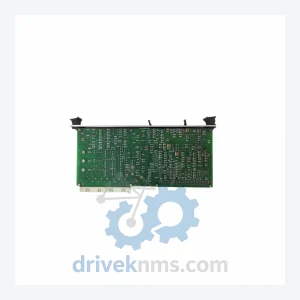
Yokogawa K9634DA-01 TCD Card Modules
Yokogawa K9634DA Series: Comprehensive Module Range and Technical Overview The Yokogawa K9634DA series TCD (Thermocouple/mV Input) cards are field-proven I/O…
Model: NFAI143-H50
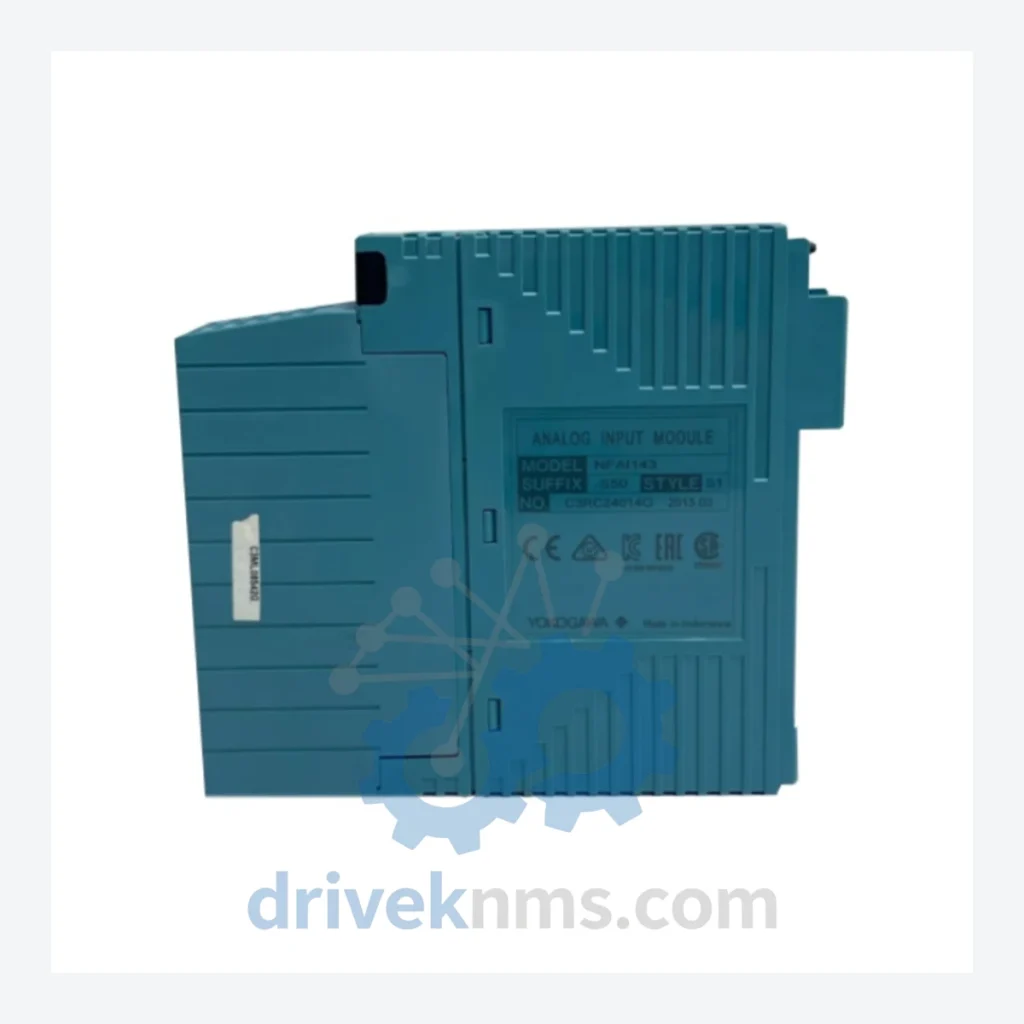
Product Overview
Commercial availability is handled through direct RFQ, model verification and export-oriented follow-up rather than public cart checkout.
Datasheet Preview
Use attached product manuals when available. If the manual is not public yet, request the full file directly through RFQ.
Commercial Path
Product pages on DRIVEKNMS are designed to verify model, brand and series first, then move the buyer into one clean quotation path.
Technical Dossier
The YOKOGAWA NFAI series of analog input modules occupies a critical position in the global distributed control system (DCS) landscape. Deployed extensively across high-consequence process industries — including petrochemical refineries, nuclear power generation facilities, offshore platforms, and large-scale chemical manufacturing plants — these modules form the field interface layer of YOKOGAWA's CENTUM VP and CENTUM CS 3000 DCS architectures. Their role is the acquisition, conditioning, and digitization of analog process signals (4–20 mA, 1–5 V, thermocouple, RTD) from field instruments, feeding real-time data to the control domain. The NFAI series is characterized by channel-dense designs, galvanic isolation per channel or per group, HART pass-through capability on select variants, and compliance with IEC 61508 SIL 2 requirements on safety-rated builds. Installed base counts in the tens of thousands of nodes across Asia-Pacific, the Middle East, and Europe make this series one of the most widely maintained analog input families in the DCS aftermarket.
The NFAI designation traces its lineage to YOKOGAWA's CENTUM XL and CENTUM CS platforms of the early 1990s, where analog input marshalling was handled by discrete, single-function I/O cards with parallel backplane buses. The transition to the CENTUM CS 3000 platform in the late 1990s introduced the V-net/R-net dual-redundant token-ring fieldbus, requiring a new generation of I/O modules with embedded microcontrollers capable of bus arbitration and self-diagnostics. The NFAI series was developed within this context, standardizing on a 16-channel or 32-channel density per slot, a unified 40-pin or 96-pin backplane connector, and a modular terminal unit (MTU) architecture that separates field wiring from the electronics card — enabling hot-swap replacement without field rewiring.
With the introduction of CENTUM VP (circa 2008), YOKOGAWA extended NFAI compatibility through firmware updates and new suffix variants (e.g., -H50, -S50) that added HART 5/6/7 multiplexing and enhanced EMC shielding. The -H50 suffix specifically denotes HART-enabled variants with 50 Hz noise rejection filtering, optimized for European grid environments. As CENTUM CS 3000 entered its extended lifecycle support phase post-2018, the NFAI series transitioned from active production to managed availability, with YOKOGAWA and authorized distributors maintaining stock for brownfield maintenance. Modern greenfield projects migrating to CENTUM VP R6 or STARDOM platforms may substitute NFAI functions with the newer NFLX or AFV series, but the installed base of NFAI modules in operating plants ensures sustained aftermarket demand through at least 2035.
The following SKUs represent verified, commonly deployed models within the YOKOGAWA NFAI series. Models are classified by functional role within the DCS I/O subsystem.
Analog Input Modules
DriveKNMS maintains a dedicated inventory program for YOKOGAWA NFAI series modules that have transitioned to limited availability or end-of-active-production status. For plant operators running CENTUM CS 3000 systems under extended lifecycle agreements, the inability to source a single failed NFAI module can result in forced manual operation of an entire I/O cluster, with direct impact on process throughput and regulatory compliance.
DriveKNMS sources NFAI modules through three channels: (1) decommissioned plant asset recovery, where modules are extracted from retired DCS cabinets, fully tested, and recertified; (2) authorized distributor excess stock liquidation; and (3) direct OEM new-old-stock (NOS) procurement from YOKOGAWA regional warehouses in Japan, Singapore, and the Netherlands. All sourced units are assigned a traceability record including origin plant, decommission date, and test certification number. Lead times for common variants such as NFAI143-H50 and NFAI141 are typically 3–10 business days from confirmed order. For low-volume or obscure suffix variants, DriveKNMS operates a global sourcing network with a 30-day maximum commitment on most NFAI SKUs.
NFAI modules present specific test challenges due to their multi-channel analog front ends, HART modem ASICs, and backplane communication controllers. DriveKNMS applies a structured test protocol to every NFAI unit processed:
Related Paths
Yokogawa K9634DA Series: Comprehensive Module Range and Technical Overview The Yokogawa K9634DA series TCD (Thermocouple/mV Input) cards are field-proven I/O…
Yokogawa UT350-01 Digital Indicating Controller – Obsolete UT Series Spare Part When a Yokogawa UT350-01 fails on the plant floor,…
YOKOGAWA K9403 Series: Comprehensive Module Range and Technical Overview The YOKOGAWA K9403 series Field Indication Device (FID) cards are deployed…