
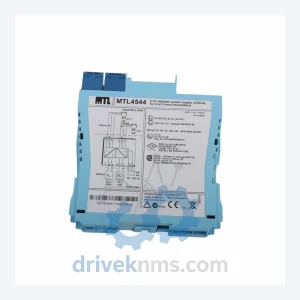
MTL 4544 Instrument Repeater Power Supply – MTL4000 Series
MTL 4544 Instrument Repeater Power Supply – MTL4000 Series | Global Shipping & Warranty The MTL 4544 is a field-proven…
Model: A5E03932844 FF450R12ME4_B11
Product Overview
Commercial availability is handled through direct RFQ, model verification and export-oriented follow-up rather than public cart checkout.
Datasheet Preview
Use attached product manuals when available. If the manual is not public yet, request the full file directly through RFQ.
Commercial Path
Product pages on DRIVEKNMS are designed to verify model, brand and series first, then move the buyer into one clean quotation path.
Technical Dossier
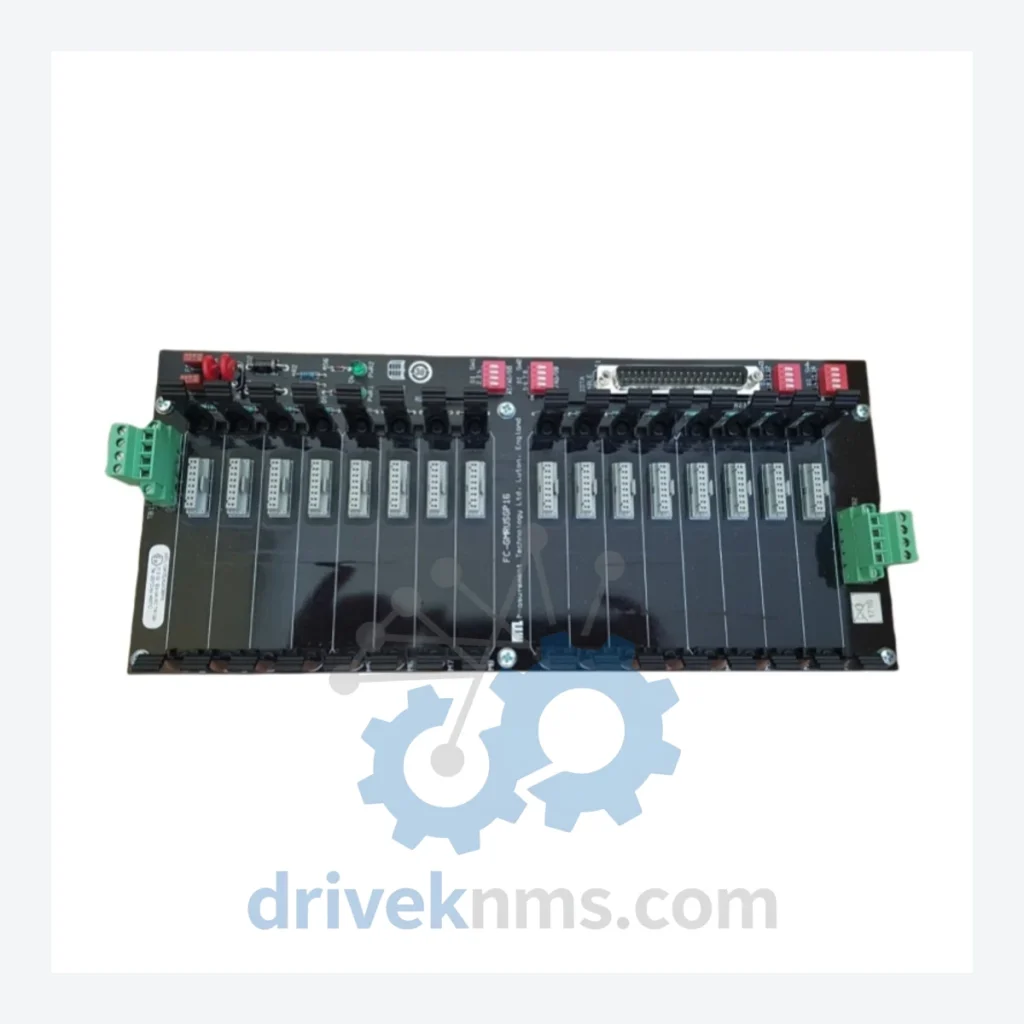
When an MTL FC-GMRUSGP16 output module fails in a live process environment, the consequences extend far beyond the cost of the component itself. A full control system migration — replacing the MTL Fieldconnex infrastructure with a modern DCS or PLC-based I/O architecture — routinely demands capital expenditure in the range of hundreds of thousands to several million dollars, depending on plant scale. Engineering redesign, loop re-commissioning, HAZOP re-validation, and production downtime during cutover are costs that accumulate rapidly. A single verified spare module, sourced at the right moment, can defer that entire capital project by years.
DriveKNMS maintains limited physical stock of the FC-GMRUSGP16. This is not a catalog listing — it reflects actual inventory held for industrial clients who cannot afford system-wide obsolescence risk.
| Parameter | Detail |
|---|---|
| Part Number | FC-GMRUSGP16 |
| Manufacturer | MTL Instruments Group (now Eaton MTL) |
| Series | MTL Fieldconnex FC Series |
| Module Type | General-Purpose Digital Output Module |
| Output Channels | 16 |
| Product Status | Discontinued / Obsolete |
| Typical System Compatibility | MTL Fieldconnex fieldbus infrastructure; compatible with FOUNDATION Fieldbus and PROFIBUS PA segment architectures where FC-series I/O is deployed |
| Cross-Reference SKUs | A5E03932844 / FF450R12ME4_B11 |
| Country of Origin | United Kingdom |
Note: Electrical parameters not independently verified. Specifications above are drawn from publicly available MTL documentation. Buyers are advised to confirm compatibility against their installed system revision before ordering.
The MTL Fieldconnex FC series was widely deployed across oil & gas, chemical processing, and power generation facilities throughout the 2000s and 2010s. Its integration into FOUNDATION Fieldbus and PROFIBUS PA segment topologies made it a backbone component in distributed control architectures — many of which remain operational today.
MTL has since consolidated its product lines under the Eaton brand, and the FC-GMRUSGP16 is no longer manufactured or supported through standard distribution channels. For plant operators, this creates a specific and serious risk: a single module failure can take an entire I/O segment offline, disabling field device communication across multiple control loops simultaneously.
Replacing the FC-GMRUSGP16 with a modern equivalent is not a simple swap. It requires re-engineering the segment topology, updating the host system configuration, re-commissioning field devices, and in many cases, re-validating the safety case. For facilities operating under IEC 61511 or equivalent functional safety standards, this process is neither fast nor inexpensive.
The operational logic is straightforward: maintaining a verified spare of the FC-GMRUSGP16 costs a fraction of one day of unplanned downtime. For facilities where production value exceeds $50,000 per day, the economics of strategic sparing are not debatable.
Plant managers facing system retirement pressure from corporate asset teams often underestimate the leverage that targeted spare parts management provides. The following approach has been applied successfully across multiple legacy DCS and fieldbus installations:
1. Failure Mode Mapping: Identify the three to five module types in your installed base that, if they fail, would cause the broadest process impact. The FC-GMRUSGP16, as a 16-channel output module, typically falls into this category. Prioritize sparing for high-channel-count modules before single-channel devices.
2. Criticality-Weighted Inventory: Do not attempt to stock every obsolete component. Focus capital on modules with no modern drop-in equivalent and long lead times for sourcing. The FC-GMRUSGP16 meets both criteria.
3. Condition-Based Rotation: Obsolete modules held in storage degrade over time — primarily through electrolytic capacitor aging and contact oxidation. Implement a rotation schedule: pull stored spares into service periodically and return recently removed field units to storage after inspection. This keeps your spare inventory in a known-good state.
4. Firmware Version Control: In fieldbus architectures, module firmware must match the host system's device description library. Before storing a spare, document its firmware revision and confirm compatibility with your current DCS configuration. A firmware mismatch discovered during an emergency replacement adds hours to recovery time.
5. Deferred Migration Planning: Use the operational window created by strategic sparing to plan — rather than react to — eventual system migration. A controlled migration executed on a planned schedule costs 40–60% less than an emergency cutover forced by hardware failure. Each verified spare buys planning time.
DriveKNMS applies a structured 5-step quality process to all obsolete and legacy modules before dispatch:
Step 1 – Visual and Physical Inspection: Full external examination for mechanical damage, label integrity, and connector pin condition. Corroded or bent pins are documented and assessed before any unit is offered for sale.
Step 2 – Electrolytic Capacitor Assessment: Capacitor aging is the primary failure mode in legacy I/O modules stored beyond their design service life. Each unit undergoes ESR (Equivalent Series Resistance) measurement on critical capacitors. Units showing degradation are quarantined.
Step 3 – Firmware Version Verification: Where accessible, firmware revision is read and recorded. This information is provided to the buyer to confirm compatibility with their host system prior to installation.
Step 4 – Functional Bench Test: Modules are powered and output channel continuity is verified under controlled conditions. This does not replicate full system integration testing, but confirms basic electrical function before shipment.
Step 5 – Packaging and ESD Protection: Units are packed in anti-static shielding bags with desiccant, inside rigid protective packaging. Shipping conditions are documented.
Condition grade (New Surplus, Refurbished, or Used-Tested) is stated explicitly on every invoice.
The FC-GMRUSGP16 is a direct physical and functional replacement for the same module in any MTL Fieldconnex FC-series rack installation. No host system reconfiguration is required beyond standard module commissioning steps already defined in the existing system documentation. There is no firmware re-flashing required for same-revision units, no I/O mapping changes, and no engineering rework.
This drop-in replacement characteristic is precisely what makes sourcing a verified spare cost-effective: the engineering labor cost of installation is measured in hours, not weeks. Contrast this with a migration scenario, where the same output function requires new hardware procurement, segment redesign, device re-commissioning, and documentation updates across multiple engineering disciplines.
For maintenance teams operating under tight turnaround windows, the FC-GMRUSGP16 spare eliminates the system integration risk entirely.
Q: What warranty applies to an obsolete module like the FC-GMRUSGP16?
A: DriveKNMS provides a 90-day warranty covering functional defects identified under normal operating conditions. Warranty terms are stated on the invoice. Extended warranty arrangements are available on request for volume orders.
Q: How do I confirm whether the unit is new surplus or refurbished?
A: Condition grade is declared on the product listing and confirmed in writing on the invoice before shipment. We do not mix condition grades within a single order without explicit buyer agreement.
Q: Can I order multiple units for long-term sparing?
A: Yes. For clients building a strategic spare inventory, we recommend confirming available quantity before committing to a maintenance budget. Contact us directly for volume pricing and availability confirmation. Stock levels for discontinued components are not replenishable on demand.
Q: How quickly can you ship?
A: In-stock units are typically dispatched within 1–3 business days. Shipping method and lead time are confirmed at order placement.
Related Paths
MTL 4544 Instrument Repeater Power Supply – MTL4000 Series | Global Shipping & Warranty The MTL 4544 is a field-proven…
ALSTOM MVAJ105RA0802A Protection Relay: Supply Continuity Strategy for a Discontinued Critical Component The ALSTOM MVAJ105RA0802A is a numerical protection relay…
MOORE 16137 Series: Comprehensive Module Range and Technical Overview The MOORE 16137 Series represents a core component family within Moore…