
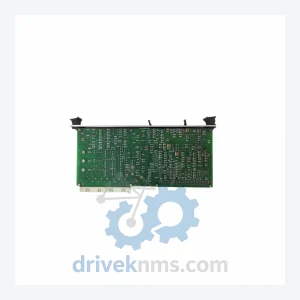
Yokogawa K9634DA-01 TCD Card Modules
Yokogawa K9634DA Series: Comprehensive Module Range and Technical Overview The Yokogawa K9634DA series TCD (Thermocouple/mV Input) cards are field-proven I/O…
Model: ADM55 S2
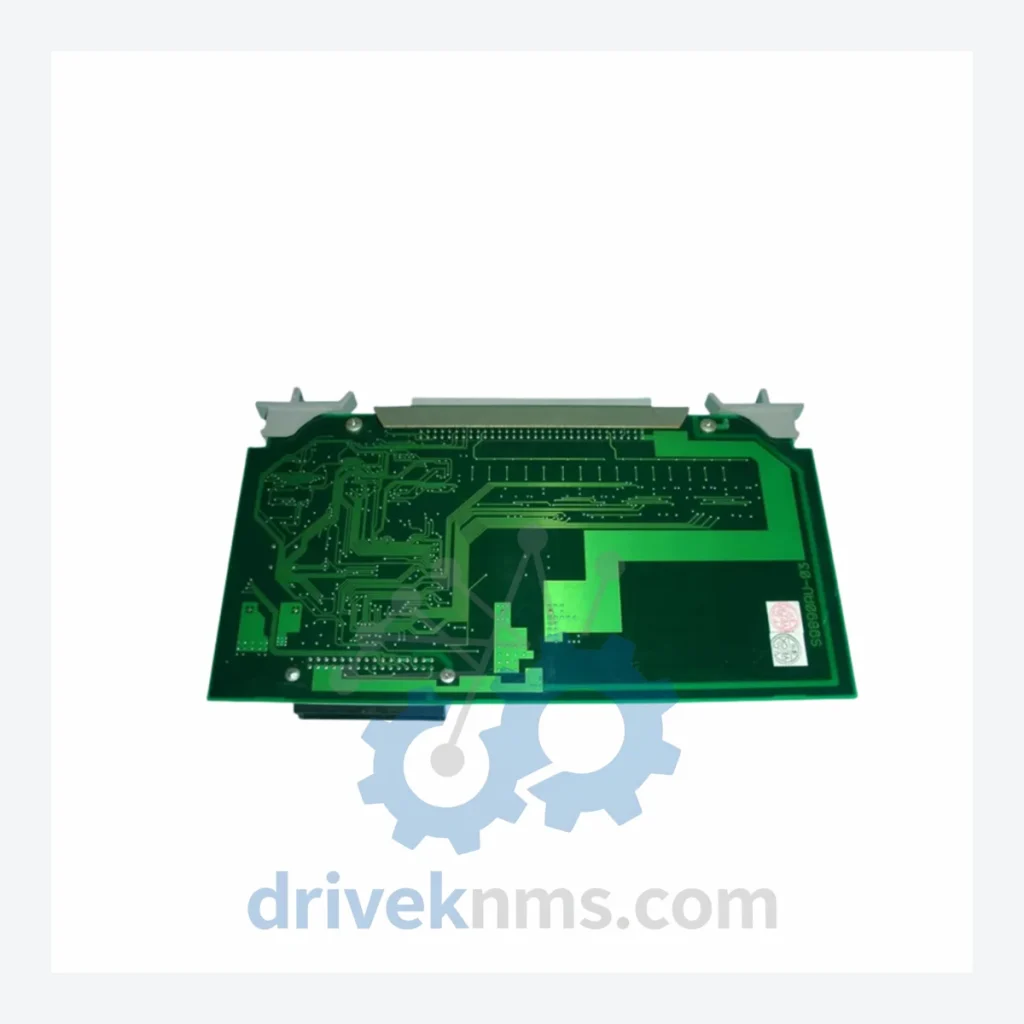
Product Overview
Commercial availability is handled through direct RFQ, model verification and export-oriented follow-up rather than public cart checkout.
Datasheet Preview
Use attached product manuals when available. If the manual is not public yet, request the full file directly through RFQ.
Commercial Path
Product pages on DRIVEKNMS are designed to verify model, brand and series first, then move the buyer into one clean quotation path.
Technical Dossier
When a Yokogawa ADM55 S2 PC Board fails in an aging CENTUM distributed control system, the consequences extend far beyond a single module replacement. A forced migration to a current-generation DCS platform — including engineering redesign, I/O rewiring, operator retraining, and production downtime — routinely costs manufacturing facilities between USD 500,000 and several million dollars per production line. DriveKNMS maintains verified physical stock of the ADM55 S2, providing a direct path to system continuity without triggering that capital expenditure.
This is a discontinued component. Procurement windows are closing. Each unit sourced today is one fewer engineering crisis tomorrow.
| Parameter | Detail |
|---|---|
| Manufacturer | Yokogawa Electric Corporation |
| Part Number | ADM55 S2 |
| Module Type | PC Board / Control Module |
| Series | CENTUM (Legacy DCS Platform) |
| Country of Origin | Japan |
| Discontinuation Status | Confirmed Obsolete – No longer manufactured or supported by OEM |
| Typical Host System | Yokogawa CENTUM V / CENTUM-XL DCS |
| Condition Available | New Old Stock (NOS) / Professionally Refurbished |
Note: Electrical parameters not independently verified. Specifications are based on known series documentation. Buyers are advised to cross-reference with original system engineering drawings prior to installation.
The Yokogawa CENTUM platform served as the backbone of process automation across petrochemical, power generation, pulp and paper, and pharmaceutical facilities throughout the 1980s and 1990s. The ADM55 S2 board operates within that architecture as a core processing or communication module — its failure does not merely degrade performance; it halts the supervisory layer that coordinates field instrumentation, alarm management, and operator interface.
OEM support for CENTUM V and CENTUM-XL has been formally discontinued. Yokogawa no longer manufactures replacement boards, and authorized service channels have exhausted their buffer stock. Facilities still operating these systems face a binary choice: source the hardware from the secondary market, or commit to a full DCS migration.
For plant managers responsible for assets with 10–20 years of remaining operational life, a migration is rarely the rational choice. The ADM55 S2 is a known quantity — its behavior within the existing control architecture is documented, its failure modes are understood, and its replacement requires no software reconfiguration. Sourcing a verified spare from DriveKNMS preserves that institutional knowledge and defers a disruptive capital project by 5 to 10 years.
The economics are straightforward: a single ADM55 S2 spare part, properly stored, costs a fraction of one week of unplanned downtime. Facilities that maintain a minimum two-unit buffer for critical DCS boards consistently report lower mean time to repair and fewer production interruptions attributable to control system failures.
Every ADM55 S2 unit processed by DriveKNMS passes a structured five-stage inspection protocol before it is offered for sale. This protocol is designed specifically for legacy industrial electronics, where age-related degradation follows predictable failure patterns.
Stage 1 – Visual and Mechanical Inspection: Board surface examined under magnification for physical damage, solder joint cracking, and component displacement caused by thermal cycling over years of service.
Stage 2 – Electrolytic Capacitor Assessment: Electrolytic capacitors are the primary failure point in boards of this age. Each capacitor is tested for capacitance drift, ESR (equivalent series resistance) deviation, and visible signs of electrolyte leakage or case bulging. Units with marginal capacitors are either recapped or rejected.
Stage 3 – Firmware and Revision Verification: Where applicable, firmware revision markings and EPROM labels are documented and cross-referenced against known CENTUM system compatibility matrices. Mismatched firmware revisions are flagged before shipment.
Stage 4 – Pin and Connector Integrity Check: All edge connectors and backplane pins are inspected for oxidation, corrosion, and mechanical deformation. Affected contacts are cleaned using appropriate solvents; severely corroded units are rejected from inventory.
Stage 5 – Functional Verification: Where test equipment permits, boards undergo powered functional testing. Units that cannot be functionally tested are clearly designated as untested and priced accordingly.
The ADM55 S2 is a direct drop-in replacement for the failed unit within a compatible CENTUM chassis. No software modifications, no I/O address reassignment, no PLC reprogramming. The replacement procedure follows the original Yokogawa field maintenance documentation — a task within the competency of any qualified DCS technician already familiar with the platform.
This matters operationally. Bringing in a systems integrator to manage a board swap introduces scheduling delays, mobilization costs, and the risk of configuration errors during recommissioning. A stocked spare eliminates that dependency. The maintenance team handles the replacement during a planned outage window, and the system returns to service without external intervention.
For facilities managing multiple CENTUM installations, DriveKNMS can discuss volume procurement arrangements that establish a site-level spare parts buffer — reducing per-unit cost while ensuring coverage across all critical board positions in the system.
What warranty applies to an obsolete part like the ADM55 S2?
DriveKNMS provides a 90-day warranty against defects identified under normal operating conditions. Given the age of this component, warranty terms are confirmed at the time of quotation based on the specific unit condition (NOS vs. refurbished).
How do I know the unit is genuine and not a counterfeit?
All units are sourced through documented industrial decommissioning channels or authorized secondary market suppliers. Yokogawa part markings, board revision labels, and serial number formats are verified against known authentic references. Counterfeit detection is part of Stage 1 inspection.
Should I purchase more than one unit?
For any board that is confirmed obsolete and installed in a production-critical system, a minimum of two spare units is the standard recommendation in industrial asset management practice. The cost of a second unit is negligible relative to the cost of a second procurement effort when the first spare has been consumed — particularly as secondary market availability continues to decline.
Can DriveKNMS source other CENTUM series boards?
Yes. DriveKNMS specializes in legacy Yokogawa, ABB, Honeywell, and Siemens control system components. If you have a broader spare parts requirement for your CENTUM installation, contact us with your full bill of materials.
Related Paths
Yokogawa K9634DA Series: Comprehensive Module Range and Technical Overview The Yokogawa K9634DA series TCD (Thermocouple/mV Input) cards are field-proven I/O…
Yokogawa UT350-01 Digital Indicating Controller – Obsolete UT Series Spare Part When a Yokogawa UT350-01 fails on the plant floor,…
YOKOGAWA NFDR Series: Comprehensive Module Range and Technical Overview The YOKOGAWA NFDR series relay output modules are core field control…