
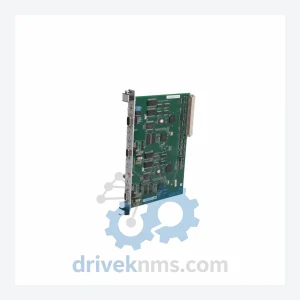
SST PB3-VME Modules: SST-PB3-VME-2-E
SST PB3-VME Series: Comprehensive Module Range and Technical Overview The SST PB3-VME series represents SST's (Woodhead Industries / Molex SST)…
Model: APP-PS7-PCU-C PSU1500S7
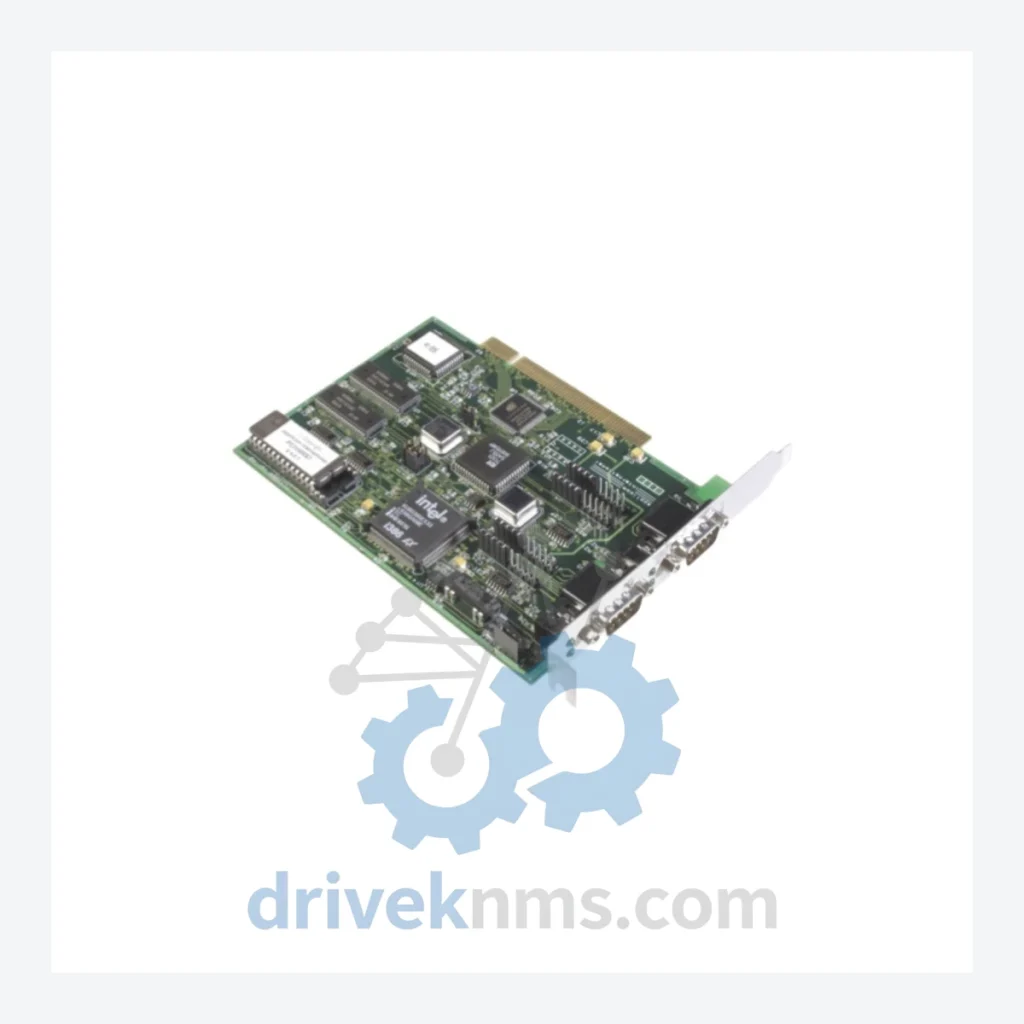
Product Overview
Commercial availability is handled through direct RFQ, model verification and export-oriented follow-up rather than public cart checkout.
Datasheet Preview
Use attached product manuals when available. If the manual is not public yet, request the full file directly through RFQ.
Commercial Path
Product pages on DRIVEKNMS are designed to verify model, brand and series first, then move the buyer into one clean quotation path.
Technical Dossier
When the power supply unit at the heart of your legacy control architecture fails, the consequences extend far beyond a single module replacement. For plants still operating SST-based fieldbus infrastructure — particularly those running aging DeviceNet or Profibus backplane systems — a single failed PSU1500S7 can halt an entire production line. The cost of an unplanned shutdown in a mid-scale manufacturing facility routinely exceeds $50,000 per day. A full system migration to a modern PLC/DCS platform, including engineering, commissioning, and revalidation, can run into the millions. Against that backdrop, securing a verified replacement unit from DriveKNMS represents a fraction of the exposure.
The APP-PS7-PCU-C PSU1500S7 has been discontinued by SST. New production has ceased. The remaining global supply exists only in distributor overstock, decommissioned equipment, and specialist obsolete parts inventories. DriveKNMS maintains a limited quantity of this unit, sourced through controlled channels and subject to our multi-stage inspection protocol before dispatch.
| Parameter | Detail |
|---|---|
| Manufacturer | SST (Woodhead SST) |
| Part Number | APP-PS7-PCU-C / PSU1500S7 |
| Product Category | Power Supply Unit – Fieldbus Backplane |
| Discontinuation Status | End of Life (EOL) – No longer manufactured |
| Country of Origin | United States |
| Compatible Systems | SST DeviceNet / Profibus backplane architectures; legacy S7-series control racks |
| Form Factor | Rack-mount module |
| Condition Available | New surplus / Tested refurbished (see QA section) |
Note: Electrical parameters (voltage input/output, current rating, power rating) are not published here to avoid inaccuracy. Confirmed specifications are provided upon request with supporting documentation.
The SST APP-PS7-PCU-C PSU1500S7 was designed as the primary power conditioning and distribution module for SST fieldbus communication racks. In systems where this unit is installed, it is not a peripheral — it is the backbone that keeps every downstream I/O module, gateway, and network interface operational. There is no modern drop-in equivalent from the original manufacturer. SST's successor product lines use a different backplane architecture, meaning a like-for-like swap is impossible without a full rack redesign.
Plants that built their automation infrastructure around SST fieldbus platforms in the 1990s and early 2000s now face a hard choice: absorb the capital expenditure of a full system replacement, or maintain the existing installation with verified spare parts. For facilities where the surrounding process equipment — reactors, presses, conveyors, packaging lines — has a remaining service life of 10 to 20 years, a full DCS/PLC migration cannot be justified on financial grounds alone. The rational path is asset preservation through targeted component replacement.
Procurement teams and plant engineers who have located this page are typically already past the point of theoretical planning. A unit has failed, or a risk assessment has flagged the absence of a spare as a critical vulnerability. In either case, the window for sourcing is narrow. SST legacy modules do not reappear on the market in volume. Each unit that surfaces is evaluated, absorbed into specialist inventory, and sold to the first buyer who can confirm compatibility.
DriveKNMS applies a 5-stage inspection protocol to all obsolete power supply units before they are offered for sale. This process is not a visual check — it is a structured technical evaluation designed to identify the failure modes most common in aged industrial power electronics.
Stage 1 – Electrolytic Capacitor Assessment: Capacitor aging is the primary failure mechanism in power supply units of this era. Each unit undergoes ESR (Equivalent Series Resistance) measurement on all electrolytic capacitors. Units with out-of-specification readings are either recapped with equivalent-rated components or rejected.
Stage 2 – Firmware and Configuration Verification: Where applicable, firmware version is confirmed against the last known stable release for the PSU1500S7 platform. Units with corrupted or mismatched firmware are not dispatched.
Stage 3 – Pin and Connector Inspection: All backplane connectors and I/O pins are inspected under magnification for oxidation, corrosion, and mechanical deformation. Affected contacts are treated or the unit is rejected.
Stage 4 – Functional Power-On Test: Each unit is bench-tested under load conditions representative of normal rack operation. Output stability and protection circuit response are verified.
Stage 5 – Documentation and Traceability: Each dispatched unit is accompanied by an inspection record. Serial numbers are logged. Units sourced from decommissioned equipment are identified as such, with condition graded accordingly.
The APP-PS7-PCU-C PSU1500S7 installs directly into the existing SST rack without modification to the backplane, wiring, or network configuration. There is no firmware re-flashing required on the host system. No engineering hours are needed to reconfigure downstream I/O modules or communication gateways. The replacement is a direct physical and electrical substitute for the failed unit.
This matters because the alternative — sourcing a non-OEM substitute or attempting a cross-brand adaptation — introduces integration risk that is difficult to quantify and expensive to validate. In regulated industries (pharmaceutical, food processing, utilities), any modification to a validated control system triggers a revalidation cycle. A verified OEM-equivalent replacement avoids that cost entirely.
For maintenance managers operating under budget constraints, the calculus is straightforward: the cost of this spare part, including freight and inspection, is measured in thousands. The cost of an unplanned line stoppage while waiting for an alternative solution is measured in multiples of that figure, per day.
The decision to extend the service life of a legacy automation system is not a failure of modernization planning — it is a financially defensible position when the surrounding capital assets remain productive. The following approach has been applied successfully in process industries, discrete manufacturing, and utilities infrastructure.
1. Critical Spare Identification: Map every single-point-of-failure component in the existing control architecture. Power supply modules, communication gateways, and CPU cards are the highest-priority categories. For SST-based systems, the PSU1500S7 and equivalent backplane power units belong at the top of this list.
2. Minimum Stock Level Calculation: For each critical spare, calculate the mean time between failures (MTBF) for the installed base and the expected lead time for sourcing a replacement from the obsolete parts market. Set minimum stock levels accordingly. A single spare for a unit with a 7-year MTBF and a 6-month sourcing lead time is insufficient.
3. Controlled Storage: Obsolete electronic components degrade in storage if conditions are not managed. Temperature-stable, low-humidity storage with anti-static packaging preserves electrolytic capacitors and prevents connector oxidation. Units stored correctly for 5 years perform comparably to units stored for 6 months.
4. Scheduled Preventive Replacement: Rather than waiting for failure, schedule replacement of high-risk components during planned maintenance windows. A power supply unit showing early signs of capacitor degradation — output ripple, thermal anomalies — should be replaced before it causes an unplanned outage.
5. Supplier Relationship Management: The obsolete parts market is not a commodity market. Availability is episodic. Establishing a relationship with a specialist supplier — and communicating your forward requirements — increases the probability of securing stock before it is exhausted. DriveKNMS maintains ongoing sourcing activity for SST legacy components and can advise on availability timelines.
Q: What warranty applies to an obsolete part like the PSU1500S7?
A: DriveKNMS provides a 90-day warranty covering functional failure under normal operating conditions. This applies to both new surplus and tested refurbished units. Warranty claims require return of the unit for inspection.
Q: How do I know the unit is genuine and not a counterfeit?
A: All units are inspected for OEM markings, PCB construction, and component dating consistent with the original manufacturing period. Units that do not pass authenticity checks are not offered for sale. Documentation is available on request.
Q: Should I buy more than one unit?
A: For a system with no existing spare and no near-term migration plan, holding a minimum of one additional unit is a reasonable risk mitigation position. For facilities with multiple racks using the same PSU, proportionally higher stock levels are advisable. Contact us to discuss volume availability.
Q: Can you source this part if it is not currently in stock?
A: DriveKNMS operates an active sourcing network for obsolete industrial components. If current stock is exhausted, we can initiate a sourcing request. Lead times vary and cannot be guaranteed, but we will provide a realistic assessment based on current market conditions.
Related Paths
SST PB3-VME Series: Comprehensive Module Range and Technical Overview The SST PB3-VME series represents SST's (Woodhead Industries / Molex SST)…
SST SST-PBMS-P PCI Bus Master/Slave Communication Card: Sourcing Strategy & Asset Return Value in a Constrained Supply Chain The SST…
SST SST-PB3-CLX-RLL: Securing Supply Continuity for a Critical PLC Output Module The SST SST-PB3-CLX-RLL is a PROFIBUS DP relay output…