
Bosch 1070080132-103 Sliding Card – Servo Drive Control Module
Bosch 1070080132-103 Sliding Card: Global Sourcing Strategy & Asset Return Value The Bosch 1070080132-103 Sliding Card is a precision servo…
Model: RACK-GG 500
Product Overview
Commercial availability is handled through direct RFQ, model verification and export-oriented follow-up rather than public cart checkout.
Datasheet Preview
Use attached product manuals when available. If the manual is not public yet, request the full file directly through RFQ.
Commercial Path
Product pages on DRIVEKNMS are designed to verify model, brand and series first, then move the buyer into one clean quotation path.
Technical Dossier
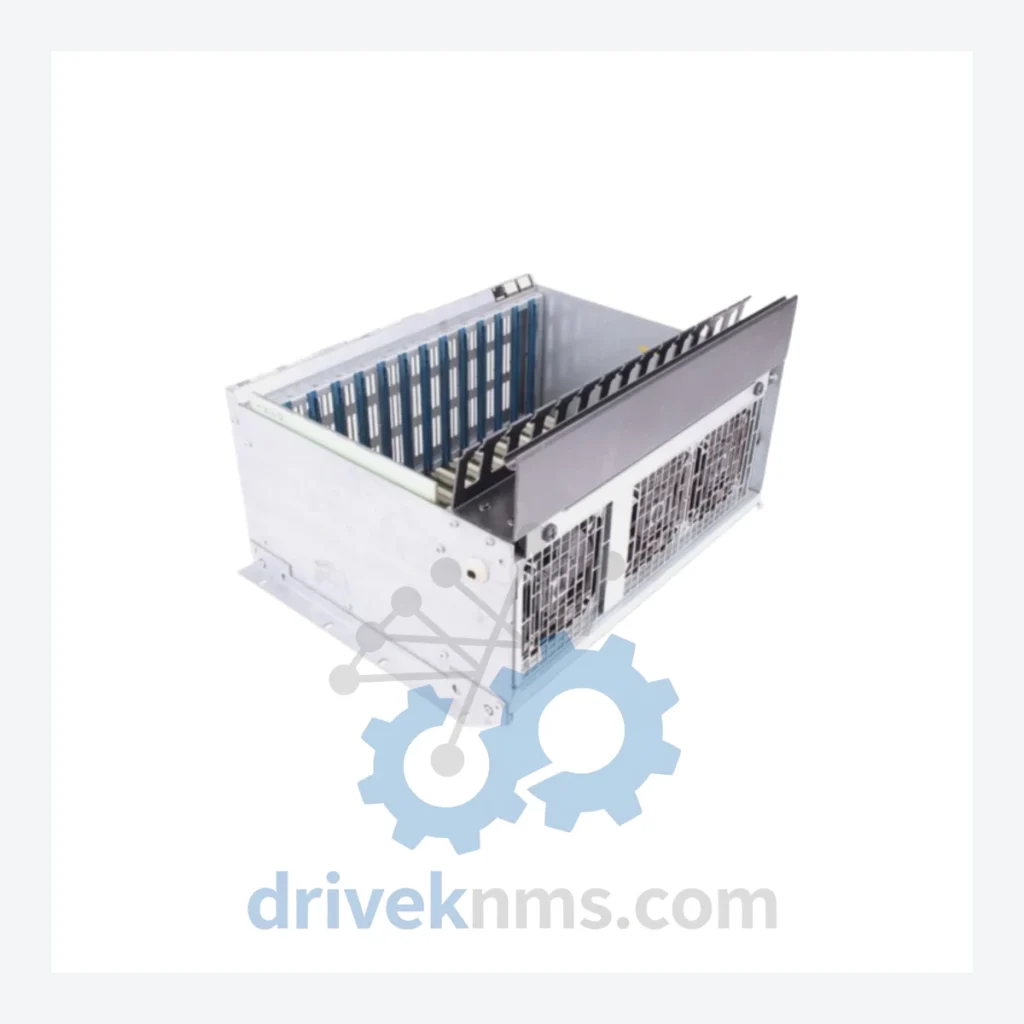
When the backplane of a CL 500 control system fails, the consequences extend far beyond a single module replacement. The Bosch CL 500 series — a programmable logic controller platform widely deployed in automotive body shops, press lines, and discrete manufacturing cells throughout the 1980s and 1990s — was built around a proprietary rack architecture. The RACK-GG 500 is the physical backbone of that architecture: a 13-slot card cage that houses CPU, I/O, communication, and power modules in a fixed, non-interchangeable configuration.
A single failed rack forces every installed module offline simultaneously. Sourcing a replacement rack on the open market is no longer straightforward — Bosch discontinued the CL 500 product line, and authorized distribution channels have been closed for years. For plant managers operating legacy lines where a full PLC migration would require re-engineering ladder logic, re-qualifying safety interlocks, and retraining operators, the cost of that upgrade routinely exceeds seven figures. Against that backdrop, a verified spare RACK-GG 500 unit represents a fraction of the exposure — and buys the production asset another operational cycle.
DriveKNMS maintains a limited inventory of the RACK-GG 500 sourced through controlled channels. Each unit undergoes a documented inspection process before dispatch.
| Parameter | Detail |
|---|---|
| Manufacturer | Bosch (Robert Bosch GmbH, Automation Technology) |
| Part Number | RACK-GG 500 |
| Compatible Series | Bosch CL 500 PLC |
| Slot Count | 13 slots |
| Form Factor | Card cage / backplane rack |
| Country of Origin | Germany |
| Product Status | Discontinued / Obsolete – no longer manufactured or sold through OEM channels |
| Typical Host Systems | Bosch CL 500, CL 400 compatible configurations |
Note: Electrical parameters such as bus voltage and backplane pinout are system-specific. DriveKNMS does not publish unverified specifications. Contact us with your system documentation for compatibility confirmation.
The Bosch CL 500 was a workhorse controller in transfer lines, welding cells, and assembly automation across European and Asian manufacturing facilities. Its modular rack design allowed engineers to configure systems precisely — but that same modularity created a hard dependency on the RACK-GG 500 chassis. No third-party rack is pin-compatible. No modern Bosch controller slots into the same footprint.
When this rack fails, the only alternatives are: locate a verified spare, or commit to a full system migration. Migration timelines in brownfield environments typically run 6 to 18 months when accounting for I/O mapping, safety re-certification, and operator retraining. During that window, the production line either runs at reduced capacity or sits idle.
Facilities that have extended CL 500 system life by 5 to 10 years beyond OEM support end-of-life have done so through a disciplined spare parts strategy: identifying the three to five components with no cross-compatible substitute, securing verified stock of each, and storing them under controlled conditions. The RACK-GG 500 is consistently on that short list. A single unit in storage eliminates the single largest unplanned downtime risk for any CL 500-based line.
For plant managers facing capital budget constraints or mid-cycle production commitments, this approach converts an unpredictable catastrophic failure event into a planned, bounded maintenance activity. The math is straightforward: the cost of one spare rack versus the cost of one unplanned shutdown day on a high-throughput line.
Obsolete hardware sourced from secondary markets carries real risk. DriveKNMS applies a 5-step inspection protocol to every RACK-GG 500 unit before it leaves our facility:
Units that do not pass all five steps are not offered for sale. Inspection records are available upon request for critical procurement decisions.
What warranty applies to an obsolete part like the RACK-GG 500?
DriveKNMS provides a 90-day functional warranty on inspected units. Given the age of the platform, we recommend customers treat this as a tested serviceable spare rather than a new-manufacture component.
How do I confirm the unit is genuine and not a counterfeit?
All units are inspected against known Bosch CL 500 documentation. Part number markings, PCB revision codes, and physical construction details are verified. We do not sell units where authenticity cannot be confirmed.
Should I buy more than one unit?
For any facility running more than one CL 500-based line, holding two rack units is a defensible position. The RACK-GG 500 is not available through any active distribution channel. When current secondary market stock is exhausted, no further supply is expected. Procurement decisions made today cannot be replicated on short notice in 12 months.
Can you source other CL 500 modules alongside the rack?
Yes. DriveKNMS specializes in complete CL 500 system support. Contact us with your full BOM and we will advise on availability across CPU, I/O, power supply, and communication modules.
© 2026 DriveKNMS. (Status: DRAFT)
Related Paths
Bosch 1070080132-103 Sliding Card: Global Sourcing Strategy & Asset Return Value The Bosch 1070080132-103 Sliding Card is a precision servo…
Bosch RKP-PQ Amplifier Card Module: Global Sourcing Strategy & Asset Return Value The Bosch RKP-PQ is a precision amplifier card…
Bosch BM-DP12 Series: Comprehensive Module Range and Technical Overview The Bosch BM-DP12 series represents a core family of PROFIBUS DP…