
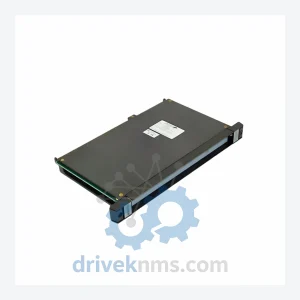
RELIANCE 0-57405-D Drive Analog I/O Module – Electric Series
RELIANCE 0-57405-D Drive Analog I/O Module: Global Sourcing Strategy & Asset Return Value The RELIANCE 0-57405-D (also referenced as 57405-D)…
Model: 770.90.10 AUTOBUS INTERFACE 770.90.10
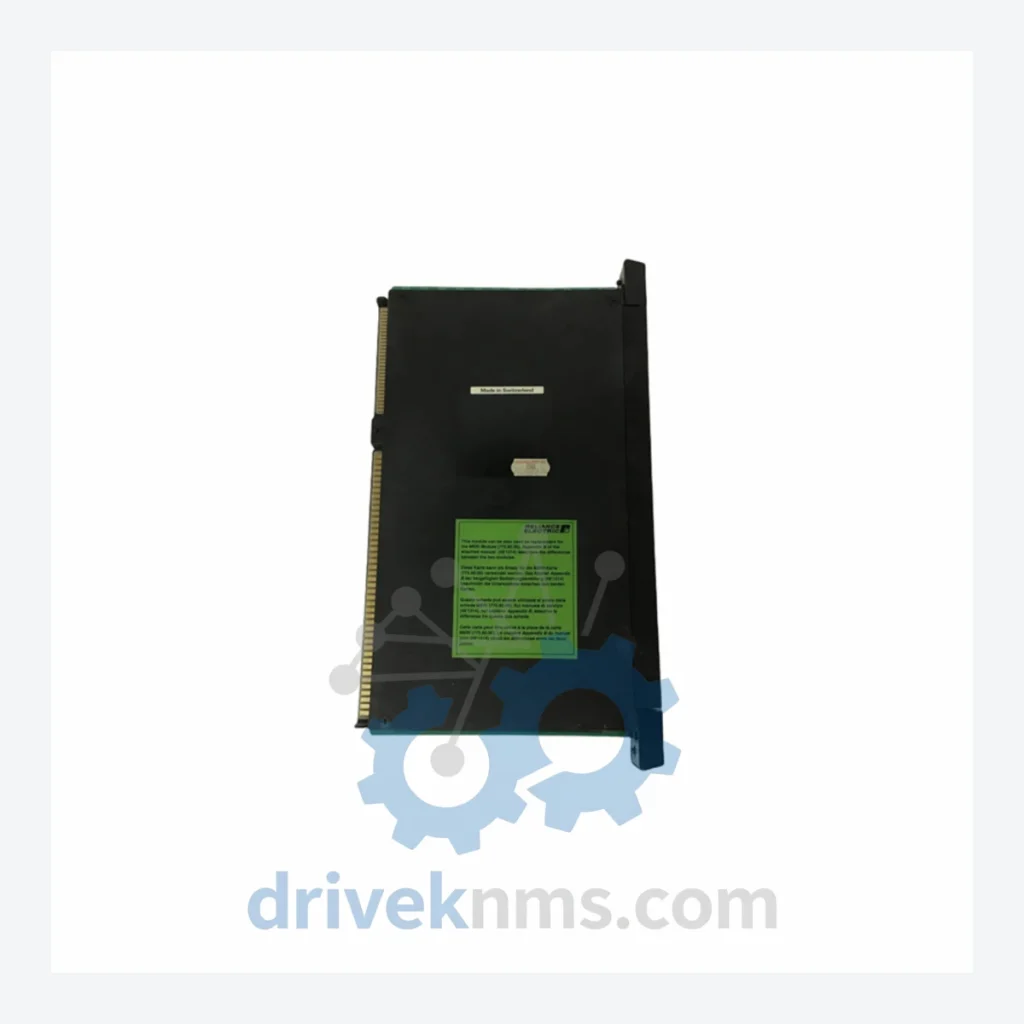
Product Overview
Commercial availability is handled through direct RFQ, model verification and export-oriented follow-up rather than public cart checkout.
Datasheet Preview
Use attached product manuals when available. If the manual is not public yet, request the full file directly through RFQ.
Commercial Path
Product pages on DRIVEKNMS are designed to verify model, brand and series first, then move the buyer into one clean quotation path.
Technical Dossier
The RELIANCE ELECTRIC 770 Series represents a foundational control platform deployed across global heavy industry sectors including petrochemical refineries, nuclear power generation facilities, pulp and paper mills, and continuous-process chemical plants. Engineered during the peak of distributed control system (DCS) and programmable logic controller (PLC) integration in the 1980s and 1990s, the 770 Series established a modular backplane architecture that allowed plant engineers to configure control nodes with high granularity. Installations of this series remain operational in brownfield facilities across North America, Europe, and Asia-Pacific, where capital replacement cycles extend system lifespans well beyond original design parameters. The series is characterized by its AUTOBUS communication backbone, which enabled deterministic data exchange between I/O modules, processor cards, and host supervisory systems at a time when fieldbus standardization was still nascent.
The 770 Series was introduced by RELIANCE ELECTRIC as part of its industrial automation portfolio prior to the company's acquisition by Rockwell Automation. The architecture is built around the AUTOBUS proprietary backplane, a parallel communication bus that interconnects processor, I/O, and communication modules within a single rack chassis. Early revisions of the 770 platform used discrete wire-wrapped backplanes; later production runs transitioned to multilayer PCB backplanes with improved noise immunity, critical for deployment in high-EMI environments such as motor control centers and arc furnace facilities.
Compatibility across 770 Series generations is constrained by backplane slot addressing and firmware revision levels. Modules from early production runs (pre-1990) may require firmware matching to communicate correctly with later CPU variants. The transition from AUTOBUS to more modern fieldbus protocols (PROFIBUS, DeviceNet, Modbus TCP) was addressed through gateway adapter modules rather than native redesign, meaning the core 770 backplane architecture was never fundamentally revised. This design decision has significant implications for long-term maintenance: the AUTOBUS physical layer is no longer manufactured, making backplane repair and module replacement dependent entirely on the secondary market and specialist refurbishers.
RELIANCE ELECTRIC's absorption into Rockwell Automation resulted in the 770 Series being classified as a legacy/end-of-life platform. Rockwell does not provide new production of 770 Series modules. All procurement is sourced through authorized surplus distributors, refurbishment specialists, and decommissioned plant asset recovery.
The following SKUs represent verified, commonly traded modules within the RELIANCE ELECTRIC 770 Series. Each entry reflects a distinct functional role within the platform architecture.
Processor / CPU Modules
Analog Input (AI) Modules
Analog Output (AO) Modules
Digital Input (DI) Modules
Digital Output (DO) Modules
Communication / Interface Modules
Power Supply Modules
The RELIANCE ELECTRIC 770 Series has been formally discontinued by Rockwell Automation. No new production units are available through OEM channels. For facilities operating 770 Series-based control systems, procurement is exclusively dependent on the global surplus and refurbishment market.
DriveKNMS maintains an active inventory of 770 Series modules sourced from decommissioned plant assets, authorized surplus channels, and controlled refurbishment programs. Our procurement team actively tracks global availability of high-demand SKUs including the 770.90.10 AUTOBUS INTERFACE, CPU modules, and analog I/O cards. For obsolete or low-availability SKUs, DriveKNMS provides cross-reference analysis to identify functionally equivalent alternatives or supports customers in sourcing original units through our international supplier network.
Lifecycle extension services for 770 Series installations include: module-level repair and component replacement, firmware version verification and matching, backplane continuity testing, and long-term consignment stocking agreements for facilities requiring guaranteed spare availability over multi-year maintenance windows.
The 770 Series backplane and AUTOBUS communication modules present specific test challenges due to the proprietary nature of the AUTOBUS protocol and the age-related degradation patterns common in legacy industrial electronics. DriveKNMS applies a structured test protocol to all 770 Series modules prior to shipment.
For AUTOBUS INTERFACE modules (including the 770.90.10), testing includes: backplane connector pin continuity verification, AUTOBUS transceiver functional test using period-accurate test fixtures, isolation resistance measurement between bus lines and chassis ground, and full power-on functional verification under simulated rack load conditions. Analog I/O modules undergo calibration verification against NIST-traceable references. Digital I/O modules are tested for channel-level switching integrity and leakage current compliance. All modules are inspected for capacitor ESR degradation, solder joint integrity, and corrosion on edge connectors — the three primary failure modes in this series after extended storage or field service.
Modules that pass full functional test are issued a DriveKNMS test certificate. Modules with repairable defects are documented and repaired at component level before re-test. Modules that fail functional test are quarantined and not offered for sale.
Related Paths
RELIANCE 0-57405-D Drive Analog I/O Module: Global Sourcing Strategy & Asset Return Value The RELIANCE 0-57405-D (also referenced as 57405-D)…
Reliance Electric 0-51820-1 PC Board – Obsolete Automax Series Spare Part When a PC board fails inside a legacy Reliance…
Reliance Electric 57C415 / 57415-A Controller Card Module: Global Sourcing Strategy & Asset Return Value The Reliance Electric 57C415 (alternate…