
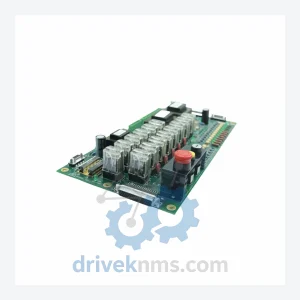
Philips 4535 670 73831 / 4535 670 06391 Power Board
Philips 4535 Series: Comprehensive Module Range and Technical Overview The Philips 4535 series power boards occupy a well-established position in…
Model: SDM010
Product Overview
Commercial availability is handled through direct RFQ, model verification and export-oriented follow-up rather than public cart checkout.
Datasheet Preview
Use attached product manuals when available. If the manual is not public yet, request the full file directly through RFQ.
Commercial Path
Product pages on DRIVEKNMS are designed to verify model, brand and series first, then move the buyer into one clean quotation path.
Technical Dossier
The Philips SDM (System Drive Module) series represents a generation of modular electronic control units deployed extensively across global heavy industry sectors, including petrochemical refineries, chemical processing plants, nuclear power facilities, and continuous-process manufacturing environments. The SDM series was engineered to operate within Philips' broader distributed control system (DCS) architecture, providing deterministic I/O handling, inter-module communication, and process loop control in environments demanding high availability and long operational cycles. Installations of SDM-series hardware remain active in legacy plant infrastructure across Europe, the Middle East, and Asia-Pacific, where full system replacement is economically or operationally impractical. The installed base of these modules creates sustained demand for spare parts, repair services, and lifecycle extension support.
The SDM series was introduced as part of Philips Industrial Electronics' control systems division during the late 1980s and early 1990s, a period when modular rack-based DCS platforms were displacing monolithic relay-logic panels in process industries. Early SDM modules communicated via proprietary parallel backplane buses, with inter-module addressing handled through hardware DIP-switch configuration. Mid-generation revisions introduced serial backplane communication protocols, improving noise immunity in high-EMI plant environments and enabling software-based module addressing.
As the series matured, Philips introduced enhanced CPU modules with expanded memory maps and floating-point arithmetic support, enabling more complex PID loop configurations and cascade control strategies. Power supply modules were revised to support wider input voltage ranges (85–264 VAC universal input) to accommodate global installation requirements. The final production variants of the SDM series incorporated limited fieldbus gateway capability, bridging legacy SDM backplane infrastructure to PROFIBUS-DP and Modbus RTU networks.
Following Philips' divestiture of its industrial automation division, the SDM series entered end-of-life status. Replacement pathways include migration to Foxboro I/A Series, Honeywell Experion PKS, and ABB System 800xA platforms, though direct hardware substitution is not possible without engineering re-work. The SDM series is now classified as a mature/end-of-life product line; long-term maintenance support is the primary operational mode for existing installations.
The following SKUs represent verified, commonly sourced components within the Philips SDM series. Each entry reflects the module's primary functional classification within the SDM rack architecture.
CPU & Controller Modules
Analog Input (AI) Modules
Analog Output (AO) Modules
Digital Input (DI) Modules
Digital Output (DO) Modules
Communication & Adapter Modules
Power Supply Modules
DriveKNMS maintains a dedicated inventory program for end-of-life Philips SDM series components. As original manufacturer support for this series has been discontinued, procurement of replacement modules through standard distribution channels is no longer reliable. DriveKNMS sources SDM modules through verified secondary market channels, decommissioned plant asset recovery, and long-term storage inventory held by industrial surplus specialists globally.
All SDM series stock held by DriveKNMS is subject to pre-sale inspection and functional verification. For critical process applications, DriveKNMS can provide documentation of module provenance and test records upon request. Emergency same-day dispatch is available for in-stock items to minimize unplanned plant downtime. For obsolete variants not currently in stock, DriveKNMS operates a global sourcing network with typical lead times of 5–15 business days.
The SDM series presents specific quality control challenges due to the complexity of its backplane communication bus and the age profile of available stock. DriveKNMS applies the following verification procedures to all SDM modules prior to dispatch:
Modules passing all stages are issued a DriveKNMS inspection certificate and are eligible for dispatch. Modules failing any stage are either repaired by qualified technicians or quarantined from inventory.
Related Paths
Philips 4535 Series: Comprehensive Module Range and Technical Overview The Philips 4535 series power boards occupy a well-established position in…
Philips LD5001M Displacement Transducer: Global Sourcing Strategy & Asset Return Value The Philips LD5001M is a precision displacement transducer designed…
Philips 940622127011 CPU Card – Obsolete ISSC Spare Part When a CPU card fails inside a legacy Philips ISSC control…