
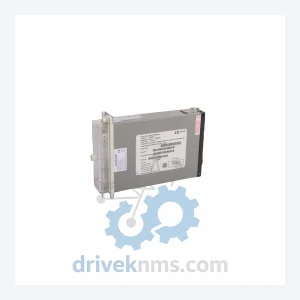
ALSTOM MVAJ105RA0802A Protection Relay – MiCOM Series
ALSTOM MVAJ105RA0802A Protection Relay: Supply Continuity Strategy for a Discontinued Critical Component The ALSTOM MVAJ105RA0802A is a numerical protection relay…
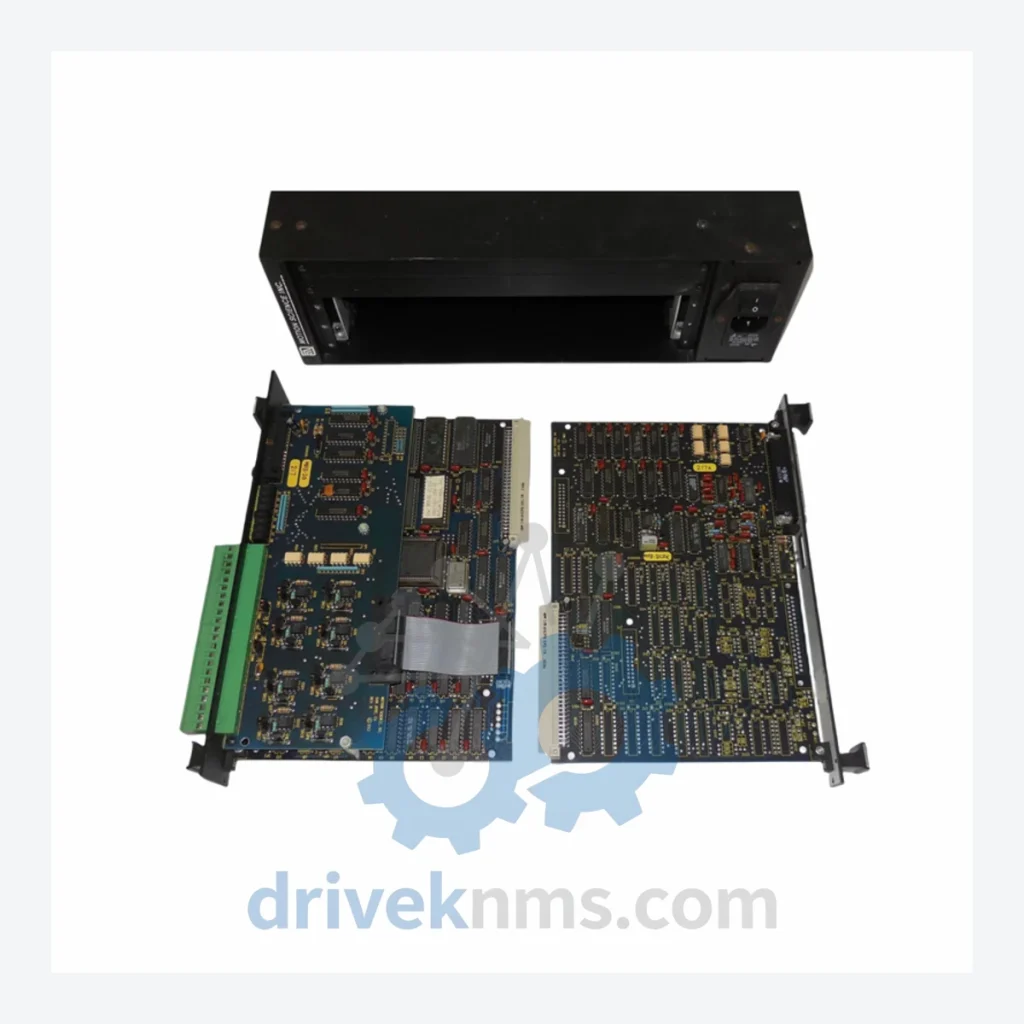
Model: MP3-404HR2
Product Overview
Commercial availability is handled through direct RFQ, model verification and export-oriented follow-up rather than public cart checkout.
Datasheet Preview
Use attached product manuals when available. If the manual is not public yet, request the full file directly through RFQ.
Commercial Path
Product pages on DRIVEKNMS are designed to verify model, brand and series first, then move the buyer into one clean quotation path.
Technical Dossier
The Motion Science MP3 Series servo drives are deployed across global heavy industry sectors including petrochemical refineries, nuclear power generation facilities, offshore oil & gas platforms, and continuous-process chemical plants. The MP3 platform is a brushless AC servo drive family engineered for closed-loop torque, velocity, and position control in demanding multi-axis motion applications. Its modular architecture and wide voltage input range (single-phase and three-phase, 100–240 VAC) made it a standard specification in OEM machine tool, packaging, and material handling systems throughout the 1990s and 2000s. Installed base remains significant in legacy automation infrastructure where replacement with modern drives requires full mechanical and electrical re-engineering, making original-specification spare parts the preferred maintenance strategy.
The MP3 Series was introduced by Motion Science as a successor to earlier analog servo amplifier platforms. Early revisions (MP3-2xx and MP3-3xx sub-families) used discrete analog command interfaces (±10 VDC velocity/torque reference) with resolver feedback. Mid-generation units introduced encoder feedback compatibility and RS-232/RS-485 serial communication for parameter configuration. The MP3-4xx sub-family, which includes the MP3-404HR2, represents the mature revision of the platform: it incorporates enhanced current loop bandwidth, improved EMI filtering, and a more robust power stage rated for higher continuous output current. The suffix HR2 denotes a high-resolution encoder interface variant with a second-generation firmware revision. As the broader servo drive market transitioned to EtherCAT and CANopen fieldbus-native architectures in the 2010s, the MP3 Series entered its end-of-life phase. Motion Science ceased active production of the MP3 line; however, the installed base in legacy systems sustains demand for spare and replacement units. Modern functional equivalents require adaptation of mechanical mounting, connector pinout, and feedback wiring — making direct MP3 replacements the lowest-risk maintenance path for plant engineers.
The following SKUs represent the verified MP3 Series product range, classified by function and power rating:
MP3-202: 200W continuous, ±10 VDC analog command, resolver feedback input
MP3-204: 200W, encoder feedback variant, RS-232 parameter interface
MP3-302: 300W continuous output, single-phase 100–240 VAC, analog velocity mode
MP3-304: 300W, dual feedback (resolver/encoder selectable), torque/velocity modes
MP3-402: 400W continuous, three-phase input, analog ±10 VDC, standard encoder
MP3-404: 400W, encoder feedback, RS-485 serial communication, position mode capable
MP3-404HR: 400W, high-resolution encoder interface (first revision), enhanced current loop
MP3-404HR2: 400W, high-resolution encoder interface (second revision), improved EMI filter, firmware Rev.2
MP3-502: 500W continuous, three-phase 200 VAC, analog command, standard resolver
MP3-504: 500W, encoder feedback, RS-485, multi-mode (torque/velocity/position)
MP3-504HR2: 500W, high-resolution encoder, second-generation firmware, enhanced power stage
MP3-752: 750W continuous, three-phase input, analog velocity/torque command
MP3-754: 750W, encoder feedback, serial communication, position loop capable
MP3-1002: 1.0 kW continuous, three-phase 200 VAC, analog command interface
MP3-1004: 1.0 kW, encoder feedback, RS-485, full torque/velocity/position control
MP3-1504: 1.5 kW continuous, three-phase input, encoder feedback, serial interface
MP3-2004: 2.0 kW continuous, three-phase 200 VAC, encoder feedback, RS-485 communication
DriveKNMS maintains a dedicated inventory program for end-of-life Motion Science MP3 Series units. As Motion Science has discontinued active production of the MP3 platform, procurement through standard distribution channels is no longer viable. DriveKNMS sources MP3 Series drives through verified industrial surplus channels, decommissioned equipment recovery, and direct OEM inventory liquidation. Stock is held for the most common failure-prone variants including the MP3-404HR2, MP3-504HR2, MP3-1004, and MP3-754. For plant maintenance teams operating under long-term service agreements on legacy machinery, DriveKNMS offers consignment stocking arrangements and priority reservation for critical spare units. Inquiries for low-volume single-unit requirements and high-volume blanket orders are both accommodated. Lead times vary by model availability; contact the procurement team directly for real-time stock confirmation.
All MP3 Series units processed by DriveKNMS undergo a structured multi-stage inspection and functional verification protocol prior to dispatch. The procedure addresses the specific failure modes documented in the MP3 platform: power stage IGBT degradation, resolver/encoder interface signal integrity, DC bus capacitor ESR drift, and firmware parameter corruption. Stage 1 — Visual and Mechanical Inspection: connector integrity, PCB contamination, heat sink condition, and fan operation (where applicable). Stage 2 — Power Stage Verification: DC bus charge/discharge cycle, IGBT gate drive signal measurement, and output phase balance under resistive load. Stage 3 — Feedback Interface Test: resolver excitation signal verification or encoder quadrature signal integrity check, depending on unit variant. Stage 4 — Functional Run Test: closed-loop velocity control test using a matched servo motor load, confirming torque linearity and speed regulation across the rated operating range. Stage 5 — Parameter Verification: factory default parameter set confirmed via RS-232/RS-485 interface; firmware revision documented. All test data is retained and available upon request with each unit shipment.
Related Paths
ALSTOM MVAJ105RA0802A Protection Relay: Supply Continuity Strategy for a Discontinued Critical Component The ALSTOM MVAJ105RA0802A is a numerical protection relay…
MOORE 16137 Series: Comprehensive Module Range and Technical Overview The MOORE 16137 Series represents a core component family within Moore…
Yaskawa YPHT11014-1A Circuit Board – Obsolete Drive Control Spare Part When a Yaskawa YPHT11014-1A circuit board fails in a production…