
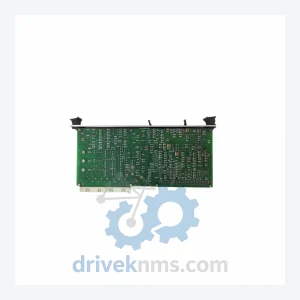
Yokogawa K9634DA-01 TCD Card Modules
Yokogawa K9634DA Series: Comprehensive Module Range and Technical Overview The Yokogawa K9634DA series TCD (Thermocouple/mV Input) cards are field-proven I/O…
Model: NFDV161-P01 S2
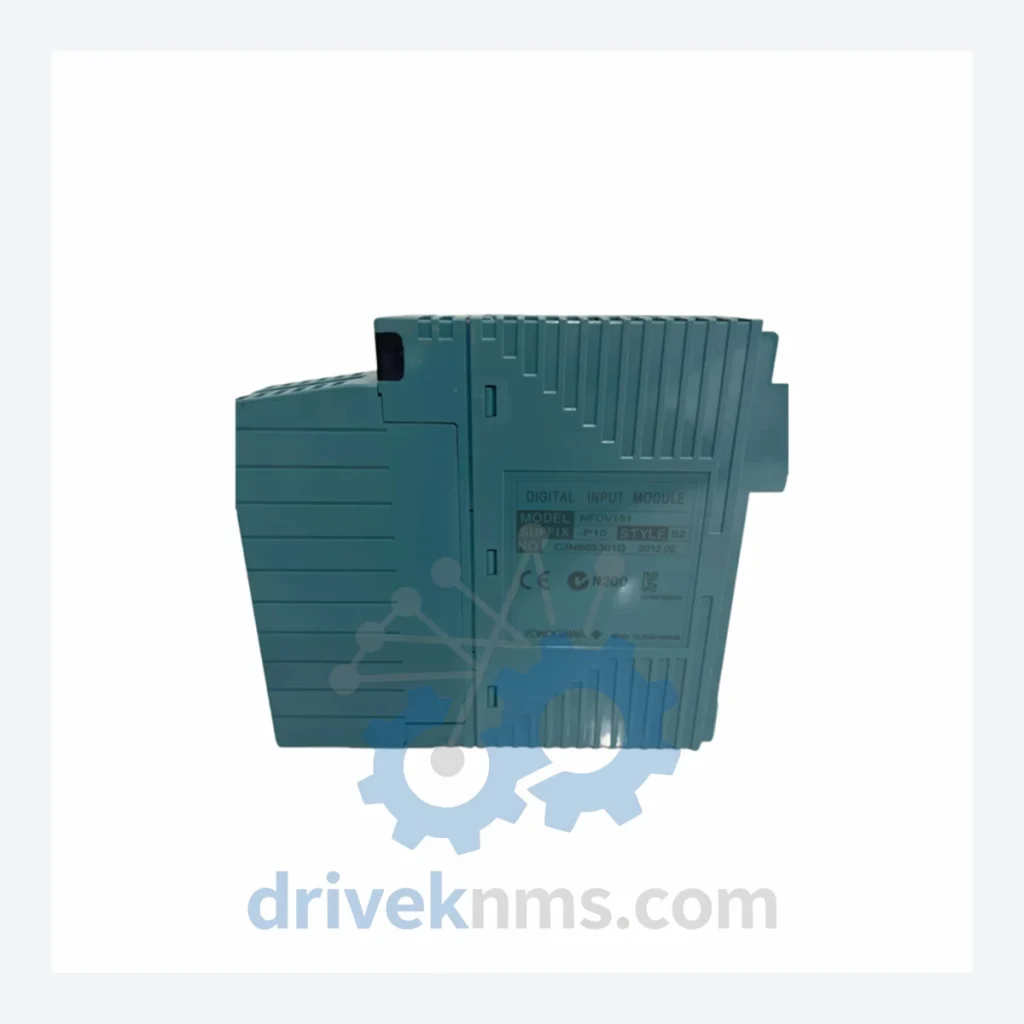
Product Overview
Commercial availability is handled through direct RFQ, model verification and export-oriented follow-up rather than public cart checkout.
Datasheet Preview
Use attached product manuals when available. If the manual is not public yet, request the full file directly through RFQ.
Commercial Path
Product pages on DRIVEKNMS are designed to verify model, brand and series first, then move the buyer into one clean quotation path.
Technical Dossier
When a digital input module fails in a legacy distributed control system, the consequences extend far beyond a single line stoppage. For plants still operating on Yokogawa CENTUM-era architecture, the NFDV161-P01 S2 is not a commodity component — it is a load-bearing element of a control infrastructure that may have taken years and millions of dollars to commission. A forced migration to a modern DCS platform, triggered solely by the unavailability of one module, routinely costs between USD 500,000 and USD 3,000,000 when engineering, re-validation, operator retraining, and production downtime are fully accounted for. DriveKNMS maintains verified stock of the NFDV161-P01 S2 specifically to prevent that scenario.
| Parameter | Detail |
|---|---|
| Manufacturer | Yokogawa Electric Corporation |
| Part Number | NFDV161-P01 S2 |
| Module Type | Digital Input Module |
| Compatible System | Yokogawa CENTUM Series DCS |
| Country of Origin | Japan |
| Discontinuation Status | Discontinued / Obsolete – No longer manufactured |
| Condition Available | New Old Stock (NOS) / Professionally Refurbished |
Note: Specific electrical parameters (voltage range, channel count, isolation rating) are confirmed upon request based on unit serial number and hardware revision. No parameters are published here without verified documentation to ensure equipment safety.
The Yokogawa CENTUM platform — encompassing CENTUM CS, CENTUM CS 1000, and CENTUM CS 3000 — represents decades of installed base across petrochemical, power generation, pulp and paper, and pharmaceutical facilities worldwide. The NFDV161-P01 S2 digital input module occupies a defined slot in the I/O subsystem of these controllers. Its physical form factor, backplane connector pinout, and firmware handshake protocol are specific to this architecture. There is no generic substitute.
Yokogawa's official end-of-life notices for CENTUM CS-era hardware have left many plant operators in a difficult position: the control system itself continues to perform reliably, but sourcing replacement I/O modules through official channels is no longer possible. The realistic options narrow to three: accept unplanned downtime when a module fails, commit to a full DCS migration, or maintain a strategic inventory of verified spare modules. The third option is the only one that preserves both operational continuity and capital budget integrity.
Plants that have adopted a structured spare-parts strategy for their CENTUM systems report extending asset service life by 5 to 10 years beyond the manufacturer's stated end-of-support date. The arithmetic is straightforward: a verified NFDV161-P01 S2 module sourced today costs a fraction of one day of unplanned production loss, and an infinitesimal fraction of a full system replacement project.
Every NFDV161-P01 S2 unit processed by DriveKNMS passes a structured 5-step inspection protocol before it is offered for sale. This protocol is designed around the known failure modes of legacy Yokogawa I/O hardware:
Q: What warranty applies to a discontinued module?
A: DriveKNMS provides a 90-day functional warranty on all refurbished units and a 30-day warranty on New Old Stock units. Warranty covers failure under normal operating conditions and excludes damage from incorrect installation or electrical overstress.
Q: How do I confirm the unit is genuine Yokogawa and not a counterfeit?
A: All units are inspected for authentic Yokogawa labeling, PCB markings, and component sourcing. We provide photographs of the physical unit, including board markings and serial number, prior to shipment upon request.
Q: Should I purchase more than one unit?
A: For any CENTUM installation where this module type is used in more than one slot, holding at least one cold spare per critical loop is standard practice. For facilities with no alternative sourcing path, a buffer of two to three units is a defensible asset protection measure given the current market scarcity.
Q: Can you source additional quantity if I need more than you have in stock?
A: DriveKNMS maintains an active sourcing network for legacy Yokogawa hardware. Contact us with your quantity requirement and we will provide a sourcing timeline and availability assessment.
© 2026 DriveKNMS. Status: DRAFT
Related Paths
Yokogawa K9634DA Series: Comprehensive Module Range and Technical Overview The Yokogawa K9634DA series TCD (Thermocouple/mV Input) cards are field-proven I/O…
Yokogawa UT350-01 Digital Indicating Controller – Obsolete UT Series Spare Part When a Yokogawa UT350-01 fails on the plant floor,…
YOKOGAWA K9403 Series: Comprehensive Module Range and Technical Overview The YOKOGAWA K9403 series Field Indication Device (FID) cards are deployed…