
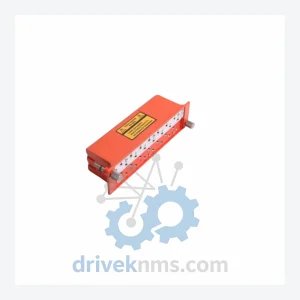
Panasonic 581B740C Circuit Board – Obsolete MINAS Series Spare Part
Panasonic 581B740C Circuit Board – Obsolete MINAS Series Spare Part A single failed circuit board should not force a plant-wide…
Model: NA2-N16D
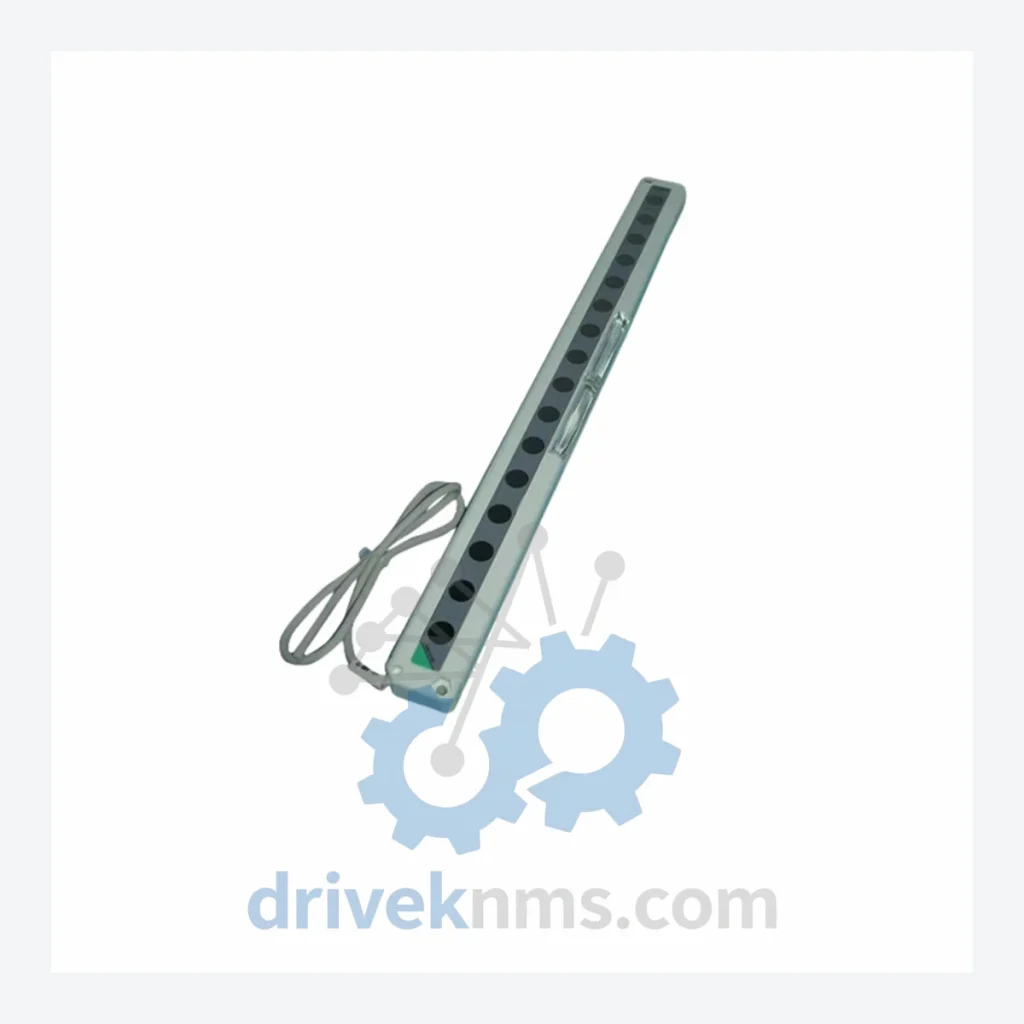
Product Overview
Commercial availability is handled through direct RFQ, model verification and export-oriented follow-up rather than public cart checkout.
Datasheet Preview
Use attached product manuals when available. If the manual is not public yet, request the full file directly through RFQ.
Commercial Path
Product pages on DRIVEKNMS are designed to verify model, brand and series first, then move the buyer into one clean quotation path.
Technical Dossier
When a Panasonic NA2-N16D area sensor fails on an active production line, the consequences extend far beyond the cost of the component itself. Plants running legacy safety light curtain and area monitoring systems built around the NA2 Series face a hard reality: the NA2-N16D has been discontinued, and sourcing a verified replacement through standard distribution channels is no longer straightforward. A single unplanned line stoppage caused by an unavailable sensor can cascade into days of lost output. For facilities where a full safety system upgrade is estimated at hundreds of thousands of dollars — plus engineering, validation, and requalification costs — securing a genuine NA2-N16D spare is not a procurement decision. It is an asset protection decision.
DriveKNMS maintains verified stock of the Panasonic NA2-N16D for industrial facilities that cannot afford to gamble on system continuity.
| Parameter | Detail |
|---|---|
| Manufacturer | Panasonic (Sunx) |
| Model / Part Number | NA2-N16D |
| Series | NA2 |
| Product Category | Area Sensor / Safety Light Curtain |
| Country of Origin | Japan |
| Lifecycle Status | Discontinued / Obsolete – No longer in active production |
| Compatibility | Designed for use with Panasonic NA2 Series area monitoring systems; commonly integrated into automated assembly lines, press safety guarding, and robotic cell perimeter protection |
Note: Electrical parameters such as supply voltage, output configuration, and detection zone dimensions are not published here to avoid inaccuracy. Please contact us directly for verified datasheet confirmation prior to ordering.
The Panasonic NA2 Series was widely deployed across automotive stamping, electronics assembly, and general industrial automation throughout the 1990s and 2000s. Many of these installations remain operational today — not because the technology is outdated for the application, but because the surrounding machinery, PLCs, and safety relay circuits were engineered around the NA2 platform and have decades of remaining mechanical life.
Replacing the NA2-N16D with a current-generation area sensor is not a simple swap. Modern safety sensors operate under IEC 61496 and ISO 13849 frameworks that may require full safety function re-validation, updated wiring schematics, and in some cases, replacement of the safety relay or controller. Engineering and validation costs for a single safety zone replacement routinely reach five figures. For a facility with multiple guarded zones, a forced platform migration triggered by one unavailable sensor can justify a multi-million dollar capital project that was never budgeted.
Sourcing a verified NA2-N16D spare eliminates that forced decision. It restores the line, preserves the existing safety validation, and returns the capital expenditure decision to the plant's own timeline — not the timeline imposed by a parts shortage.
For plant managers and maintenance engineers operating facilities built on legacy Panasonic, Omron, Keyence, or similar sensor platforms from the 1990s–2010s, the following approach has proven effective in deferring costly system overhauls:
1. Conduct a criticality audit of all obsolete sensing components. Identify every sensor model on the line that is discontinued or approaching end-of-life. Rank them by failure impact: a sensor that stops a single station is lower priority than one that halts an entire line or triggers a safety shutdown.
2. Establish a minimum buffer stock for Tier-1 critical sensors. For high-criticality obsolete parts like the NA2-N16D, holding two to three verified spares on-site eliminates the sourcing lead time risk entirely. The carrying cost of three spare sensors is negligible against one day of unplanned downtime.
3. Source from verified secondary market suppliers, not auction platforms. Unverified obsolete parts sourced from online auction sites carry significant risk of counterfeit components, incorrect firmware versions, or undisclosed physical damage. A structured QA process — as described below — is the minimum acceptable standard for safety-rated components.
4. Document the installed firmware and configuration baseline. For sensors with configurable parameters, record the current settings before any replacement. This eliminates re-commissioning time and reduces the risk of introducing a configuration error during a high-pressure breakdown situation.
5. Plan the platform migration on your schedule, not the market's. A strategic spare parts buffer buys time. Use that time to evaluate migration options, budget properly, and schedule the transition during a planned shutdown — not as an emergency response.
This approach consistently extends the productive life of legacy automation assets by five to ten years while keeping maintenance costs predictable and capital expenditure under management control.
Every NA2-N16D unit supplied by DriveKNMS passes a structured five-stage inspection process before dispatch. For discontinued components, standard incoming inspection is insufficient. Our process addresses the specific failure modes associated with aged industrial electronics:
Stage 1 – Visual and Mechanical Inspection: Full external examination for housing cracks, connector pin corrosion, lens contamination, and label integrity. Units with physical damage indicators are rejected at this stage.
Stage 2 – Electrolytic Capacitor Assessment: Aged electrolytic capacitors are a primary failure mode in sensors manufactured more than ten years ago. Internal boards are inspected for capacitor bulging, electrolyte leakage, and ESR deviation where accessible.
Stage 3 – Firmware and Configuration Verification: Where applicable, firmware version is confirmed against known production baselines. Units with unknown or non-standard firmware states are flagged and disclosed prior to sale.
Stage 4 – Pin and Contact Integrity Check: Connector pins are inspected for oxidation, mechanical deformation, and contact resistance. Corroded contacts are a common cause of intermittent faults in legacy sensors and are treated as a disqualifying defect.
Stage 5 – Functional Verification: Units are powered and tested for basic operational response prior to packaging. Only units that pass all five stages are released for sale.
Drop-in replacement: The NA2-N16D is a direct form-fit-function replacement for the original installed unit. No mechanical modification to the machine guarding structure is required.
No reprogramming required: The NA2 Series uses hardware-configured detection parameters. Replacing the sensor does not require PLC program changes or safety controller reconfiguration, provided the replacement unit is the correct model variant.
Preserves existing safety validation: Because the replacement is identical to the original specified component, the existing safety function documentation and risk assessment remain valid. There is no requirement to re-engage a safety engineer for a full re-validation.
Avoids engineering reconstruction costs: A forced migration to a current-generation safety sensor platform involves electrical redesign, updated safety relay or controller selection, new cable assemblies, and full functional safety validation. The cost of a verified NA2-N16D spare is a fraction of that expenditure.
Q: What warranty applies to an obsolete part like the NA2-N16D?
A: DriveKNMS provides a 90-day warranty covering functional defects identified under normal operating conditions. Given the discontinued status of this component, we recommend customers treat the warranty period as a commissioning validation window and maintain a buffer spare once the unit is confirmed operational in the application.
Q: How do I know the unit is genuine and not counterfeit?
A: All units are sourced through traceable industrial channels, not consumer auction platforms. Physical authenticity markers — including label print quality, housing mold characteristics, and connector construction — are verified against known-genuine reference units during Stage 1 inspection. We do not sell units that fail authenticity verification.
Q: Is the unit new or refurbished?
A: Stock condition varies. We clearly disclose whether a unit is new-in-box, new surplus (unused but removed from original packaging), or professionally inspected used stock. Condition is confirmed in writing prior to order confirmation. We do not represent used stock as new.
Q: Should I buy more than one unit?
A: For any discontinued component installed in a critical production application, holding at least one verified spare on-site is standard maintenance practice. For high-utilization lines or facilities with multiple installations of the same sensor, a buffer of two to three units is a defensible and low-cost insurance position against future sourcing difficulty.
Q: Can you source additional quantity if I need more than one unit?
A: Contact us with your required quantity. We will confirm available stock and, where possible, identify additional verified supply through our sourcing network.
© 2026 DriveKNMS. (Status: DRAFT)
Related Paths
Panasonic 581B740C Circuit Board – Obsolete MINAS Series Spare Part A single failed circuit board should not force a plant-wide…
Panasonic DV80X180MB5 Servo Driver: Global Sourcing Strategy & Asset Return Value The Panasonic DV80X180MB5 is a high-performance AC servo driver…
Panasonic MDDDT3530 AC Servo Driver – Obsolete MINAS A Series Spare Part When a Panasonic MDDDT3530 servo driver fails on…