
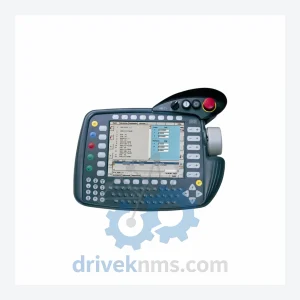
KUKA KCP2 VKCP2 Robot Control Panel – KCP Series
KUKA KCP2 VKCP2 Robot Control Panel: Sourcing Strategy & Asset Return Value in a Constrained Global Supply Chain The KUKA…
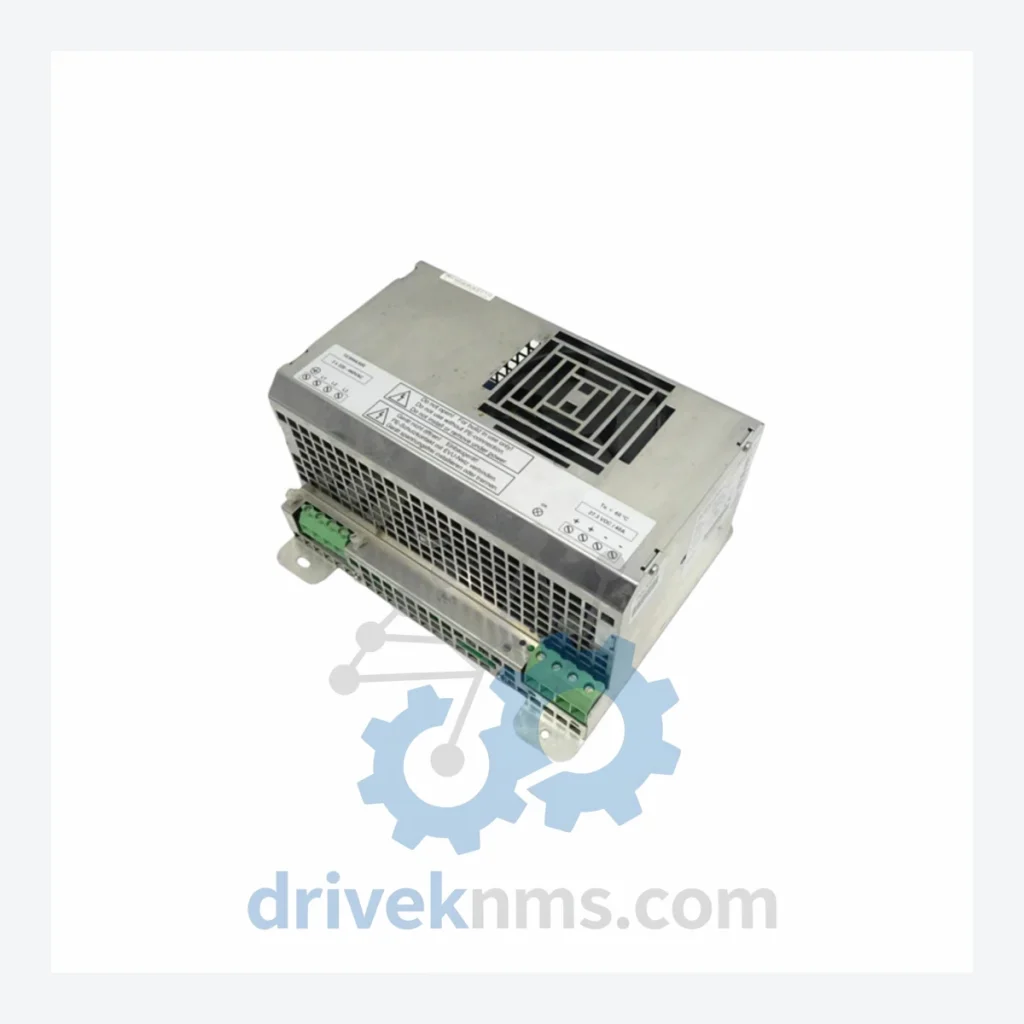
Model: PH1003-2840
Product Overview
Commercial availability is handled through direct RFQ, model verification and export-oriented follow-up rather than public cart checkout.
Datasheet Preview
Use attached product manuals when available. If the manual is not public yet, request the full file directly through RFQ.
Commercial Path
Product pages on DRIVEKNMS are designed to verify model, brand and series first, then move the buyer into one clean quotation path.
Technical Dossier
When a KUKA PH1003-2840 power supply fails in an active production cell, the consequences extend far beyond a single component replacement. The KR C2 controller platform — the backbone of thousands of automotive, metal fabrication, and general-purpose robotic cells installed between the late 1990s and mid-2010s — has been officially discontinued by KUKA. A forced migration to the KR C4 or KR C5 architecture carries engineering costs that routinely exceed $150,000 USD per robot cell when factoring in controller hardware, teach pendant replacement, PLC interface rewiring, safety circuit recertification, and production downtime during commissioning. For multi-robot lines, that figure multiplies accordingly.
The PH1003-2840 is the internal power supply unit responsible for delivering regulated DC voltages to the KR C2 controller's logic boards, drive amplifiers, and safety relay circuits. Its failure mode is rarely sudden; degraded output voltage, intermittent E-Stop faults, and unexplained axis errors are the early indicators that plant engineers must recognize before a complete shutdown occurs. DriveKNMS maintains verified stock of this unit specifically to serve facilities that have made the deliberate, financially sound decision to extend the operational life of their existing KR C2 infrastructure rather than absorb the capital expenditure of a full platform migration.
| Parameter | Detail |
|---|---|
| Part Number | PH1003-2840 |
| Manufacturer | KUKA Roboter GmbH |
| Compatible Platform | KUKA KR C2 Robot Controller |
| Component Function | Internal Power Supply Unit (PSU) |
| Country of Origin | Germany |
| Product Status | Discontinued / Obsolete – No longer in KUKA active production |
| Condition Available | New Old Stock (NOS) / Professionally Refurbished |
Note: Specific electrical output parameters (voltage rails, current ratings) are not published here to prevent misapplication. Contact our technical team for verified datasheet confirmation prior to ordering.
The KUKA KR C2 controller was the industry standard for robotic automation across automotive body shops, foundries, and tier-1 supplier lines for over a decade. Its reliability record is well-documented, and many facilities have built their production processes, safety validations, and operator training programs around this platform. The decision to retire a KR C2 line is rarely driven by performance — it is driven by parts availability.
The PH1003-2840 power supply sits at the center of this availability problem. As a non-modular internal component, it cannot be substituted with a generic industrial PSU without risking incompatibility with the KR C2's proprietary voltage sequencing and fault detection logic. KUKA's own service network no longer stocks this unit in most regions. Third-party repair services that lack the original unit for core exchange are unable to offer a reliable turnaround.
Facilities that have secured a verified spare of the PH1003-2840 have effectively purchased an insurance policy against unplanned downtime. A single avoided production stoppage on a high-throughput welding or assembly line typically recovers the cost of multiple spare units. The strategic calculus is straightforward: the cost of the spare is a fraction of one shift's lost output.
How to extend your KR C2 system life by 5–10 years: The most effective asset protection strategy for KR C2-based lines combines three elements. First, identify and stock the three to five components with the longest lead times and highest failure probability — the PH1003-2840 is consistently on that list. Second, establish a scheduled preventive maintenance interval that includes thermal inspection of the controller cabinet, capacitor condition assessment, and connector integrity checks. Third, document the current software and configuration state of each controller so that a hardware swap does not require re-commissioning from scratch. Facilities that implement this approach routinely operate KR C2 systems well beyond the 15-year mark without the capital disruption of a platform migration. The investment required is a fraction of what a single unplanned line stoppage costs in lost production, expedited logistics, and emergency engineering fees.
Every PH1003-2840 unit that leaves DriveKNMS undergoes a structured five-stage quality process before dispatch:
1. Electrolytic Capacitor Assessment: Capacitor aging is the primary failure mechanism in power supplies of this era. Each unit is inspected for bulging, leakage, and ESR deviation. Units with degraded capacitors are either recapped with equivalent-specification components or removed from serviceable stock.
2. Firmware and Hardware Revision Verification: The hardware revision of each unit is documented and cross-referenced against known KR C2 compatibility matrices to confirm the unit will operate correctly in the target controller generation.
3. Pin and Connector Corrosion Inspection: All connector pins and PCB edge contacts are inspected under magnification for oxidation, fretting corrosion, and mechanical damage. Affected contacts are treated or the unit is downgraded accordingly.
4. Functional Load Test: Where test equipment permits, units are subjected to a functional power-on test under representative load conditions to verify output stability and fault response behavior.
5. Condition Classification and Documentation: Each unit is classified as New Old Stock, Grade A Refurbished, or Grade B Refurbished, with the classification disclosed to the buyer prior to order confirmation. No unit is shipped without a documented condition report.
The PH1003-2840 is a direct, drop-in replacement for the original unit installed in the KR C2 controller. No firmware modification, no PLC re-mapping, and no safety circuit recertification is required as a result of the power supply swap alone. The replacement procedure follows the standard KR C2 service manual sequence and is within the competency of any qualified KUKA service technician or experienced in-house maintenance engineer.
This matters because the alternative — retrofitting a non-original power supply or migrating to a newer controller platform — introduces engineering risk, validation cost, and production downtime that the original spare eliminates entirely. For facilities operating under tight maintenance windows, the ability to execute a like-for-like swap without additional engineering involvement is a direct operational advantage.
Q: What warranty applies to an obsolete part like the PH1003-2840?
A: DriveKNMS provides a 90-day warranty covering functional defects on all refurbished units and a 30-day warranty on New Old Stock units. Warranty terms are confirmed in writing prior to shipment.
Q: How do I know the unit is genuine KUKA and not a counterfeit?
A: All units are sourced through documented industrial surplus and decommissioning channels. Physical markings, PCB silk-screen references, and component dating are inspected as part of our intake process. We do not source from unverified secondary markets. Buyers may request pre-shipment photographs of the specific unit prior to order confirmation.
Q: Should I buy more than one unit?
A: For any facility operating more than two KR C2 controllers, holding a minimum of one spare PH1003-2840 is a defensible maintenance position. For larger installations or facilities where the KR C2 line is a production bottleneck, two units is the standard recommendation. Global stock of this component is finite and will not be replenished by the manufacturer. Procurement decisions made today directly determine the options available during the next failure event.
Q: Can you source this part if it is not currently in stock?
A: Yes. DriveKNMS maintains an active sourcing network for obsolete industrial components. If current stock is depleted, contact us with your requirement and timeline and we will initiate a sourcing inquiry on your behalf.
Status: DRAFT
Related Paths
KUKA KCP2 VKCP2 Robot Control Panel: Sourcing Strategy & Asset Return Value in a Constrained Global Supply Chain The KUKA…
KUKA KCP2 Series: Comprehensive Module Range and Technical Overview The KUKA KCP2 (KUKA Control Panel 2) teach pendant is the…
KUKA KSD1-08 Servo Drive: Procurement Strategy & Asset Return Value in a Constrained Supply Chain The KUKA KSD1-08 is a…