
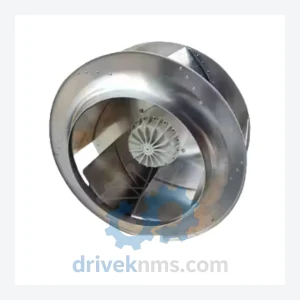
ZIEHL-ABEGG RH71M-6DK.7Q.1R Axial Fan – Obsolete RH Series Spare Part
ZIEHL-ABEGG RH71M-6DK.7Q.1R Axial Fan – Obsolete RH Series Spare Part When a cooling fan fails inside a legacy drive cabinet…
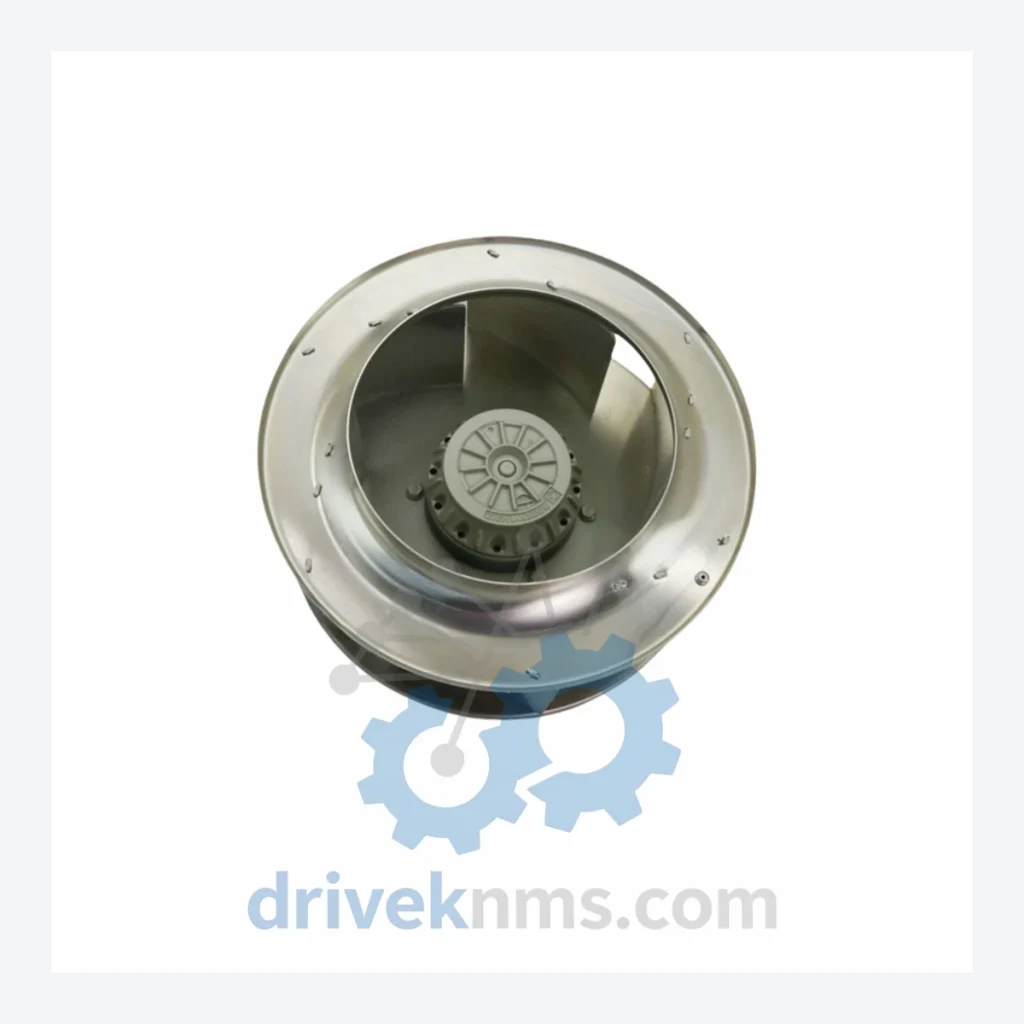
Model: RH31C-ZID.DC.1R
Product Overview
Commercial availability is handled through direct RFQ, model verification and export-oriented follow-up rather than public cart checkout.
Datasheet Preview
Use attached product manuals when available. If the manual is not public yet, request the full file directly through RFQ.
Commercial Path
Product pages on DRIVEKNMS are designed to verify model, brand and series first, then move the buyer into one clean quotation path.
Technical Dossier
When a Ziehl-Abegg RH31C-ZID.DC.1R fails in a running production or HVAC system, the immediate question is not where to find a replacement — it is whether the entire system must be retired. A full platform migration involving new fan arrays, updated control interfaces, and re-commissioning engineering can cost facility operators hundreds of thousands to several million dollars, depending on system scale. A single verified spare part changes that calculation entirely. DriveKNMS holds limited physical inventory of the RH31C-ZID.DC.1R, sourced through controlled channels and subject to multi-stage inspection before dispatch. This is not a catalog listing — it is a working component ready for deployment.
| Parameter | Detail |
|---|---|
| Manufacturer | Ziehl-Abegg SE |
| Part Number | RH31C-ZID.DC.1R |
| Series | RH (Radial / Centrifugal EC Fan) |
| Motor Technology | EC (Electronically Commutated), DC-powered |
| Country of Origin | Germany |
| Discontinuation Status | Obsolete – No longer in active production by Ziehl-Abegg |
| Typical Application | Air handling units (AHU), refrigeration condensers, industrial ventilation systems |
| Control Interface | DC input with integrated EC controller (0–10V or PWM signal, model-dependent) |
Note: Specific electrical parameters (voltage, wattage, airflow curve) are confirmed upon request against the unit's nameplate data. No parameters are published here that cannot be verified against physical documentation.
The Ziehl-Abegg RH series EC fan motors were widely integrated into precision air handling and refrigeration systems across European and Asian industrial facilities throughout the 2000s and 2010s. Their EC motor architecture — offering variable-speed control with low harmonic distortion — made them the preferred choice for energy-efficient HVAC design at a time when building automation systems were being standardized around BACnet and Modbus protocols.
When Ziehl-Abegg transitions a product line, the installed base does not disappear. Facilities running legacy AHUs built around the RH31C platform face a structural problem: the mechanical mounting dimensions, shaft configuration, and electrical interface of the RH31C-ZID.DC.1R are specific to that generation of equipment. A modern replacement motor from the current ZAbluefin or FC series requires mechanical adaptation brackets, revised wiring harnesses, and in many cases, a reconfigured BMS control loop. That engineering work carries both direct cost and operational downtime.
Maintaining a verified spare of the RH31C-ZID.DC.1R eliminates that risk window. The asset continues operating on its original control architecture, with no revalidation of airflow performance required. For facilities under ISO 14001 or operating within pharmaceutical cleanroom classifications, avoiding unplanned system modifications is not merely a cost preference — it is a compliance requirement.
Plant managers facing pressure to defer capital expenditure on HVAC or process cooling infrastructure can apply the following framework to extend operational life without compromising system reliability:
1. Identify single-point-of-failure components. In any fan array, the motor is the highest-wear item. Mapping which motor models are no longer in production — and which have no direct drop-in equivalent — defines the critical spare list. The RH31C-ZID.DC.1R is precisely this type of component.
2. Establish a minimum buffer stock. For a system running multiple RH31C units, holding two to three verified spares eliminates the risk of an extended lead time (often 6–18 months for obsolete parts sourced through secondary markets) causing unplanned downtime. The carrying cost of three spare motors is a fraction of one day of production loss in most manufacturing environments.
3. Implement condition-based monitoring. EC motors in the RH series provide current draw data that can be trended through the building management system. A rising current draw at constant speed is an early indicator of bearing wear. Replacing on condition — rather than on failure — allows planned maintenance windows and eliminates emergency procurement pressure.
4. Document the procurement source. Secondary market sourcing for obsolete parts carries quality variance. Establishing a verified supplier relationship — with documented inspection records — protects the facility's maintenance audit trail. DriveKNMS provides inspection documentation with each unit dispatched.
5. Negotiate long-term supply agreements. For facilities with multiple identical units, a forward purchase agreement locks in current pricing and guarantees allocation from available stock. Contact DriveKNMS to discuss volume reserve arrangements.
Every RH31C-ZID.DC.1R unit dispatched by DriveKNMS passes a five-stage inspection protocol before shipment:
Stage 1 – Electrolytic Capacitor Assessment: EC motor drives contain electrolytic capacitors that degrade over time, particularly in units that have been stored. Each unit is inspected for capacitor bulging, electrolyte leakage, and ESR deviation. Units with capacitor anomalies are quarantined.
Stage 2 – Firmware Version Verification: Where the integrated EC controller carries embedded firmware, the version is recorded and cross-referenced against known compatibility matrices for common BMS platforms. Firmware mismatches that could cause control signal rejection are flagged before dispatch.
Stage 3 – Terminal and Pin Corrosion Inspection: Connector pins, terminal blocks, and grounding points are inspected under magnification for oxidation, pitting, and contact resistance anomalies. Affected contacts are treated or the unit is rejected.
Stage 4 – Insulation Resistance Test: Winding insulation is tested to confirm integrity. This step identifies units with moisture ingress or insulation breakdown that would not be visible on external inspection.
Stage 5 – Rotational and Bearing Check: The rotor is checked for smooth rotation, axial play within specification, and absence of bearing noise. Units with bearing roughness are not dispatched.
Condition grades (New Old Stock, Tested Refurbished, or Inspected Used) are declared on the dispatch documentation for each unit.
Drop-in replacement: The RH31C-ZID.DC.1R installs directly into the original mounting frame without mechanical modification. Shaft dimensions, bolt pattern, and airflow direction are preserved.
No reprogramming required: The EC controller accepts the same 0–10V or PWM control signal as the original unit. The BMS control loop requires no reconfiguration. Commissioning time is limited to physical installation and a functional run test.
No engineering redesign: Substituting a non-equivalent motor would require airflow rebalancing, duct pressure recalculation, and potentially a revised energy performance certificate. Using the correct spare part avoids all of this.
Audit trail preserved: Replacing like-for-like maintains the original equipment record. For facilities subject to third-party audits — insurance, regulatory, or customer-driven — this matters.
What warranty applies to an obsolete spare part?
DriveKNMS provides a 90-day functional warranty on all inspected units. New Old Stock units carry a 180-day warranty. Warranty terms are confirmed in writing at the time of order.
How do I know the unit is genuine and not counterfeit?
All units are inspected against Ziehl-Abegg's published physical and electrical specifications. Nameplate data, label format, and internal construction are verified. Inspection records are provided with each shipment.
Should I buy more than one unit?
For any system running more than two RH31C units, holding at least one spare is standard practice. For critical systems where downtime cost exceeds HKD 50,000 per day, a buffer of two to three units is the defensible position. Stock availability for obsolete parts is not guaranteed beyond current inventory.
Can you source this part if it is not currently in stock?
DriveKNMS operates an active sourcing network for obsolete industrial components. If the RH31C-ZID.DC.1R is not in current inventory, submit an RFQ and we will provide a sourcing timeline and indicative pricing within 3 business days.
Related Paths
ZIEHL-ABEGG RH71M-6DK.7Q.1R Axial Fan – Obsolete RH Series Spare Part When a cooling fan fails inside a legacy drive cabinet…
ZIEHL-ABEGG FB063-6EQ.4I.V4L EC Fan Motor – Critical Spare Part for Cold Storage Systems A single failed fan motor in a…
ALSTOM MVAJ105RA0802A Protection Relay: Supply Continuity Strategy for a Discontinued Critical Component The ALSTOM MVAJ105RA0802A is a numerical protection relay…