
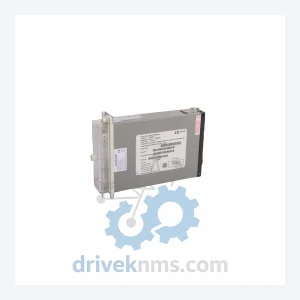
ALSTOM MVAJ105RA0802A Protection Relay – MiCOM Series
ALSTOM MVAJ105RA0802A Protection Relay: Supply Continuity Strategy for a Discontinued Critical Component The ALSTOM MVAJ105RA0802A is a numerical protection relay…
Model: SPARC ESP5S-85/0-S
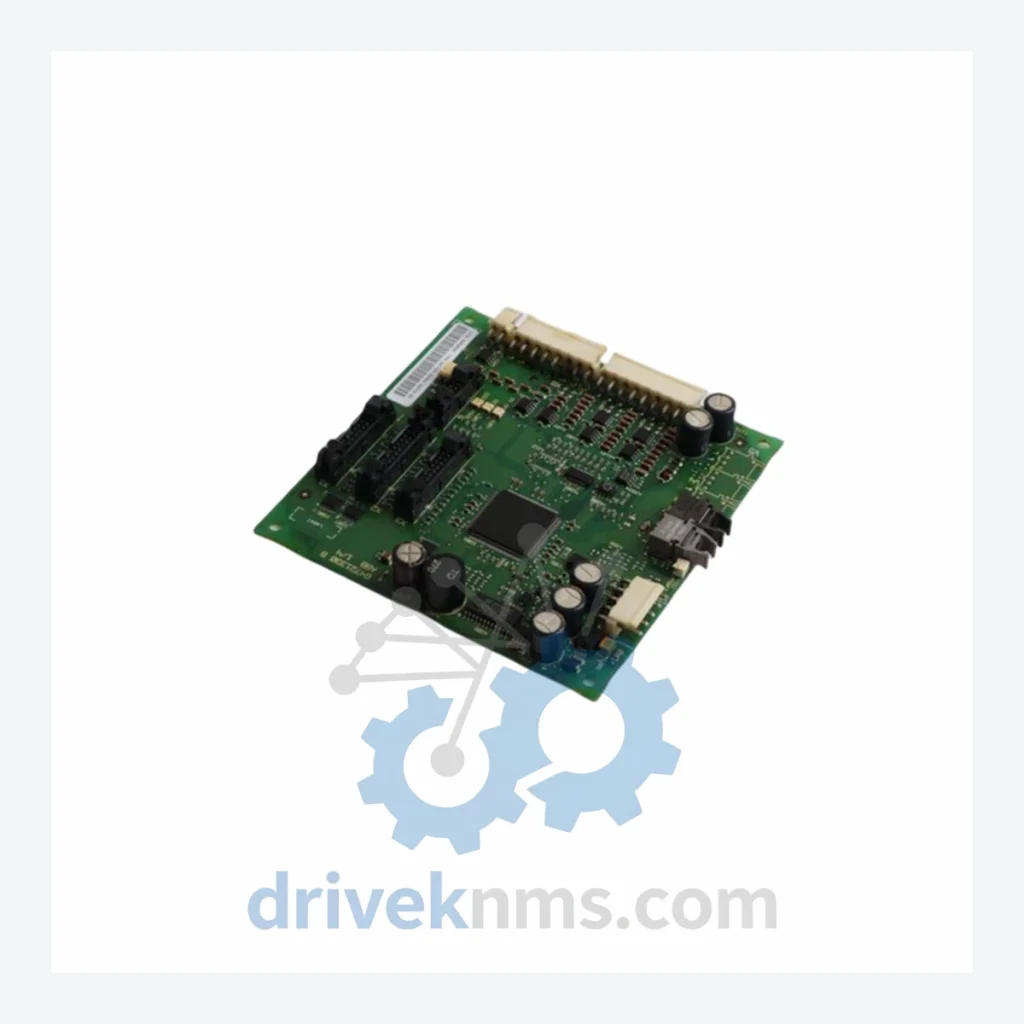
Product Overview
Commercial availability is handled through direct RFQ, model verification and export-oriented follow-up rather than public cart checkout.
Datasheet Preview
Use attached product manuals when available. If the manual is not public yet, request the full file directly through RFQ.
Commercial Path
Product pages on DRIVEKNMS are designed to verify model, brand and series first, then move the buyer into one clean quotation path.
Technical Dossier
The FORCE SPARC ESP5S series represents a mature, field-proven platform deployed across global heavy industry installations, including petrochemical complexes, nuclear power facilities, and crude oil refineries. The SPARC ESP5S-85/0-S and its sibling modules occupy a critical position in distributed control system (DCS) architectures where long-term hardware continuity is a non-negotiable operational requirement. These modules are characterized by their VMEbus-based backplane architecture, deterministic real-time processing, and compatibility with FORCE Computers' broader SPARC-based ecosystem. Installed base density is highest in European and Middle Eastern process industries, where original equipment manufacturer (OEM) support contracts have historically extended well beyond standard product lifecycle windows.
The SPARC ESP5S series is built on Sun Microsystems' SPARC (Scalable Processor ARChitecture) RISC instruction set, first commercialized in the mid-1980s. FORCE Computers, a German embedded computing specialist, adopted this architecture for its VMEbus single-board computers (SBCs) targeting real-time industrial control. The ESP5S designation denotes the fifth-generation embedded SPARC processor board within the FORCE product line, optimized for the VME64 bus standard.
Early iterations of the SPARC ESP5S operated under VxWorks or LynxOS real-time operating systems, providing deterministic interrupt latency suitable for process control loops. As the platform matured through the 1990s and into the 2000s, FORCE introduced variants with expanded DRAM capacity (from 16 MB to 128 MB), integrated Ethernet (10BASE-T to 100BASE-TX), and enhanced SCSI-2 interfaces for mass storage. The -85/0-S suffix on the SPARC ESP5S-85/0-S specifically denotes the 85 MHz clock variant with no onboard DRAM expansion and a standard temperature rating, distinguishing it from ruggedized (-R) or extended-temperature (-ET) configurations.
Compatibility across SPARC ESP5S sub-variants is constrained by backplane slot addressing and bus arbitration firmware. Substituting a higher-clock variant into a system configured for a lower-clock module requires firmware validation and, in some cases, BIOS/PROM re-flashing. Systems integrators managing legacy DCS installations must account for these constraints when sourcing replacement modules.
The following SKUs represent verified models within the FORCE SPARC ESP5S and closely related SPARC SBC product family. Each entry reflects a distinct hardware configuration relevant to VMEbus-based industrial control systems.
SPARC ESP5S-85/0-S: 85 MHz SPARC, no DRAM expansion, standard temp, VME64
SPARC ESP5S-85/64-S: 85 MHz SPARC, 64 MB DRAM, standard temp, VME64
SPARC ESP5S-85/128-S: 85 MHz SPARC, 128 MB DRAM, standard temp, VME64
SPARC ESP5S-110/64-S: 110 MHz SPARC, 64 MB DRAM, standard temp, VME64
SPARC ESP5S-110/128-S: 110 MHz SPARC, 128 MB DRAM, standard temp, VME64
SPARC ESP5S-85/64-R: 85 MHz SPARC, 64 MB DRAM, ruggedized conformal coat
SPARC ESP5S-110/64-R: 110 MHz SPARC, 64 MB DRAM, ruggedized conformal coat
SPARC ESP5-85/64-S: Predecessor ESP5 variant, 85 MHz, 64 MB, VME32 bus
SPARC ESP5-110/64-S: Predecessor ESP5 variant, 110 MHz, 64 MB, VME32 bus
SPARC ESP2: Second-generation SPARC SBC, 40 MHz, VMEbus, legacy I/O
SPARC ESP3: Third-generation SPARC SBC, 50 MHz, VMEbus, SCSI-1
SPARC ESP4: Fourth-generation SPARC SBC, 60 MHz, VMEbus, SCSI-2
FORCE CPU-5CE: Companion CPU module, 68040-based, VMEbus coprocessor
FORCE SIO-1: Serial I/O expansion module, 8-port RS-232/422, VMEbus
FORCE VMIF-1: VMEbus interface module, bus bridge for legacy backplane integration
FORCE MEM-128: 128 MB VMEbus memory expansion module, ECC-protected
FORCE ETH-100: 100BASE-TX Ethernet mezzanine for SPARC ESP5S series
The FORCE SPARC ESP5S series entered end-of-life (EOL) status as FORCE Computers was absorbed into Motorola Computer Group and subsequently Emerson Network Power (now Vertiv). Factory new units are no longer manufactured. The installed base, however, remains active in facilities where DCS replacement projects are deferred due to capital expenditure constraints or regulatory freeze requirements (common in nuclear and pharmaceutical environments).
DriveKNMS maintains a dedicated inventory of FORCE SPARC ESP5S modules, including the SPARC ESP5S-85/0-S, sourced through certified secondary market channels. All units are de-racked from decommissioned systems with full traceability documentation. DriveKNMS provides lifecycle extension support including: module-level repair, PROM/firmware re-flashing to specified revision levels, and cross-reference matching for discontinued part numbers. For facilities operating under IEC 61511 or ISA-84 functional safety standards, DriveKNMS can supply modules with accompanying test reports suitable for safety instrumented system (SIS) maintenance records.
The SPARC ESP5S series presents specific quality control challenges due to its VME64 backplane interface, multi-layer PCB construction, and SPARC processor socket design. DriveKNMS applies the following test protocol to all SPARC ESP5S units prior to dispatch:
Visual Inspection: PCB examined under 10x magnification for cold solder joints, capacitor ESR degradation, and corrosion on VME P1/P2 connectors. Power-On Self-Test (POST): Module booted in an isolated VME64 test chassis; POST completion and PROM checksum verified against known-good reference. Bus Arbitration Test: VMEbus DTACK, BERR, and IACK signal integrity verified using a logic analyzer at 85 MHz and 110 MHz clock rates. Memory Subsystem Test: Full DRAM read/write cycle test with ECC error injection to validate error correction logic. Ethernet Interface Test: 100BASE-TX loopback test with packet error rate measurement over 10,000 frames. Thermal Stress Test: 4-hour burn-in at 55°C ambient to screen latent component failures. All test data is logged and supplied with the unit as a quality certificate.
Related Paths
ALSTOM MVAJ105RA0802A Protection Relay: Supply Continuity Strategy for a Discontinued Critical Component The ALSTOM MVAJ105RA0802A is a numerical protection relay…
MOORE 16137 Series: Comprehensive Module Range and Technical Overview The MOORE 16137 Series represents a core component family within Moore…
Yaskawa YPHT11014-1A Circuit Board – Obsolete Drive Control Spare Part When a Yaskawa YPHT11014-1A circuit board fails in a production…